Category Archives: Memoir

Today

This morning I washed the sheets and put them back on the bed.

I washed, rinsed, and air-dried my hair brushes. What can I say? Is this some proto-spring cleaning of personal gear? Maybe so: Last night, I also darned my husband’s sock. I really don’t know how to darn, but I used my mother’s darning egg, so it gave me another opportunity to think of her.

I made granola. For this batch, I put in oatmeal, oat bran, flax seeds, pumpkin seeds, sesame seeds, sunflower seeds, sliced almonds, unsweetened coconut, raisins, dried apricots*, cinnamon, freshly grated nutmeg, three tablespoons of coconut oil, and three (plus) tablespoons of maple syrup. When everything that should be baked was baked and when all the ingredients were mixed together, I added some vanilla.

granola

granola

I cleaned out the shelf where some of the baking ingredients reside. Sometimes, I like to straighten shelves. I believe that doing so makes me think I have some control over the universe. In this case, I was also trying to round up stray flax seeds.

I watered the plants. This takes about one half hour of wandering around the house. (I mention the amount of time because I don’t think I will make it to the gym today but I want to get 10,000 steps on my pedometer). I don’t have an indoor watering can, which is okay, because I don’t like them much. I feel like I have more control when I use my big green plastic cup and the bit of old pink towel I use to mop up mistakes. Note: I am good with plants indoor and out. That started a long time ago when my mother and I planted a tiny garden of corn and radishes against the house in Detroit. In college, I rooted some pussy willows and my dad planted them down by the lake, where they prospered. Later, during Tom and my salad days, several of my indoor plants were given to me by my sister-in-law, Betsy. My friend Pat just gave me back a little bay tree that I had given her plus the scion of a clivia that I had given her years back. I like watering the plants.

house plants

house plants

After lunch, Tom and I drove to Ivy Nursery to pick up some spring flowers to take up north tomorrow to some people we love. Daffodils, because sometimes we all wander lonely as a cloud.

daffodils

daffodils

One thing I didn’t do today: I didn’t write Refugees, Part 2 (See, Refugees, Part1) as I should have done. I will soon, though. Spring is coming and my frozen heart will melt.


*I chopped the apricots with my trusty nine-inch Henckels French knife. I call it trusty because it has been my constant kitchen companion since my first summer at the North Rim in 1971. Our chef, Floyd Winder, required all the cooks and “pantry girls” (my designation in those unenlightened days) to buy their own knives. With my own knife at hand, I felt professional. The knife still works fine. However, when I searched this morning for the peace symbol I had etched in the handle, I couldn’t find it. I hope that is not a portent of the future. Update 4:15 P.M.: Tom and I both think we see the marks of the peace sign, but they are too faint for me to photograph.
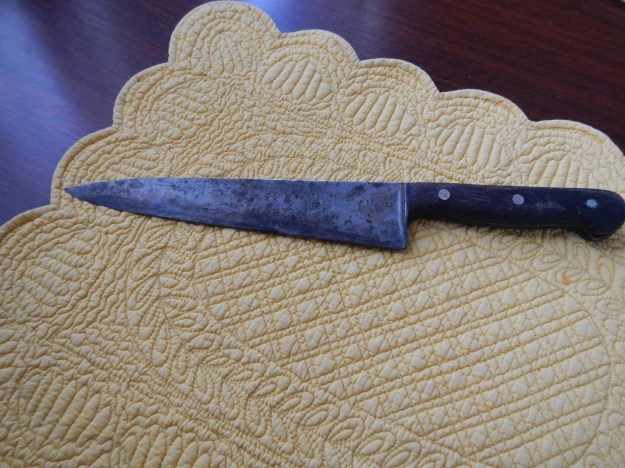
French knife
French knife
 

Refugees, Part I

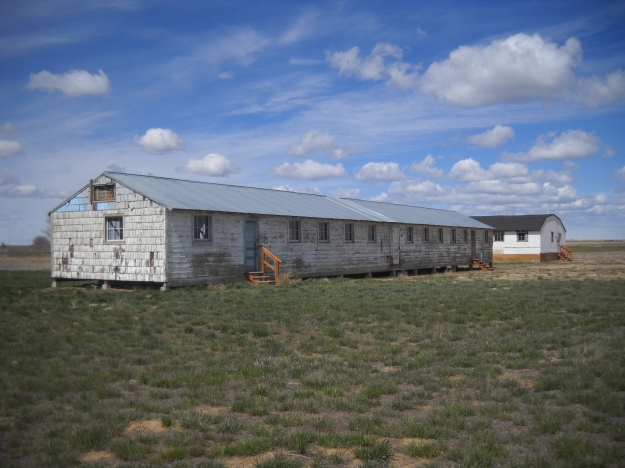
It probably goes without saying that I am distressed and angry about the divisive words of the extreme political right wing. I could name names, but you know those already, so I won’t sully this page. I do wonder, though, if a visit to Minidoka National Historical Site on a cold and windy day (such as when Tom and I visited) might make some ugly talkers rethink their support for a particularly ethnocentric and stupid idea. Minidoka, one of 10 relocation centers created in 1942 by FDR, had a population of approximately 10,000 Japanese Americans and Japanese. Throughout the relocation system, 120,000 people were interned.

Minidoka #3

Minidoka #3

Although some of my friends, relatives, and coworkers have long known that I stand somewhat left of center on many issues, others of you reading this may not know that. Now, I mostly want to write about music, trees, hikes, and my memories of my family. I wanted to write this post about traveling on the Going-to-the-Sun road. Not now. For weeks, I have been putting off writing about refugees, but I can’t in good conscience wait any longer. So, instead of writing about walking on mountain trails and beside blue lakes, I have to sit here and cry while I try to figure out what to say.

I am not, nor have I ever been, a refugee. The closest I ever got to being an outcast was when my students and, I guess, the school administration thought I was a communist back in Page, Arizona forty years ago.

However, I have had the great honor to work with refugees from around the world. Although  I have discarded at least a ton of books and papers these last years, I have kept much (probably most) of the writing from the adult students. When I read the students’ words now, even after many years, I still feel the beating of their hearts.

The United States did not designate the Salvadorans as refugees, That’s a long story, but the thousands my school worked with were refugees according to  definition on the website of the United Nations High Commissioner on Refugees (UNHCR): “owing to a well-founded fear of being persecuted for reasons of race, religion, nationality, membership of a particular social group or political opinion, is outside the country of his nationality, and is unable to, or owing to such fear, is unwilling to avail himself of the protection of that country.” Here’s what one young Salvadoran man wrote:

I want to talk about my country, it’s El Salvador. I miss my family and my friends. I want to see my mama. Also, I am missing my farm. I am missing my horse, and cows, dog, but I want to live in this country because in my country, we have war.

Mostly, the Salvadorans didn’t talk to me about war. They just moved ahead with their lives. One woman—I’ve  forgotten her name, but not her—I taught in a family literacy class at an elementary school in Arlington, Virginia. In those classes, we were all moms and dads together and so things were shared that might not have been talked about in other venues. She talked about how they all slept on the floor because of the flying bullets. This woman let me see the residual pain behind her cheerful, can-do demeanor.  She and her family prospered in Arlington, as did the young man who had missed his horse and cows.

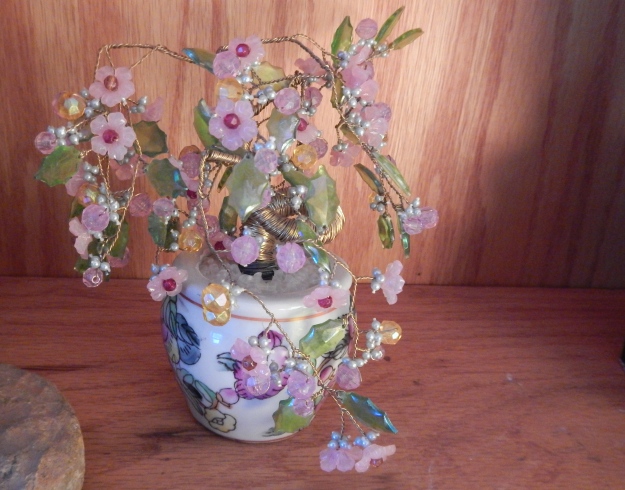
The woman who made me the golden and ever-blooming flowers (below) told me about her flight through the Cambodian jungle. I think she was the person who told me about burying her child on that journey. Forgive me, there are so many stories, they sometimes run together. I need to share the stories to help dispel the baseless fears that demagogues spread.

flowers

flowers

At my school, the Arlington Education and Employment Program (REEP), we were always working on projects of one sort or another to help figure out the best and most appropriate ways to teach adult immigrants and refugees. For one project, I interviewed a young Somali woman. She talked about how one day she went to the market and by the time she got back home, her home and her husband had been blown up.

When our school was preparing to receive a large group of Somali refugees, we were advised by human resources experts that it would be culturally inappropriate for a woman to shake hands with a Somali man. The first time a Somali man walked into our computer learning center, I walked up and enthusiastically shook his hand, as he did mine. He was in a new land and—enthusiastically—beginning to make a new life.

These refugees have lost so much and then they come here and share so much pain, yes, but  they also share their love and their hope with us.

One day I was sad in class because I was thinking of my mother and her cancer.  One young woman told me that she would “pray for your mother in the holy month of Ramadan.” Thank you.

So many stories: They are pictures I keep in my heart. I think I will stop for now.

However: I want to say, these adult students were so brave and strong. Unlike the fear-mongering stories promulgated by the extreme right wing, these people didn’t want to kill me. They made food for my family and me. I loved them and they loved me.

Bits of scripture still rattle around in my agnostic brain. Refugees are not the fiends those wicked people say. Refugees—at least until they get on their feet—are  the least of our brethren:

…for I was hungry and you gave me food, I was thirsty and you gave me drink, I was a stranger and you welcomed me, I was naked and you clothed me, I was sick and you visited me, I was in prison and you came to me.’ Then the righteous will answer him, `Lord, when did we see thee hungry and feed thee, or thirsty and give thee drink? And when did we see thee a stranger and welcome thee, or naked and clothe thee? And when did we see thee sick or in prison and visit thee?’ And the King will answer them, `Truly, I say to you, as you did it to one of the least of these my brethren, you did it to me.’ (Matthew, Chapter 25, Bible, Revised Standard Version)

Merry Christmas

I Wonder As I Wander

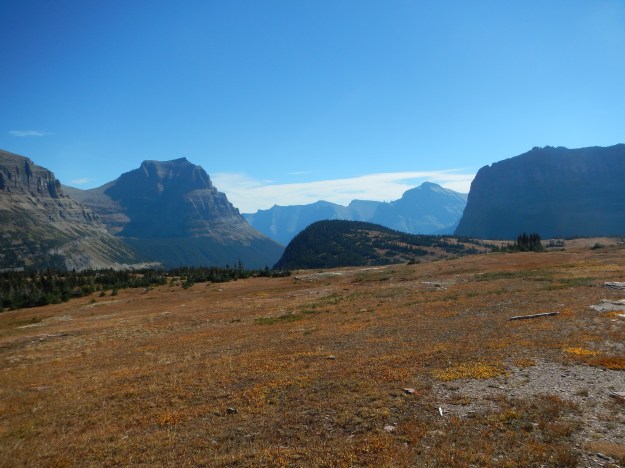
Going-to-the-Sun Mountain

Going-to-the-Sun Mountain, Glacier National Park, Montana

I was (still am) the youngest of five children. One of the benefits of this set-up was that I  listened to rock and roll from a tender age. I remember Jerry Lee Lewis’ “Great Balls of Fire” from Cooke School in Detroit. I remember Van Morrison from 6th grade in Milford, mostly because I had a friend named G-L-O-R-I-A. One of my older brothers and his friends used to sing rock a cappela on the school bus.  Another brother annoyed me because he always demanded that I answer the question, “Who put the bomp in the bomp bah bomp bah bomp? Who put the ram in the rama lama ding dong?…Who was that man? I’d like to shake his hand… (Barry Mann, 1961).” I don’t know that man’s name, but this morning I am happy to report a breakthrough on a similar venerable rock and roll question:

I Wonder, wonder who, who ooh ooh who
Who wrote the book of love?
The Monotones, 1958

The answer, I now believe, is Stevie Wonder. Last night, my husband, Tom, our next door neighbors Mark and Ward, and another (roughly) 10,000 people at the John Paul Jones Jones Arena in Charlottesville, Virginia jammed to Stevie’s skill, power, grace, and love until after the midnight hour. I can’t sing, I can’t dance—my hiking boots stuck to the floor in best WASP-of-a-certain-age-style—but still, I danced and sang with Stevie until I was hoarse and tears were in my eyes. I could go on and on, but, well, maybe I will just a little bit: the geniality, the humor, the call and response, the steel guitar, the harmonica, intertwining The Star Spangled Banner and Lift Every Voice and Sing in the funkiest and best version of either I’ve ever heard, and on and on.

I do go on, but here’s the take away: Stevie called on us all to love more and hate less. Yes, he referred to the Paris massacre and the gun violence ongoing in this country. I am going to try to accept his challenge. Note: When I say “called on,” I don’t mean that lovey-dovey ideas were just floating in the ether.  I mean Stevie explicitly gave us our marching orders: He told us that we need to start going forward, not backward.

What I didn’t write: Since September 25, I’ve wanted to write about finally getting on the Going-to-the-Sun Road in Glacier National Park. I’ve wanted to go there ever since I read the  poet, Vachel Lindsay, sometime in the mid-1960s. Lindsay, more noted for such works as “Abraham Lincoln Walks at Midnight,” and “General William Booth Enters into Heaven,” also wrote a poem called “Going-to-the-Sun” in a volume of the same name.  I’ve searched for the snippet of poetry that had inflamed my imagination all those years ago. I haven’t been able to unearth it yet, but more on that in another post.

Then I came back to Charlottesville and started sifting through books and memorabilia like I have for the last five years. Do I keep this or that piece of paper or shred of cloth? What do I do with the remaining mountains of teaching materials?

A piece of paper

A piece of paper

Then, last night with Stevie, I had to think, yet again, of the innocents and their blood–in this country and around the world–and of the refugees.

Likely I will write some more about poets and rock and roll, my travels, and my memories. Not today, though. Stevie brought it all home for me last night. I know now which sun I am really traveling to:

Lift every voice and sing
Till earth and heaven ring,
Ring with the harmonies of Liberty;
Let our rejoicing rise
High as the listening skies,
Let it resound loud as the rolling sea.
Sing a song full of the faith that the dark past has taught us,
Sing a song full of the hope that the present has brought us,
Facing the rising sun of our new day begun
Let us march on till victory is won.
“Lift Every Voice and Sing,” James Weldon Johnson (poem to music, 1900)

I’m Starting Now: I love you.


September Song

September 11, 2001 As often as I think about that day, I also think about the several days before it. If you were in Washington D.C. then, I wonder if you remember the weather? In the days before that Tuesday, the sky was a perfect blue and the temperature was (for Washington) unseasonably pleasant for early September. The organization for which I worked, the National Center for ESL Literacy Education (NCLE), and the Office of Vocational and Adult Education (OVAE), U.S. Department of Education convened a symposium, The National Symposium on Adult ESL Research and Practice. This conference was held September 4-7 at the S. Dillon Ripley Center at the Smithsonian Institution. As I remember it, planning and conducting the symposium was hectic, but exciting. My colleagues and I were proud to offer the attendees—adult English as a second language teachers and administrators from the fifty states and the territories—a nonpareil venue and we had the weather to match. One of the random memories that still remains in my mind is that—because the U.S. Department of Education had no authority or budget to provide afternoon snacks—my colleagues and I baked cookies for the symposium attendees. That was crazy; we were already working day and night as educators, but when we finally got home we had to swap our school clothes for aprons. It was crazy, but everyone enjoyed the cookies, so it turned out okay.

The symposium concluded on Friday and several of the participants were planning on getting some sightseeing in on the weekend before they headed home. In addition to the usual Washington offerings, a brand-new event would be going on that weekend. On Saturday, September 8, the Library of Congress and First Lady Laura Bush were hosting the first National Book Festival on the East Lawn of the Capitol. NCLE was hosting a booth offering information and materials related to teaching English to adult immigrants. I can see it now, my friend MaryAnn and I in the early morning, revived overnight from the stresses of the symposium, trundling our signs, flyers, boxes, and bags up to the Capitol lawn, waved through pro forma security. This was not a day for Republicans or Democrats. It was a festival—in all the meaning that happy word suggests—for book lovers. The sun shown, people heard authors talk and give readings, and there was food. Unlike carnivals with Tilt-a-Whirls, this was my kind of event.

After I was released from booth duty, I met my husband and we wandered around listening to several authors. We listened to a presentation by some of the Navajo code talkers. They explained in some detail the code they developed and which successfully confounded Japanese efforts to crack it during World War II. One of the code talkers commented on how he didn’t think most Americans had heard of their service to the country. After the talk, I asked one of the code talkers if he would autograph my program. I assured him I knew about the work of the code talkers. He thanked me for remembering, signed my program, and shook my hand. I have not discarded that program. There’s a website now, so you could find out more about the Navajo code talkers.

Blue, calm weather continued through Tuesday until we heard the news. Actually, I think the good weather continued after Tuesday, but we were all crying so much that the whole world seemed filled with smoke and death.

In the evening when it was finally, finally time for sleep, our son Billy—just starting 9th grade—hauled an old mattress into our bedroom and plopped down to sleep near us. Such a good idea; let’s all stay close together and hug.

Maybe you had to be in Arlington to hear it and maybe you never read about this. Very early in the morning of September 12 we heard huge, ugly airplane noises and we thought we were being attacked. It turns out that it was U.S. military planes at National Airport, a little over eight miles away from our house. We were already on tenterhooks, but I think this noise helped solidify the case of trauma I was developing.

The next night, Tom and I dropped off Billy with friends and headed into Washington. We were going to a memorial concert to be held on the west side of the Capitol. This was our small attempt to stand in respect and solidarity with those who had died in New York, Pennsylvania, and our home of Arlington. No one knew what was happening yet. We felt there was a slight chance that it was dangerous to hang out near the Capitol, but we wanted to stand up (a little shaky) to our enemies. Only four days since the book festival, the world had changed. We sat on the Capitol steps and looked across the river back towards Arlington to where the Pentagon was still burning.

Thousands of people surrounded the Capitol Reflecting Pool. We lit memorial candles. I think I still have my candle stub. There didn’t seem to be a formal program. Someone would start a song and it would travel around the pool in a wave until we were all singing together. I remember that we were standing by several people who sang beautifully—a well-worn modifier, but true here, nonetheless.   We sang patriotic songs and I liked that fine because I have always loved those songs and I loved the United States. I was satisfied though, when someone was starting with “God Bless America” and someone else said something like God bless the world or God bless us all. A latter day Tiny Tim had come to save us from our own parochial—albeit understandably traumatized— selves.

We sang many other songs, but the only one I remember for certain is Carole King’s “You’ve Got a Friend.” It’s like she wrote it for this special occasion years before we had any idea this world would come to us:

If the sky above you
Grows dark and full of clouds
And that old north wind begins to blow
Keep your head together
And call my name out loud
Soon you’ll hear me knocking at your door
You just call out my name
And you know wherever I am
I’ll come running to see you
Winter, spring, summer or fall
All you have to do is call
And I’ll be there
(1971)

After that night, we never had easy access to the government buildings or grounds or festivals ever again. I understand this, I think, but I haven’t liked it.

My workplace in Northwest Washington was about four and half miles from my home in Arlington. My friend and officemate Carol, who lived near me in Arlington, and I used to plot how we could make our way back home across the Potomac River if terrorists bombed the bridges. I thought that maybe I would be able to swim across the river at Chain Bridge. I stocked up on Ricola cough drops and had enough to be able to share with Carol. I am not sure what that was about, but I still have more than enough decaying cough drops scattered about my remaining possessions. In the face of the millions of people worldwide who faced and do face calamities every day, particularly the immigrants and refugees I had met, I am not particularly proud of being so upset about my own circumstances after 9/11. I do not like terrorists, I want people to act right, and I want to be brave, but generous. There, maybe those are my final words for now about September 11.

Adapted from Losing It: Deconstructing a Life. Unpublished work © 2012 Lynda Terrill. All rights reserved.

Book Report II

I’ve loved books as far back as I can remember. When I was almost five, I started Cooke Elementary School in Northwest Detroit.  That’s a long time ago now, but I still remember the school—staffed by plenty of tough old birds, some with their hair done up in braids like stern fräuleins out of Heidi. I remember the school library where  I read the Billy and Blaze books by Clarence William Anderson. It’s not like I’ve remembered the author’s name through these intervening years. In fact, until I Googled the title a few minutes ago, I had forgotten about the eponymous Billy as well. I have remembered some of the illustrations and—more—the joy I felt reading those books.

Tom just mentioned that I need to tell you more about why I liked Billy and Blaze. I admit the specifics are harder to dredge up than the memory of  the joy.  I liked this book because I liked reading about someone who actually got a pony.  I wanted a pony–really a horse. I loved the pony rides at some of the parks I went to with my family.  I still want to own a horse, but it seems impractical because a) I don’t know anything about taking care of horses b) horses are expensive c) we own 1/10 of an acre inside a city.  I also enjoyed Billy and Blaze because it may have been the first series I read by myself.  Not only did I get to enjoy one story, but there was more and then more pleasure to anticipate.

Cooke Elementary School, Detroit, Michigan

Cooke Elementary School, Detroit, Michigan

Another book I enjoyed (and have since remembered) from those very early years was Squanto, Friend of the Pilgrims by Robert Clyde Bulla. I reread Squanto a few years ago and I believe I have it now in storage as part of my Native American book collection. Nowadays, I wonder whether Squanto was wise to have been such a good friend, but that doesn’t change the happiness I experienced in reading the book. I think I was probably seven when I read Squanto. Here, I think I was first experiencing a sympathetic hero as well as a strong plot related to real life happenings–a literary element I enjoy to this day.

Here’s the point: Even books that are not deemed great or good literature or even decent popular writing, can calm that whirling in my head (see yesterday’s Prologue) and help me to consider new facts and ideas. This is all leading up to the four books I am currently reading:


Lamentation by C.J. Sansom

Lamentation by C.J. Sansom


Lamentation by C.J. Sansom is the latest in the six book (so far) mystery series about Matthew Shardlake, a lawyer in the time of King Henry VIII. Not only have I learned more about politics and intrigue in Tudor England than I’ve ever known, but I have had to consider again the nature of good and evil and of power and powerlessness. We don’t have torture in the Tower of London now, but otherwise those twisty, dark, hot, and smelly London streets remind me too much our own times. Matthew Shardlake tries to be a good person in a bad, or at least troubled, world. When I can, I try to do that, too.

Cordelia Underwood by Van Reid

Cordelia Underwood by Van Reid

I picked up Van Reid’s Cordelia Underwood or The Marvelous Beginnings of the Moosepath League at a store called Bull Moose in Brunswick, Maine. I had facilitated the first part of a workshop and felt the need of a calming book to read that evening and on the plane back home the next day. Cordelia, a young adult book and a New York Times Notable Book, fit the bill. I read it in my spartan college dorm room at Bowdoin College and at the Portland airport and in the air. I’m not sure I will finish it right now, but I will cart it along for my next lonely trip because as the NYT Book Review says, this book is “an amiable, richly populated first novel…” (from the blurb on the back of the book).


Look to the Mountains by Charles S. Peterson

Look to the Mountains by Charles S. Peterson

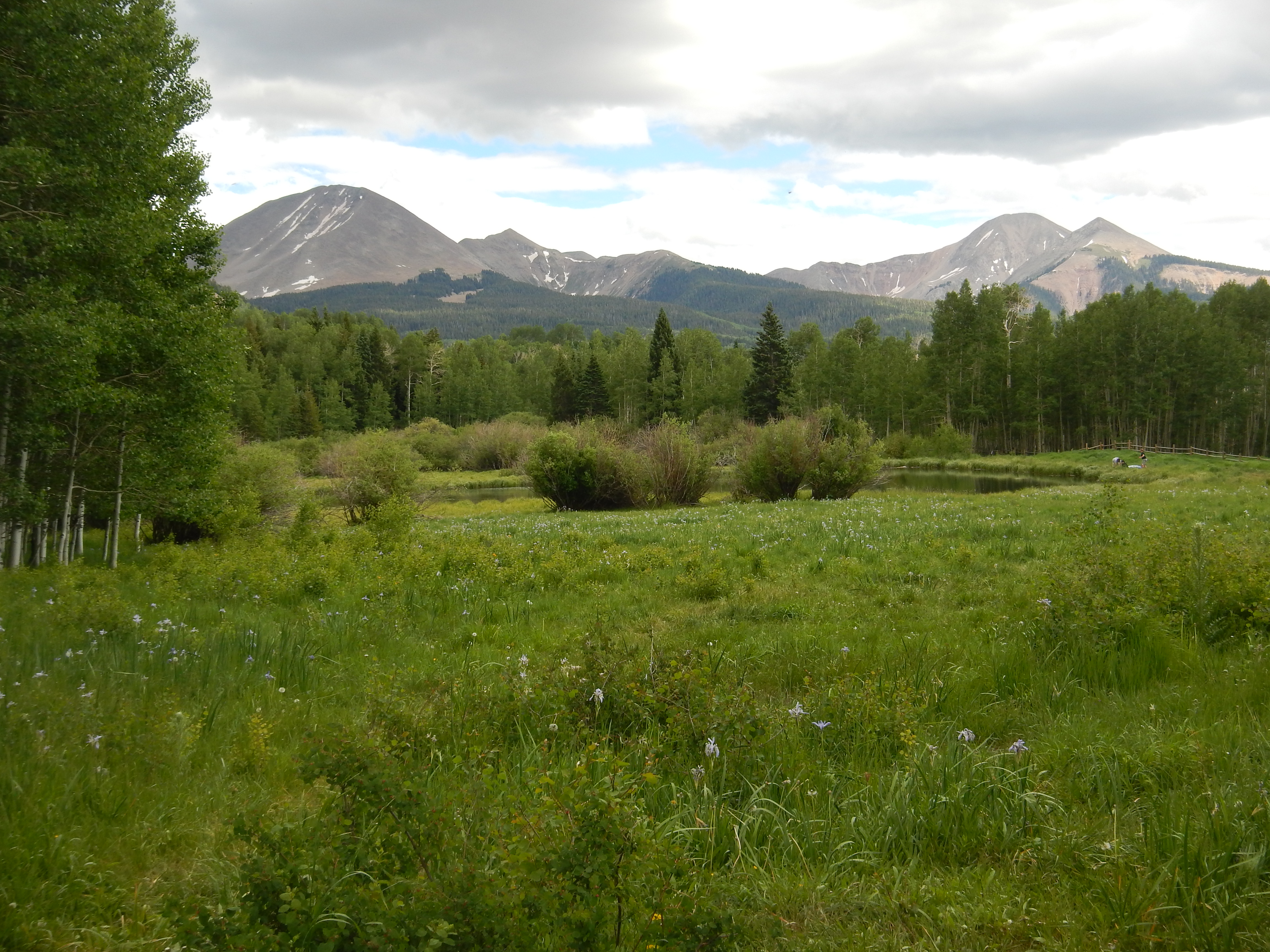
The book that has most often been in my backpack recently is Look to the Mountains: Southeastern Utah and the La Sal National Forest by Charles S. Peterson. Tom’s father, the forest supervisor of the Manti-La Sal National Forest when this book project was undertaken, gave us this book when we recently visited him in Florida. I don’t know what has happened to me, but for the last many years, there is no reading I enjoy more than digging into non-fiction histories of the American West. Talk about calming my fretful mind: for me reading about the natural history,  prehistory, and history of San Juan and Grand counties in Utah is like the meditative breathing I am always forgetting to do. It’s like chanting a mystical syllable and I don’t know why. I do know, or at least suspect, that I am the only person in this country reading Look to the Mountains at this time.

Lake Warner, La Sal Mountains

Lake Warner, La Sal Mountains

Tattered Legacy by Shannon Baker

Tattered Legacy by Shannon Baker


Speaking of Grand County, Utah, about a week or so ago Tom bought me, Tattered Legacy (A Nora Abbott Mystery) by Shannon Baker, published this year. I’ve only read 30 pages so far and it doesn’t seem to be (charitable comment) a particularly well-written book, but I am continuing through it because the setting is Moab, Utah. Perhaps almost too trendy for its own good, Moab is in the middle of some of the most beautiful landscape on the earth. Clarification: I have not seen most of the landscapes of the earth and many other places that I’ve seen are also beautiful, but the red rock desert touches me in a way I can’t express with any amount of modifiers, hyperbolic or not. Tattered Legacy is nothing like the reality of the Southeastern Utah landscape and history. So far, this book is overly replete with villainous polygamists and clunky prose, but I am going to finish it. Our hero, Nora, works for a group that is trying to convince Congress to expand Canyonlands National Park. I keep trying to convince Congress and President Obama to do the same. If you want to read more about the efforts to save the land and the human treasures of this area, please see the Southern Utah Wilderness Alliance, the  Grand Canyon Trust, the Bears Ears Coalition, and others.


The Needles, Canyonlands National Park

The Needles, Canyonlands National Park

Waiting in the wings: Stephen King, Finders Keepers. My husband it is reading it now, but only in the daylight!

Prologue: Book Report II

For some time now, I’ve been meaning to write, but, as you might have noticed, I haven’t produced anything since I gave you my mother’s cookie recipe.

First, I wanted to write about the five Lake Superior rocks I have by my birdbath here in Central Virginia. I didn’t know what I was going to write about them, but  I know they are important to me. My guess is that I wanted to say something about the thesis and antithesis and synthesis of the North and the South (and the East and the West, for that matter) inside of me. Something like: I love the little birds and flowers here in this (mostly) mild place, but how I love that cold and wild Superior.

Lake Superior rocks and birdbath

Lake Superior rocks and birdbath

Then, I wanted to write about my swiss chard: maybe something more about the about the polarities in my life. I grew up eating iceberg lettuce or, to be exotic, the odd bit of romaine or escarole. When I was still quite a new gardener back in the early 1980s, I figured out that there was no point in me growing either head lettuce or spinach. The former didn’t work for my home garden—I need greens all the time, not one time and then you’re done. The latter bolted as soon as the weather got hot and it’s hot everywhere I’ve lived since the 1970s: hot and dry or hot and humid. So, I started growing swiss chard even though it seemed exotic to my bland mid-western self. Swiss chard grows for me in  hot and dry and  hot and humid and cold and snow and  mud and baked clay. I love it. We eat chard in salads and in pasta and with rice.  My favorite chard varieties are “Bright Lights” and “Rainbow Mix.” I am growing organic “Rainbow Mix” this year. How lovely, how timely: Here’s to our rainbow country and may we all live long and prosper.

swiss chard, "Rainbow Mix"

swiss chard, “Rainbow Mix”

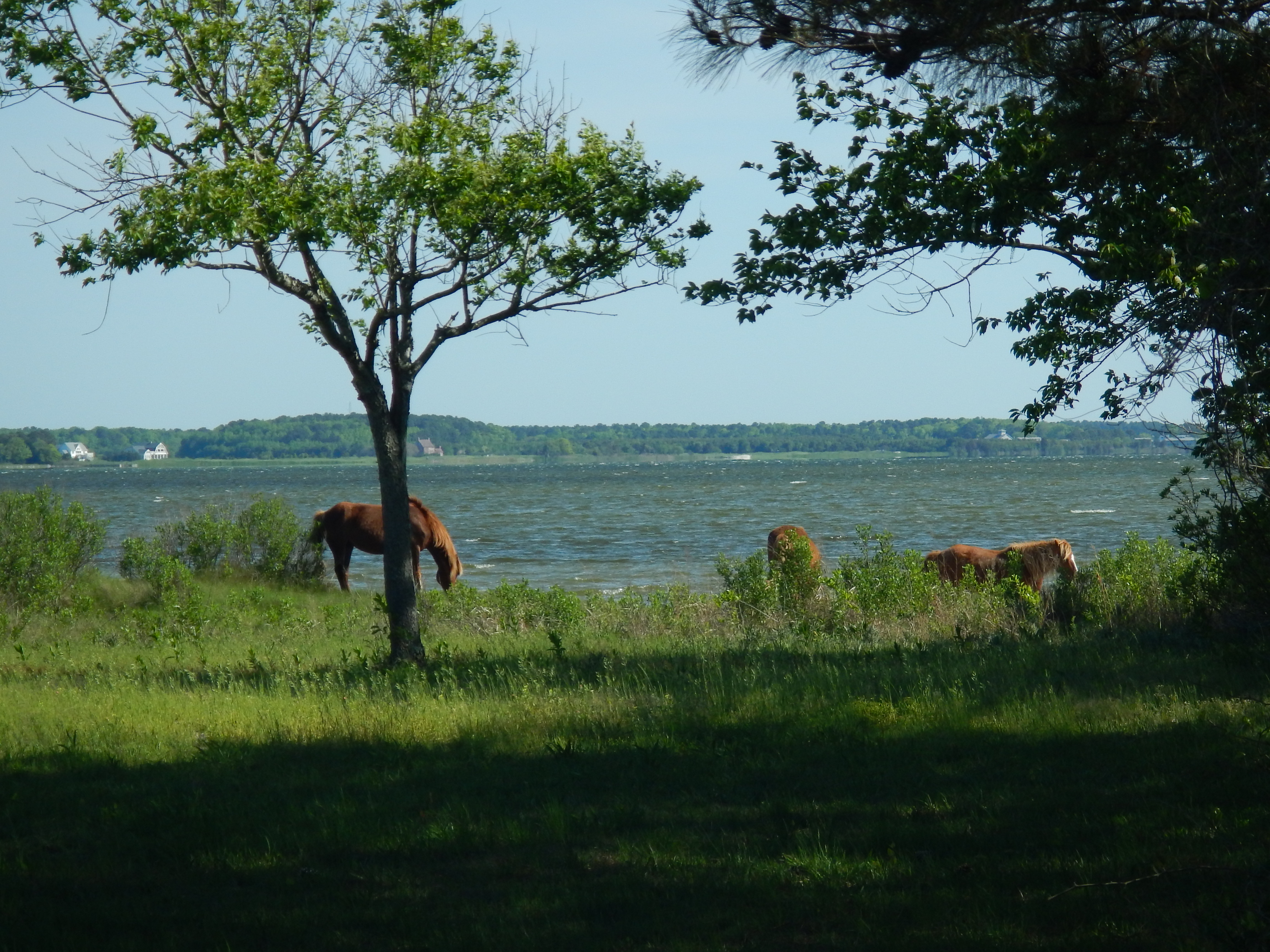
Later,  I wanted to write about how Tom and I camped on the Eastern Shore. We were so excited to be among the wild horses at Assateague National Seashore, but a little time passed and I forgot to write.

wild horses, Assateague National Seashore

wild horses, Assateague National Seashore

Finally, I took dozens of photos I wanted to share with you of Tom’s climbing rose, Awakening, but none of them (even the photo below) were able to  completely capture the gentle, fresh beauty of its reality.

awakening copyright Lynda Terrill

Awakening

I think I couldn’t write because my mind these days is like a Tilt-a-Whirl. My mind spins one way and then another. It stops, goes up, then down, and makes me sick in my stomach and in my head.  I couldn’t shake out the words.*

A trusty remedy for my twirling mind has always been reading. Child and woman, student and teacher, I have enjoyed book reports. Expect a report tomorrow on the four books I am currently reading.

*I have never liked amusement park rides. So many stories: the feckless pilot of my bumper car trying to be cool like my brothers; two go-rounds on the Edgewater roller-coaster, to be cool and then puke; my sister-in-law encouraging me to go on the “mild”  pirate ship, so that I felt even more terror than on the Hershey Park roller coaster. Apparently close to the ground is where I belong. Anyhow, if you want to see a photo of the Bob-Lo Island Tilt-a-Whirl and other photos, go to https://www.facebook.com/media/set/?set=a.127533410970.137189.126609635970&type=3


Swedish Ice Box Cookies

My mother, Audrey, originally got the recipe for Swedish ice box cookies from her friend, Mathilde. The two of them were friends since kindergarten (circa 1921, by my reckoning) and through the years mom got several of our family’s favorite recipes from Mathilde. This recipe’s name shows its own age: It has been a long time since that kitchen machine was called an “ice box.”

My brothers and I baked and ate our share of chocolate chip, peanut butter, and oatmeal raisin cookies, but I think these cookies might have been our favorites. Like so many of my mother’s recipes ( see New Orleans Pralines ) Swedish ice box cookies are easy, but delicious. Here’s the recipe from my mom’s index card:


Swedish Ice Box Cookies*

Cream

1 C. white sugar

1 C. brown sugar

1 C. shortening (my mom used margarine, I use butter)

2 eggs added to above

Add to above

1t. salt

1t. soda

½ c. nuts (Mom and I use pecans)

2 T. hot water

Flour to stiffen—about 3 cups

Bake 10 – 12 min. in 375° oven

May be dropped on cookie sheet immediately after mixing & baked. Or form half into a roll & held in refrig. Several days – Large recipe—-Usually I make half a recipe.


I hope you enjoy making and eating these easy cookies. I wish I were eating them with my mom and dad and brothers. I wish I had some on a plate next to my tea and computer on this rainy afternoon, far in time and place from Milford, MI. So, if you make these cookies, I hope you have someone dear to share them with.

No photos: I don’t usually make cookies anymore (because my husband and I want to eat them–all of them–but we are trying to hold the line).

*I think my brothers and I called them Swedish nut cookies.

Chúc Mừng Năm Mới

National Garden, U.S. Botanic Garden

National Garden, U.S. Botanic Garden

Last Tuesday Tom and I took Amtrak to D.C. In our day and a half in the city, we enjoyed many activities including dinner with two children, two museums (The National Museum of the American Indian  and The National Gallery), four gardens (Enid A. Haupt, Mary Livingston Ripley, National Garden and Bartholdi Park of the U.S. Botanic Garden), and several big city meals. One of these meals was lunch at PHO 75 on Wilson Boulevard in Arlington, Virginia.

PHO 75, Arlington, VA

PHO 75, Arlington, VA

Wilson School

Wilson School


I think I might have mentioned before about my good fortune in teaching at the Arlington Education and Employment Program (REEP). Before you think, oh no (!) she’s becoming too elliptical again, let me explain the connection. One part of that REEP good fortune was all the great food that was associated with it. PHO 75 itself was in the strip mall just the other side of the gas station from Wilson School where we taught.

Phở is beef and rice noodle soup with a variety of fresh vegetables (and lime) added to it.

Phở

Phở

When it’s made in the traditional way (e.g. with real beef stock, no cutting up the noodles) phở is a delicious soup.

What I am remembering today though is not so much the taste of the soup, but the happy times doing good work with my friends. Sometimes we’d get the phở carry out so we could go back to school and slurp through interminable meetings. The slurping and the switching between chopsticks and spoon kept one awake and also (in my case, at least) kept my mouth full so I wasn’t always making comments, which sometimes annoyed a program coordinator or two.

The reason I am writing this post: It is the beginning of Vietnamese New Year (Tết). I remember my friends and my students—I counted once, all told I taught people about 85 countries—with love and respect.

The real reason I am writing this post: As a follower of the Gregorian calendar, I made my New Year’s resolution a little over six weeks ago. I resolved to be a kinder person. I’m working on it, but it’s surprising to me how often a nice enough person (like me) has to remind herself to be kind. I am happy that another New Year has come around so soon to help me to remember my resolution. Hot soup and warm memories also help in my resolve.

We had a snowstorm yesterday. It was nothing like the Northeast or the Midwest, but we did get several inches. Still, under a laurel bush, I saw a crocus in bud through the snow. A new year and spring waiting in the wings.

crocus

crocus

Music for January

taking down the dogwood

taking down the dogwood

This morning the Woodson’s Complete Tree Service guys are taking down our dogwood tree.  I expect that this is not a foreshadowing of my or Tom’s early demise. After all, we aren’t as old in people years as the dogwood was in tree years. We sometimes wonder whether this tree was planted when the house was built.  If so, it would be 85 years old. In any case, the dogwood has had dieback for years and had to come down (see the post To Autumn).

Forgive me, it’s just that January’s short days and cold nights make me think long thoughts. I told you a while ago that I was going to write more about the 2014 road trip. I was hoping for a brief, yet comprehensive, summary of what we saw and felt and what we learned. Maybe later.

Back to January My mother died in January. Three years later my dad died in January. That was okay, really, but I do get a bit pensive whenever there is snow on the Pennsylvania and Ohio Turnpikes (the route we take from Virginia to Michigan for the funerals).

Music of the Spheres Tom bought some new speakers for the stereo system. So we had to try them out by listening to music we’d heard many times to see whether or not the new speakers sound significantly better than the older (by 20 years) speakers.*

The first song I listened to was “Secret Gardens” from Judy Collins’ True Stories and Other Dreams. I listened to it a couple of hundred times when my parents were dying and then died. Thinking back though, even in 1973 when I first owned the album, I cried when I heard this song. I cried Monday when I heard it again. I think they are tears of happiness: “I see you shining through the night through the ice and snow of winter.”

Next, we listened to Joan Baez’s version of “North Country Blues” from her Any Day Now: The Songs of Bob Dylan CD. I think I was checking out the speakers to see how they worked on pure human voices. Very well, I can report.

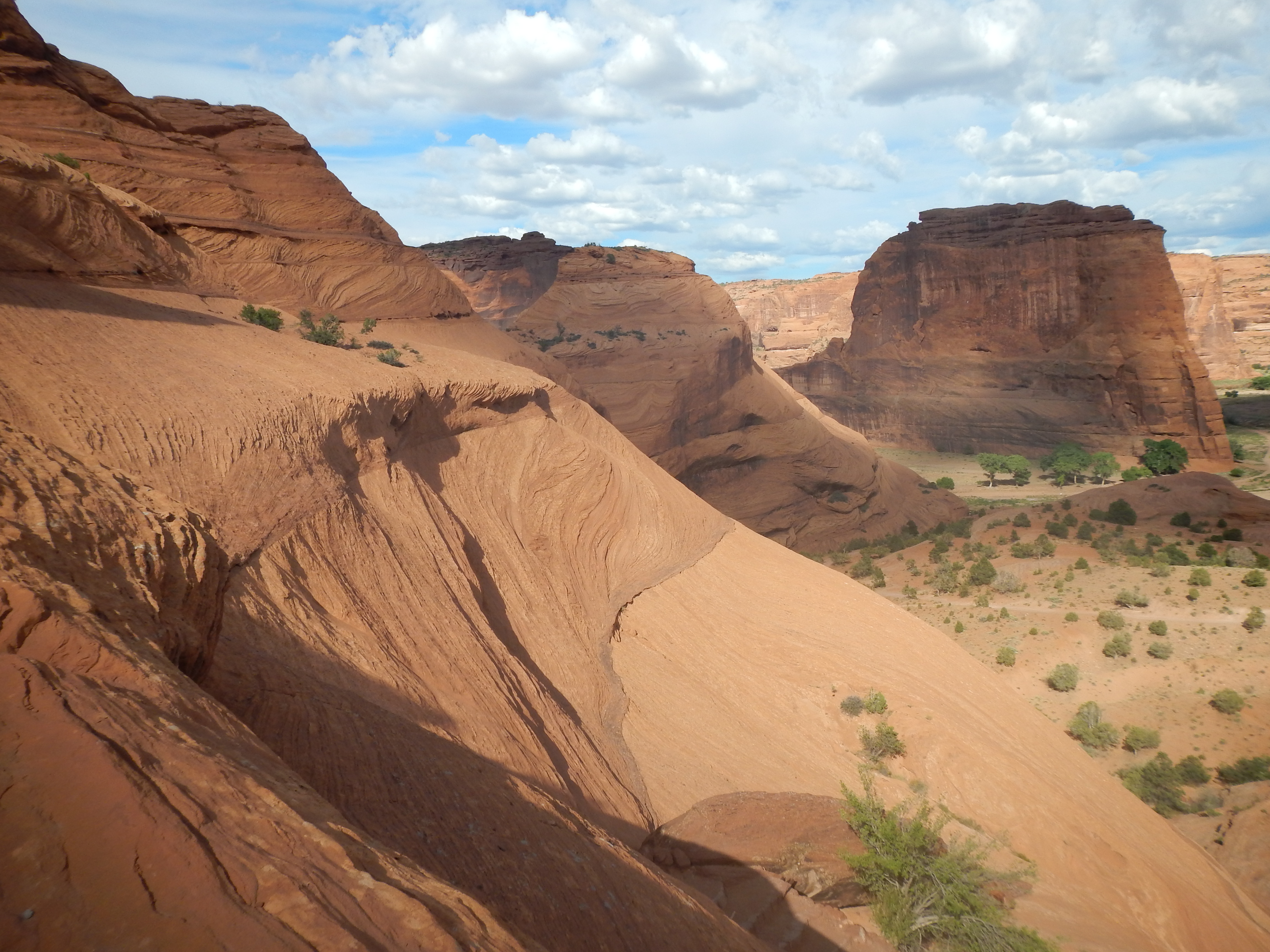
Next,  I made a quirky choice: “Land of the Navajo” by Peter Rowan. The majority of our CDs are still in storage, maybe that’s my rationale for choosing this CD. Or maybe it’s because, while the plot of the song is opaque to me, Rowan’s evocative yodels (or whatever they are) take me back to the land of the Navajo, which I love.

Canyon de Chelly

Canyon de Chelly

Tom chose Abbey Road, you know by whom. We listened from “Here Comes the Sun” through “Her Majesty.” I was astounded. They sang with the voices of angels. I hadn’t remembered that.

Little darling, I feel that ice is slowly melting
Little darling, it seems like years since it’s been clear
Here comes the sun
Here comes the sun, and I say
It’s all right

How did they know how to write “little darling” instead using heavier words? Baby, I’m amazed.

Next, we listened to “Sad Eyed Lady of the Lowlands” from Bob Dylan’s Blonde on Blonde CD. Tom has been listening to this song since he was a teenager in the town he always characterizes as “the armpit of Utah.” Looks like songs of love and yearning may work anywhere. I note that I am a person from the lowlands.

Finally, we listened together to some songs from Judy Collins’ Wildflowers including “Since You Asked”:

What I’ll give you since you asked
Is all my time together;
Take the rugged sunny days,
The warm and rocky weather,
Take the roads that I have walked along,
Looking for tomorrow’s time,
Peace of mind.

As my life spills into yours,
Changing with the hours
Filling up the world with time,
Turning time to flowers,
I can show you all the songs
That I never sang to one man before.

We have seen a million stone lying by the water,
You have climbed the hills with me
To the mountain shelter.
Taken off the days, one by one,
Setting them to breathe in the sun.

Take the lilies and the lace
From the days of childhood,
All the willow winding paths
Leading up and outward.
This is what I give
This is what I ask you for;
Nothing more.

Maybe I can use this song as the summary of the road trip/marriage we’ve been on so far.

wildflowers

wildflowers


*The verdict on the speakers: I am not an audiophile. I don’t usually listen consciously for sound quality. Nonetheless, the minute I heard these speakers, I had a simile for Tom. The speakers are like my sugar cookies (really Joy of Cooking’s rich sugar cookies). They are so pure, simple, and unadulterated that a person used to inferior baked goods might not notice how delicious the cookies are. Same deal for the speakers.

Road Trip 2014: Restaurants

Grand Canyon Lodge, North Rim, Arizona

Grand Canyon Lodge, North Rim, Arizona–the dining room is on the left

My husband Tom and I have been on a road trip since January 2, 2014. I want to write about our journey in some—as yet unspecified—epic, metaphorical piece, but I have been finding it difficult to get these—as yet unformed—thoughts into the computer. Experiences and ideas swirl around in my head, but I can’t focus. I think I will start writing about simple, finite topics (e.g., restaurants, bookstores, campsites, hikes, medical misadventures) and hope that concentrating on them will help some of the other ideas settle down and organize themselves.

Path of our trip, in brief: Virginia, Maryland Pennsylvania, Ohio, Michigan, Ohio, West Virginia, North Carolina, South Carolina, Maryland, South Carolina, Georgia, Florida, Alabama, Mississippi, Louisiana, Texas, New Mexico, Arizona, Utah, Colorado, Utah, Nevada, California, Nevada, Oregon, Idaho, Nevada, Utah, Arizona, New Mexico, Colorado, Nebraska, Iowa, Wisconsin, Illinois, Indiana, Michigan, Ohio, Pennsylvania, Maryland, Virginia, District of Columbia, North Carolina, South Carolina Note: we plan on being in Maryland, Virginia, and Pennsylvania before year’s end.

Finite Topic #1: Favorite Restaurants

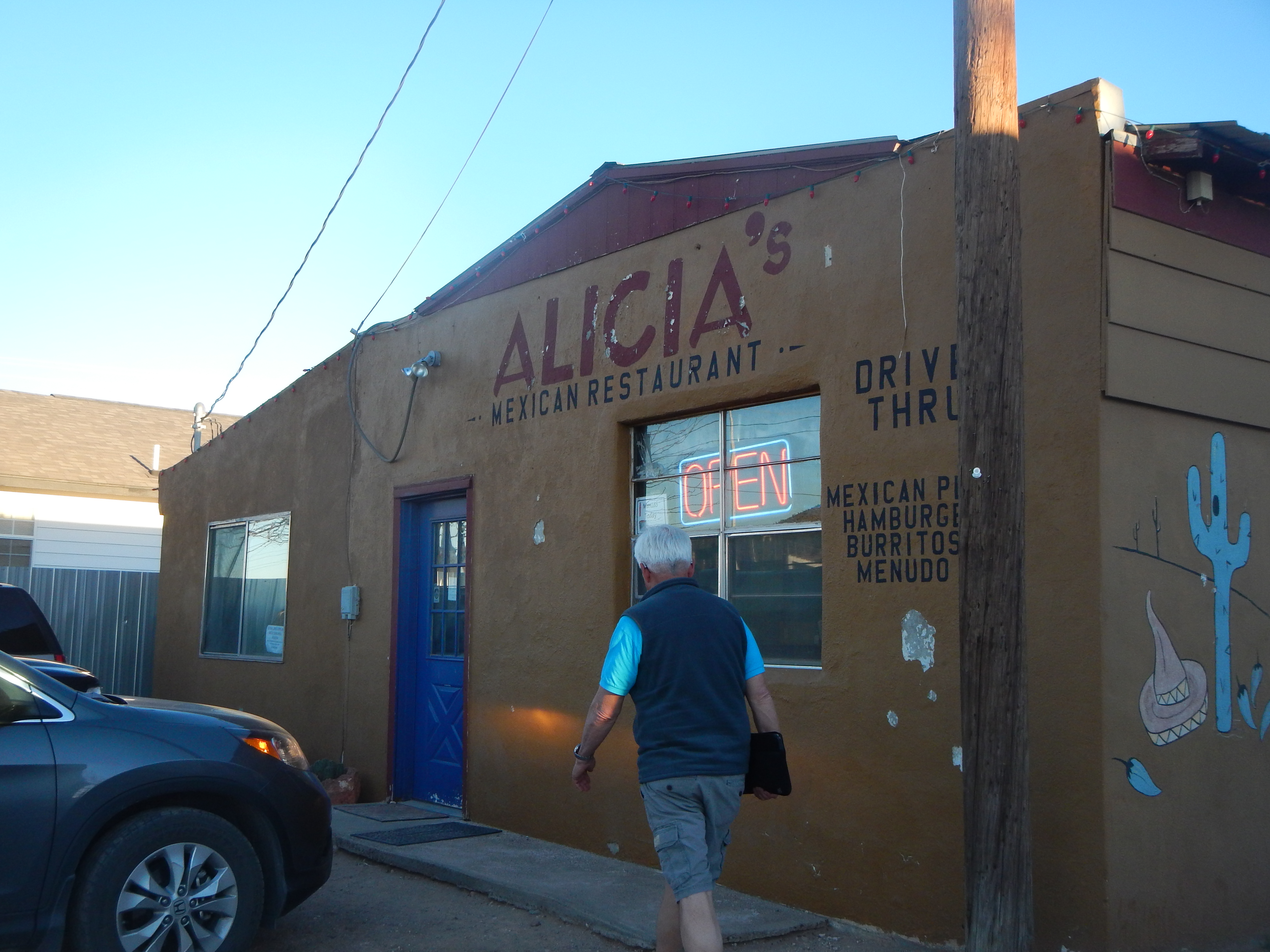
First, a minor confession: Tom and I are, some would say, foodies.* So, although we have shared many camp meals and picnics, we have ended up going to restaurants more than one might think for a couple of (would-be) adventurers. As Tom says, in our defense, we met in a restaurant— Grand Canyon Lodge in 1971—so, really, all this restaurant going is just a logical progression of how we started our journey together.

Anyhow, you can see from the list above, where we’ve wandered. For the amount of places we’ve traveled and eaten in, one might think we would have a long list of restaurants to recommend, but no, we have a list of six favorite restaurants from the whole trip. While there were plenty of okay, pretty good, or good meals, there are entire states, regions, and interstate highways where we didn’t find food that we loved.** Here’s the restaurant list:

Lunch in New Orleans

Lunch in New Orleans


I don’t want to critique the restaurants any more than to say that, in each place, we enjoyed tasty meals made with real ingredients and cooked and served by professional, friendly people.


Heading into Alicia's

Heading into Alicia’s

Saigon Bowl, Denver

Saigon Bowl, Denver

*Yes, we travel with whole nutmeg, Sriracha, smoked paprika, and the dowel rolling pin Tom made me.

** That’s not counting the delicious food we have shared with family and friends along the way.

Happy Thanksgiving!