Data Points in My Life

In my September 2025 post, I noted that my mind was full of unruly ideas waiting to form themselves into a reasonably cogent article.* Two months later, that still hasn’t happened. I think I might reasonably throw some blame on the challenging times.**  Instead, I am going back to the fundamental premise of this blog: eschewing grand belief systems, in favor of concentrating on smaller things, on trying to be closer to the ground (both in metaphor and in fact). So, with no essay in mind, I am falling back to a tool of education and other disciplines: the bulleted list.

  • Speaking of smaller things, closer to the ground, I fear that oak leaf gall mites (Pyemotes herfsi) have it in for me. Since the summer of 2023, I have been prey to sporadic seasonable bouts of small, itchy, painful rashes that look like the work of oak leaf gall (or itch) mites. I am not sure that the oak leaf gall mites are the culprits, but, my  brief investigation leads me to think so. As an amateur (wannabe, at least) naturalist, I spend an inordinate amount of time poking around in nearby woods. Four of my favorite local parks have plenty of oak trees. I am happy about this as I love oak trees (see Old Growth), but I going to have to suit up more carefully next season.
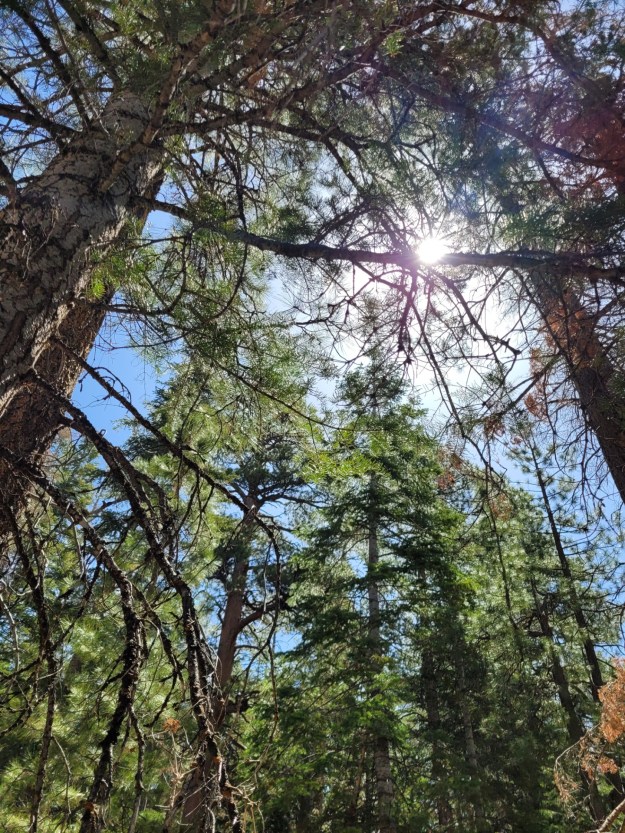
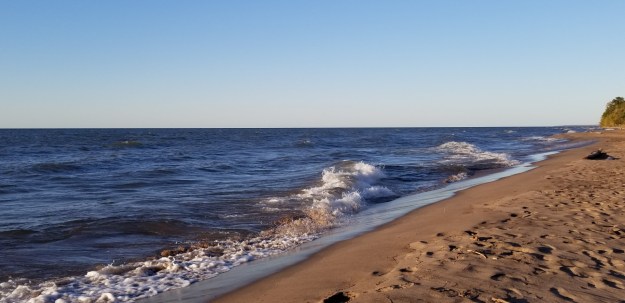
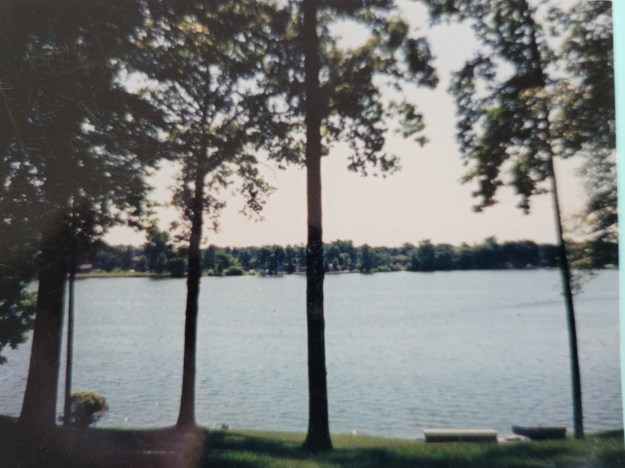
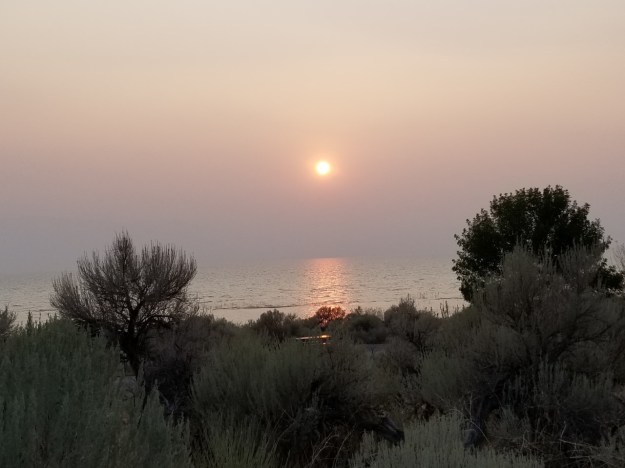
  • I do go on about flowers, trees, birds, and other little live things. Sometimes, too, I go on about canyons and other grand places.  However, I noticed a few months ago that the wallpaper on both my laptop and on my phone display photos of water. I think that looking at these photos calms me (a bit) and makes me happy (somewhat) even in these disordered and disturbing times. These photos remind me of the lake water I listened to and watched day and night during my childhood.
  • I have been pretty grouchy the last few days and last night I had troubled sleep. Nothing major: life stuff, getting old stuff, and the ridiculous and unrelenting dross emanating from the U.S. president and his minions. Also, I have recently curtailed my nature walks hoping to avoid the pesky mites (see above). Still, It’s now the end of November, so today I chanced a walk over to the Ballston Wetland Park. I saw the water, the fall plants, the insects, and the birds. I watched a bumblebee busy in the late flowers and a small flock of Canada Geese flew in for a paddle. I heard several small birds in the underbrush and caught sight of a northern mockingbird and a cardinal. I feel much better now than I have for the last few days. I (sometimes) try not to be (overly) directive, but I do recommend a bracing walk in the woods, in the fields, along the shoreline, or in the park as an antidote to the blues.

near Kirk Creek, Big Sur, March 26, 2013 (my laptop wallpaper)

Lake Superior, Ontonagon, Michigan, September 17, 2021 (my phone wallpaper)

view from my front yard, Lake Sherwood, circa 1960s or 1970s (photographer unknown)

staghorn sumac, Ballston Wetland Park

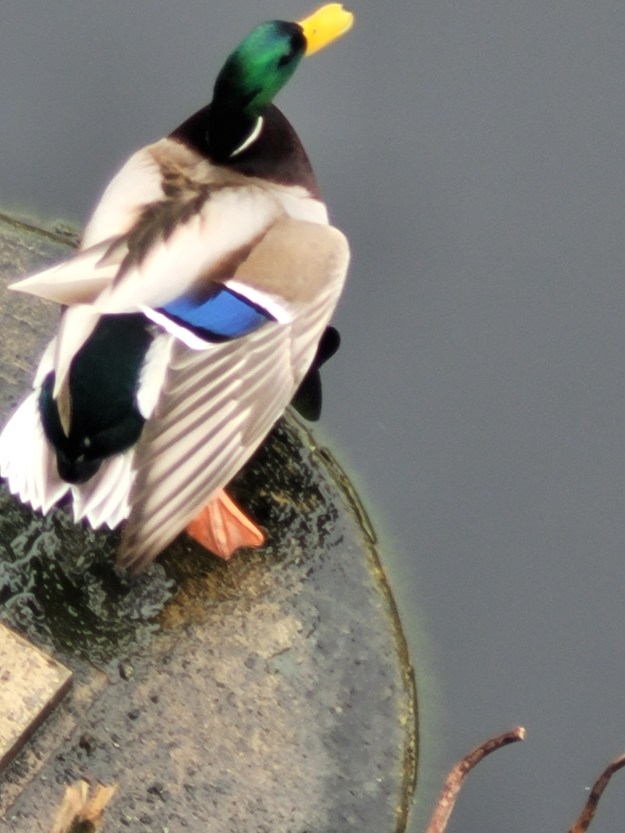
mallard ruffling his feathers at Ballston Wetland Park, Arlington, VA

Canada geese, November 26, 2025

  • In the beginning of November, Tom and I drove up to Michigan for the memorial for our sister-in-law, Nancy.  When we were young, Tom and I didn’t expect that we would come to enjoy memorials for those who die, but we have done so.  Along with the others in attendance, we laughed, we cried, and we ate a good lunch. Before and after the service, we drove the back roads of southeastern Michigan: sun and wind and red and golden leaves. It was perfect. This was the landscape of my early life. On the way up to Michigan and then heading back home, we stayed with George and his wife, Valerie, as we have for close to 40 years.  We drove home on the tollways, highways, and byways of Pennsylvania to visit our sister-in-law, Jeanne. Tom and I were glad to see so many people we love.
  • I love music, but I never learned to play an instrument or to read music. In sixth grade or whenever, when students were encouraged to take up an instrument, I was too shy to do so. I regret this decision, but then I have been a life-long whistler–taking after my dad. I am writing about music now because the Beatles came to mind a few days ago and started me on this article.

There are places I’ll remember
All my life, though some have changed.
Some forever, not for better;
Some have gone and some remain.

All these places had their moments
With lovers and friends I still can recall.
Some are dead and some are living,
In my life I’ve loved them all.      “In My Life,” (1965)

I wish you and those you love a Happy Thanksgiving..


* I am (mostly) not being lazy when I use this “wait until something bubbles up method.”  I discovered this method in college, or even before, and it works for me. There seems to be some part of my brain that keeps working on ideas and words while other parts are focused elsewhere.

**”Challenging times,” are my trying-to-sound-balanced words. More viscerally and honestly, the sh%$ storm that Tom foretold before the last inauguration has turned out to be an ongoing superstorm.  I am devastated by the wanton destruction of so many of our Constitutional, governmental, and societal norms on the part of individuals who appear to be cruel and fascist.  However, I will keep fighting what I believe is the good fight and trying to love my relatives and friends and neighbors. I also am working on having empathy for all.

September 2025

For several weeks–in a messy corner of my mind–I have been working on a blog post. So far, that post exists only as an unruly pile of ideas waiting to straighten themselves out. Fall has come, though, and I need to be reading, writing, and walking out in the beautiful world.

For many years, I have been searching for the right time to read J.R.R. Tolkien’s The Lord of the Rings another time. I was hoping that if I waited long enough, I could approach the book with the absolute wonder and absorption that I felt when I read it for the first time in the fall of 1967–fifty-eight years ago. A little over half through The Fellowship of  the Ring, and even though I am familiar with every scene and much of the dialogue, I am again wonderfully absorbed in Middle Earth. Turns out, I started reading September 22, which LOTR aficionados may recognize as Bilbo’s and Frodo’s birthday.  I count it a fortuitous beginning,

our current copy of the The Lord of the Rings

Mostly what I want to write today are Tolkien’s words that give me comfort.  I hope they give you comfort as well.

There they (Frodo and Bilbo in Rivendell) sat for some while, looking through the window at the bright stars above the steep-climbing woods, and talking softly. They spoke no more of the small news of the Shire far away, nor of the dark shadows and perils that encompassed them, but of the fair things they had seen in the world together, of Elves, of the stars, of trees, and the gentle fall of the bright year in the woods.  (last page of the chapter “Many Meetings” in The Fellowship of the Ring).

Here in Arlington the oppressive hot weather ended many weeks ago and autumn is beginning in earnest. The walks I take now also give me comfort.  Below are some photos from recent walks.

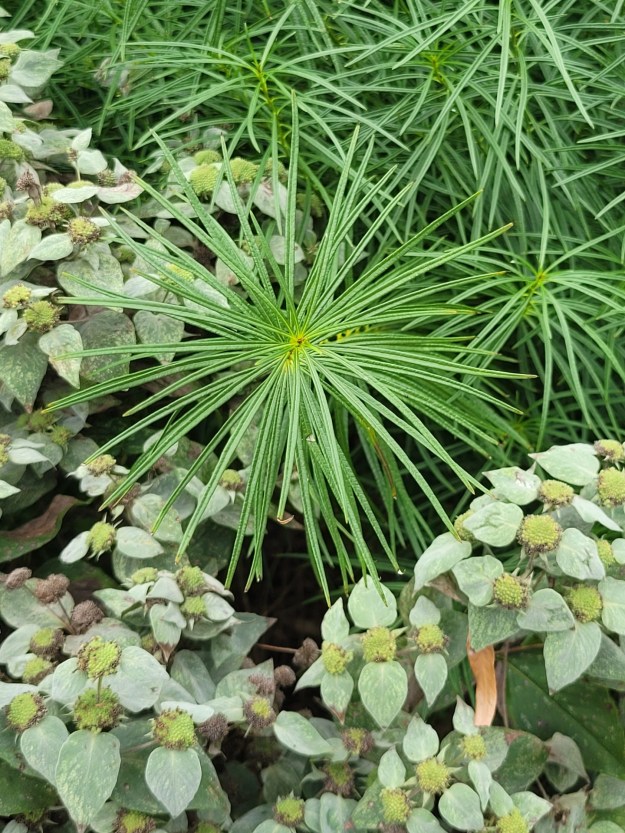
bluestar and mountain mint

mallards at Ballston Wetland Park, Arlington, Virginia

inland sea oats

swamp milkweed

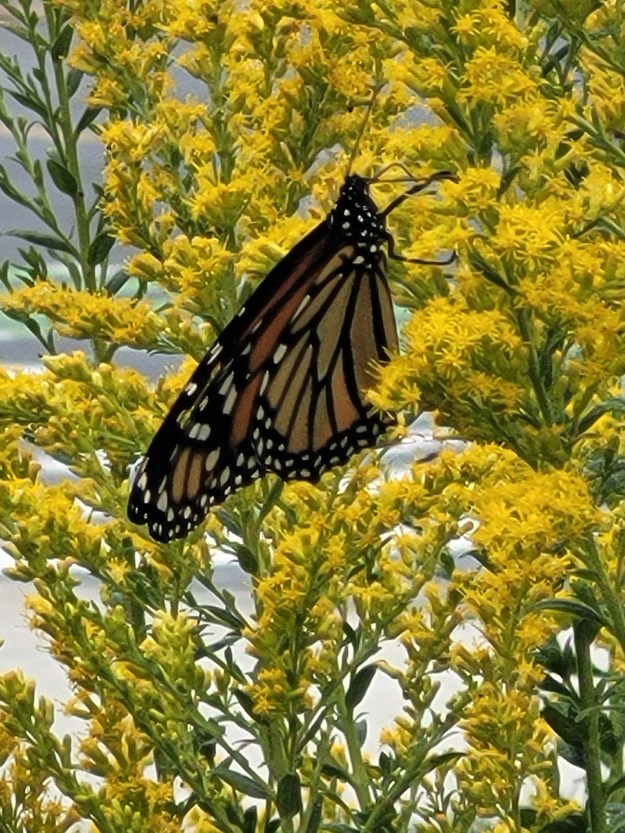
monarch and goldenrod, September 29, 2025

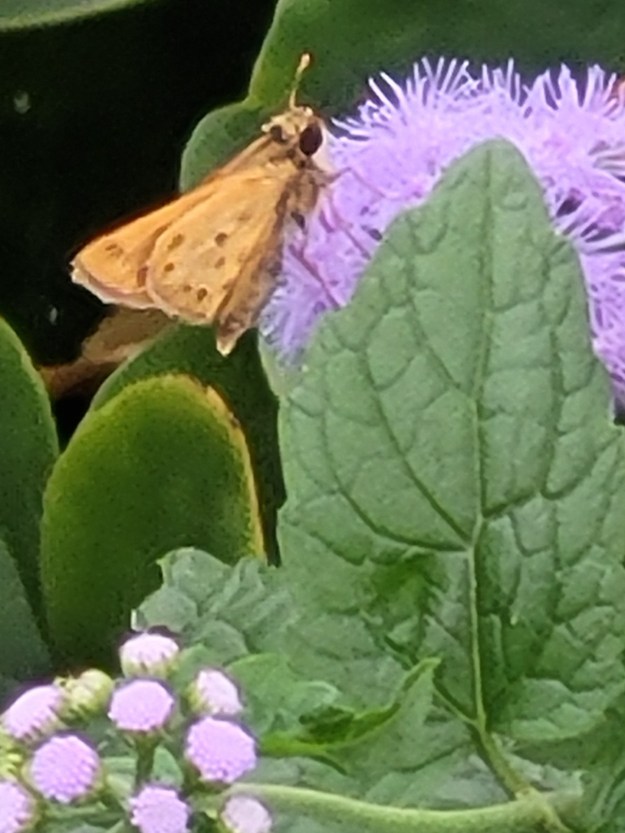
fiery skipper on blue mistflower

Once More to the Rim


Grand Canyon Lodge at sundown

A few days ago, I started thinking about what I should write about the forest fire on the North Rim of the Grand Canyon and the destruction of the Grand Canyon Lodge and its environs. Yesterday I realized that I have been writing about the North Rim and surrounding areas since I began writing this blog in October 2012.  I don’t think you need many more words from me about this beloved place right now. Below, I have gathered links to some of the earlier articles I have written about the rim. I am also including a handful of the hundreds of photos of I have taken of the North Rim.

Grand Canyon Lodge with Oza Butte in the distance

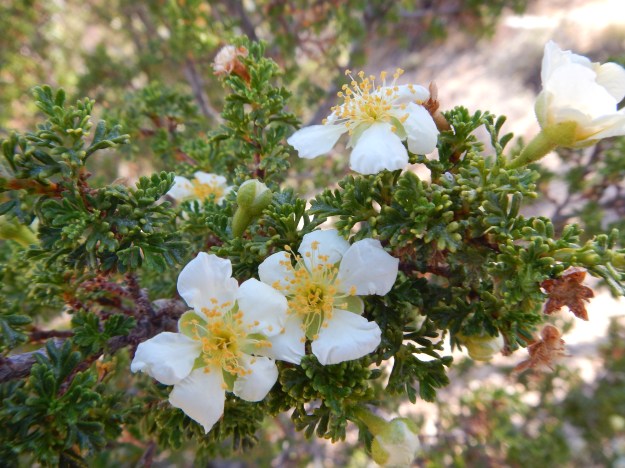
cliffroses North Rim June 7, 2014

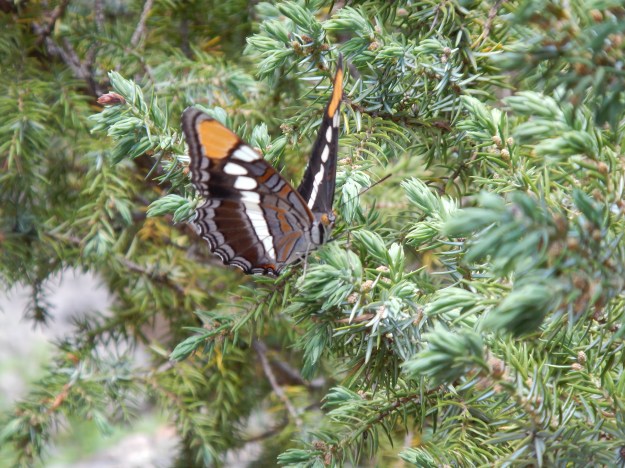
Arizona sister (Adelpha eulalia) Harvey Meadow, North Rim

view of the canyon from near Bright Angel Point, May 2024

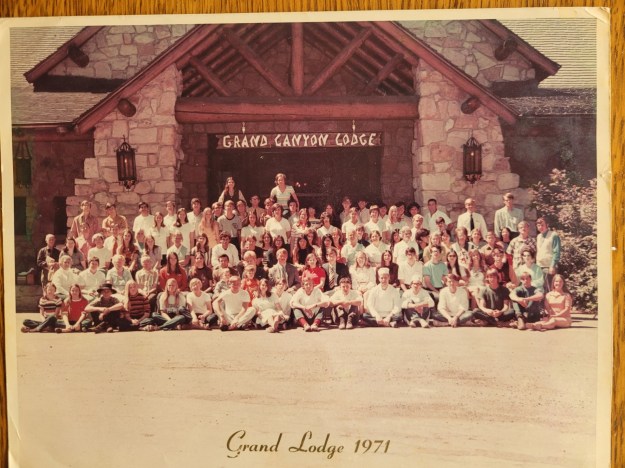
my first summer at North Rim*

our car July 17, 2025

The four classic elements: Fire, earth, air, water. North Rim has them all. Fire now, certainly.  Earth is still there and will regenerate.  Air: I can almost smell that fragrance of ponderosas in  the sunlight at 8,000 feet. Water: I remember the old stone drinking fountain outside the lodge. It was the best water I ever tasted, and this from a water girl from Michigan. Showers at Roaring Springs, the music of Bright Angel Creek, the search for Cheyava Falls on a spring break way back when, and the Colorado River.  Changes now, certainly, but the canyon world survives. Love and peace to my canyon friends.


* I am in the second row on the right wearing sunglasses.

Puzzled, Edgy, and Seeking Comfort

Puzzled For the last several months, I have been working assiduously on a variety of puzzles–even more than I had done previously (as a retired person with too much time on her hands). The New York Times informed me this morning that I have played 663 games of their online Spelling Bee. That’s my favorite game. For a year or so, I  also worked on the Times’ Connections. Now, because the newspaper doesn’t allow each of us to work separately on this puzzle, it’s Tom’s year to play. I enjoyed playing Connections, but I only solved the puzzle about 68% of the time. I also play Strands, which is a simple wordfind puzzle. Simple though the puzzle may be, I often have to use several hints to complete it. About the same time I started working on Connections, I started playing Wordle on NYT. I was never very good at it and had little patience for it. I think I had little patience because I wasn’t very good at it. In addition, I didn’t bond with the format. All these puzzles have led me to think about the way my brain works (or doesn’t work). For over a decade, Tom and I have worked on crossword puzzles. We worked on them when we still subscribed to paper versions of The Washington Post and the The New York Times. When we  were traveling and camping a great deal, we always had our trusty NYT crossword books with us. Now, I usually work on some Post crosswords and help Tom on some of the Times crosswords.

You may have seen those articles about how crosswords (and other puzzles) may (or may not) help old people retain high cognitive functioning. Who knows? So far, though, I am with my friend, Laura, who posits that people who work on puzzles become adept at doing those puzzles. I have recently taken up Sudoku again. More about that below.

Edgy An example of how edgy I have been lately: I was just writing this section of the article, but I felt the need to pause to reply to a political email from one of my score of anti-Trump friends.  I try. I really try to avoid overdosing on the Trumpworld news of the corrupt and the deranged. This far into the regime, I am only so successful at tamping down my anxiety. I am trying to do my part, but I need to do more. I need to do more than make a few calls and write a few emails, go to a couple of marches, surreptitiously place immigrant rights cards in stores and restaurants, and give a little money to the ACLU. I am trying to work harder to help preserve our government, our land, and our people from the would-be autocrats and their orcs.

resist tee shirt

my tee shirt for the gym and protests, circa early 2017

Franklin Park, May 1, 2025, MWashington D.C

Franklin Park, May 1, 2025, Washington D.C.

caricature, Franklin Square protest, May 1, 2025

caricature, Franklin Square protest, May 1, 2025

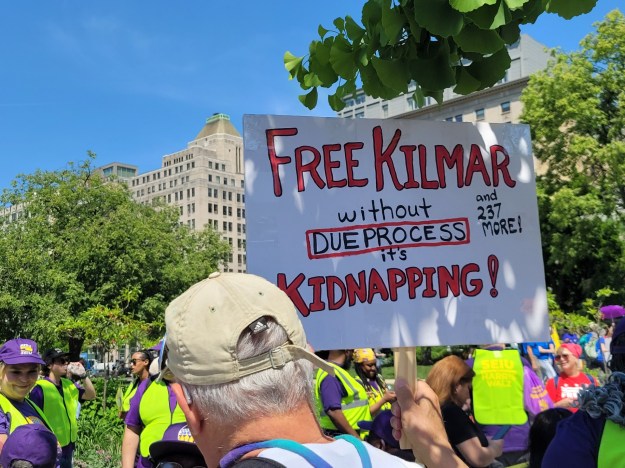
my sign of the times, May 1, 2025

my sign of the times, May 1, 2025

Puzzled and Edgy I am going nuts on the puzzles because they calm me down. Concentrating on becoming a “genius” in Spelling Bee every morning keeps me from reading too many news articles. I took up Sudoku again because, before bed, if I am not working on a crossword, I can fill my mind with nine digits again and again until it is time to sleep. I am puzzled about how day after day, illogical, unconstitutional, unethical, and cruel things happen in this country I love. Most of my life (white and middle class though I am) I have been aware of the many persistent problems facing our nation (e.g., racism, sexism, homophobia, access to healthcare, extreme wealth inequality, environmental issues, climate change, education, and more). In my own small way, I have tried to help work on some of these problems. I saw good (not perfect) things happening in the United States. Now, I am puzzled about how our society has veered into this ugly corner. It seems like we are in a horrible mash-up of the bumper cars and the haunted house in a carnival run by stupid and evil clowns. You can see I am feeling on edge. Lately, I have to keep reminding myself to take deep meditative breaths.

I am Seeking Comfort and I am relieved that I am finding it in many ways.

  • I have been working harder on my high-intensity interval training (HIIT). My 75 year old version of this exercise may be laughable to the younger and more fit, but working out as hard and sweaty as I can, relieves my anxiety and, generally, makes me feel more optimistic for much of a day.
  • I take walks alone, with Tom, with our daughter, Sarah, and with my friend, Donna. I watch and hear the birds. I see the trees. Occasionally, I hug them. I feel more calm when I walk among the trees–whether they  are in large forests (G. Richard Thompson Wildlife Management Area) or in one acre parks in densely urban settings (Hillside Park). I see flowers everywhere this time of year and that makes me happy. I also feel hopeful when I see more and more native plants growing in yards and parks.
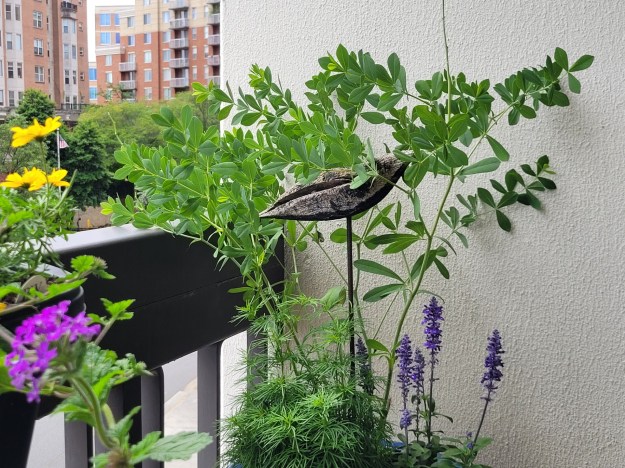
  • Tom and I have filled our balcony with plants in tubs and pots. Our old iron birdbath is our current rock garden. We have put in a small bed of native plants at Sarah and Mike’s house. I spend some happy time there hacking back the English ivy and white mulberries.
  • Tom does most of the cooking and I do most of the cleaning up. Even though I am also a good cook, I like it that way. Cleaning our tiny kitchen gives me more small, repetitive tasks that make me feel efficient and  help keep the zeitgeist at bay. I still find pleasure in making the occasional pie, soup, or loaf of bread.

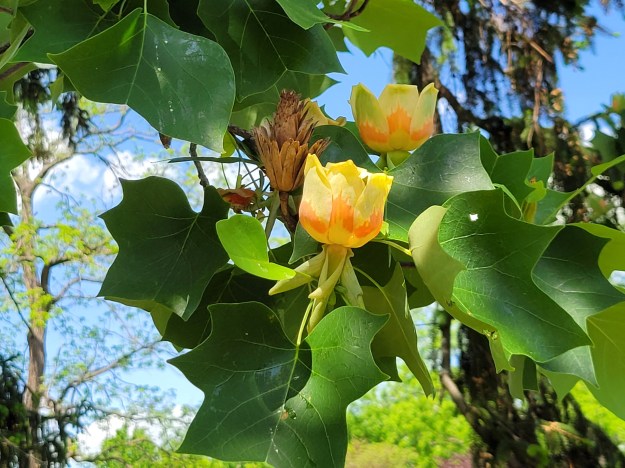
tulip poplar, Ft. C.F. Smith, May 2025

native plants on the balcony, May 26, 2025

rhubarb pie

Bedrock I am lucky to have family (human, avian, and canine) and friends whom I love and who love me. Since I was 17, John Lennon has been telling me, “All you need is love.” I am not sure that is accurate, but it is my mantra now during these difficult times. Please be well.

Listing

Listing Part 1 Since I was very young, I’ve enjoyed making lists in my head, verbally, or on paper. For example, I had a list of all my stuffed animals. I could rattle off their names whenever I felt like it: Woodsy, Foresty, Teddy, Fishy, Plushpuppy, Ginger, Kitty (if there were more animals, I have since forgotten their names). I think that I might have already told you how in high school, I wrote a list of the books I owned.

My penchant for listing does seem at least somewhat acquisitive. My heaps of names, words, and books made me feel a little like Scrooge McDuck immersed in his pile of money (I read my share of comics, too). However, since my freshman year of college, I have also used my lists to organize my life. I would use a day planner to list what tasks I had to do and marked each one off when it was finished. That made me feel like I was accomplishing something, even if it just meant one more day until a visit home. Most importantly making lists has helped me remain engaged in my own life and the world around me. Below are some examples.

About six or seven years ago–before the pandemic–I signed up for the INaturalist app. This app (and the organization behind it) allow me to identify plants and animals and share photographs I take with amateur and professional scientists around my community and the world.

screenshot of my INaturalist list, March 15, 2025

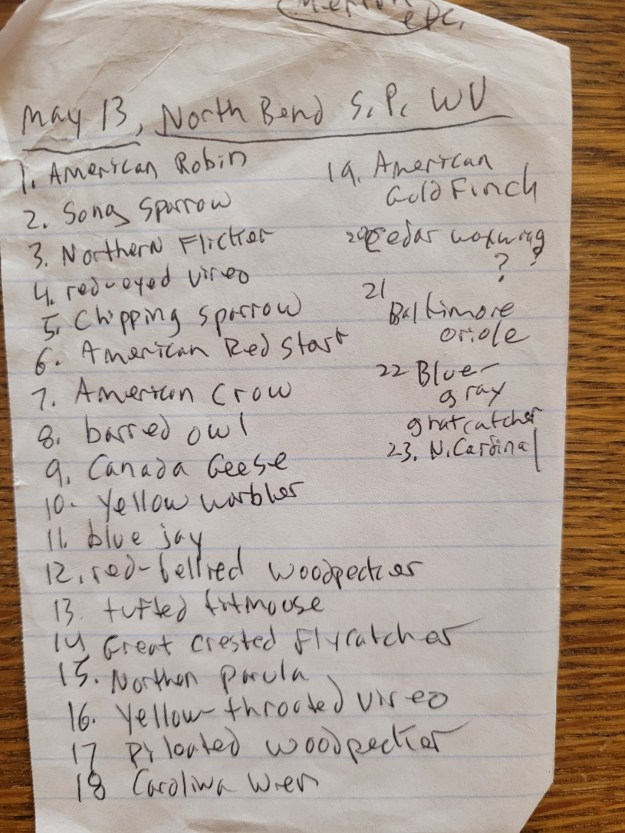
I was so happy with INaturalist that I finally downloaded the Merlin Bird ID app from Cornell Lab of Ornithology. I used this app just two days ago to help me identify the bird calls of eight species I heard on my eleven minute walk home from the library: northern mockingbird, American crow, European starling, American robin, Carolina wren, northern cardinal, house sparrow, and blue jay. In less urban environments, I use Merlin to identify birds I can’t see in the trees and to verify guesses about the birds I do see. Below is my list from the afternoon of May 13, 2024, in North Bend State Park, West Virginia.

North Bend State Park, West Virginia, May 13, 2024

Following in the footsteps of my brother Dan, I have again started writing a list of the books I’ve read.  Dan’s list (I have a copy of his list tucked away somewhere) featured academic literature. Mine is my usual hodgepodge, but I like it.

book list circa 2024-2025

Through the last 14 years, I have used my day book to note trips to gardens, museums, forests, parks, visits with family and friends, road trips, and the like. Since the beginning of this year, I have also used my day book to list each day’s activities more granularly. My daily list has changed. Now, along with lunch or dinner with friends and family or going to the Smithsonian or working at Hillside Park, I also list going to the store or to the the recycling bin in the next block or to the downstairs gym or that I made muffins. I am focusing on daily tasks. One task listed is, “breathe.” Not, breathe in and out 24 hours a day; I mean meditative breathing to keep myself moderately calm(ish). Our country is in turmoil. I need to stay calm enough to empathize with others and to remain active, helpful, and hopeful. Today I sent ten postcards to Donald J. Trump expressing my views on social, political, and governmental issues. I also responded to a text from one of my senators. Some days I contact people in Congress, join in town hall meetings, sign petitions, or donate tiny bits of money to the ACLU. These things are also on my list. I haven’t gone to a march yet, but I think I will soon. So my lists have changed a bit, but they still help me keep engaged in my own life and in that of my country.

Listing Part 2 A ship can be said to be listing when it tilts to the port (left) side or the starboard (right) side. Our ship of state is listing dangerously to the right. I do not want it to founder on the jagged rocks of racism, sexism, homophobia, greed, ignorance, or cruelty. I will to do my part.

Note:Democracy” is on my long list of favorite Leonard Cohen songs. Please be well.

In the Bleak Midwinter

Last Friday, January 31, 2025, it rained most of the day. In the late morning, I walked over to my friend Donna’s place. We’ve needed the rain and, as a gardener, I especially enjoyed my rainy walk. As always, I had a good time at Donna’s home. We talked about many things: our families, books, our aches and pains, the political situation, and Donna read a poem.  She made a good loaf of bread, which we enjoyed with butter, jam, and tea.

In the  mid-afternoon, I went home to prepare for dinner guests. Our daughter and son-in-law (Sarah and Mike) and their dogs (Connor and Susie) were coming over. Tom and I enjoy getting ready for these guys, because we always have a pleasant and mellow time.

Two Things Happened I think I might have been setting the table. In the late afternoon, I happened to look out our big balcony window. Somehow, I didn’t have the good rainy day feeling I had had earlier, I saw dark menacing clouds–crazy dark and menacing–and almost palpable. I felt like I was in Minas Tirith gazing eastward as the shadows of Mordor advanced.* I don’t think I am exaggerating. I wanted to write to some of my fellow The Lord Of the Rings aficionados to share my experience, but it felt too acute and sad to share except with Tom. A little while later we were fixing dinner and we heard a loud crash. For no reason that we could see, the Ben Shahn dove print that our friend Laura gave us about 50 years ago had spontaneously fallen off the wall.

Shadows of Mordor and the peace dove falling down: We need the free peoples of this earth of ours to come together to fight the scourge we are facing at the hands of the current U.S. president and his coterie. I want to be as cheerful and brave as a hobbit. I am not cheerful or brave, but I am trying.

Note: The dove sustained no injuries. We will find a stronger fastening and put her up again.

How the Birds Fly by Ben Shahn


*I first read The Lord of the Rings when I was a 17 year old college freshman. I guess I have read the trilogy at least six or seven times–twice (with Tom) aloud to our children. You can read about Minas Tirith, bravery, good, and evil in Book Five of LOTR, which is in The Return of the King (book three of the trilogy).

December 2024: Melancholy, Memories, and Marcescence

Melancholy

I debated about even using the word “melancholy.” It’s a good word, but it might exaggerate my actual emotional state. Still, the word is mostly accurate for me on this cold bright Winter Solstice.* Ever since my parents died decades ago, I have had a complicated relationship with Christmas (see Humbug, Maybe from December 2012). I remain agnostic about many things in this life. However, I still love holiday festivities with my family and my friends. Through the holiday season, I continue to listen hour after hour to Christmas music (the carols of The Boston Camerata are some of my particular favorites). I remember being a small child singing carols in my bedroom in Detroit. Even then, I thought about the great promise of the words, “peace on earth, goodwill to men.” I still believe, or hope these words even now, although I would change “men” to “all.”

My three quarters of a century’s worth of years are weighing on me somewhat now. This seems especially true because two work friends died this year and family and friends are facing health issues. Another thing: I dread the coming of the next Trump regime. As one of my loved ones has said, “It’s going to be a sh**storm.” It looks to me like the storm is already here and Inauguration Day is still almost a month away. On January 20, 2025, I plan on remembering the words and actions of Dr. Martin Luther King, Jr. and, weather permitting, joining in the National Day of Service by clearing out invasive plants at Hillside Park. I am a proponent of freedom of speech, diversity, equity, and inclusion–also, and perhaps more fundamentally, of civility and kindness. This does not mean I am always civil and kind: these are my goals. I am downcast by the ugliness and hatred I see and hear announced from so many quarters. Now, sometimes, I find it a little harder to get out of bed in the morning. Sometimes, I feel the tears behind my eyes. Sometimes, I feel as old as I now look. However, my dear ones (my husband, my family, and my friends) and I are of a like mind. We will hope and not despair and work together to save ourselves and our country.

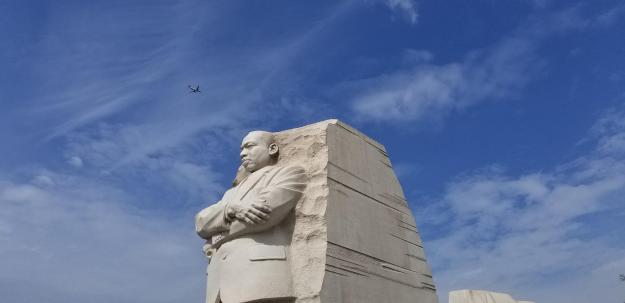
Martin Luther King, Jr. Memorial

Martin Luther King, Jr. Memorial, Washington, D.C.

Memories

Now that I have started thinking of winters and Christmases past, the wisps of melancholy around me are disappearing. Disappearing in a mental jumble of snow, sleds, skates, pralines, gingerbread, trees, and light. Below are Just a few  of the memories crowding my mind:

  • Christmas at my Grandma Jose’s with all the cousins back when we all lived in Detroit. I loved her little round Christmas tree with all the lights.
  • Snow in the winter–every winter–with all the wet gloves, boots, and pants dripping in the tub
  • Heading down the Pennsylvania Turnpike during a snowstorm for Dan and Jeanne’s wedding
  • Finishing college exams, exhausted, but heading home for rest and comfort
  • Back in Page, Arizona, every classroom had a Christmas tree from the Kaibab National Forest
  • Making gingerbread people with Laura in Salt Lake City; Laura’s were stylish, mine were barely hominid
  • Sewing Christmas clothes and toys for our children (even though I couldn’t sew)
  • Making our own holiday traditions with our children: chile verde, spring rolls, or pupusas for Christmas!

So many good memories, I think it will take me days to revisit them all in my head.  That’s one of the good things about having so many years under my belt now.

Kaibab ponderosas

Kaibab ponderosas–our classroom trees were not so large

Marcescence

Last year I learned a new word to describe a natural phenomenon I have noticed throughout my life. The word is marcescence. This phenomenon is when some deciduous trees (such as oaks and beeches) retain some leaves on their branches into the winter and early spring. Note: For more information about this, see “Marcescence and the Legend of the Evergreens” by Alonso Abugattas.

marcescent leaves, Theodore Roosevelt Island, January 2022

Thinking of winter leaves takes me back to more happy winter scenes: Michigan winters with lots of oak leaves hanging on amid the snow and Theodore Roosevelt Island, my refuge during the pandemic, when we all tried to hang on. I believe the leaves below are from a tiny beech tree on the island that I love (and have photographed several times).

I am trying to be like this marcescent beech. I am holding on for spring and for better times.

Happy Holidays!

marcescent beech leaves, Theodore Roosevelt Island, February 2021


* Yet again I missed my self-imposed deadline, Now, one day after the Winter Solstice, we are turning toward the light.

November 2024

Preparations A few hours ago, I separated a pot of anthuriums and made two pots. Yesterday, I picked my remaining little red Thai peppers. I dehydrated them in the oven and now they are ready for spicy winter meals. I also separated my chives into three pots. It’s high time as they have been pot-bound for a year or two. I love chives because, while keeping a low profile and causing no problems, they produce healthy bits of green for salads and soups throughout the year. A week or so ago, I repotted my bay plant and brought it inside for the winter. I am not sure whether or not I will bring the rosemary in for the winter. Our weather forecast is for another warm winter. Besides, through the years, I haven’t noticed that my rosemary plants have enjoyed being inside. Thyme, Italian oregano, and mint are happy where they are, whatever weather comes.

anthurium

Yesterday, when Tom and I went to the grocery store, I stocked up a bit.  A few more rolls of toilet paper and paper towels and an extra jar of peanut butter, nothing much. Later on at the drugstore, I picked up vitamins on the the “buy one, get another at 50% off” deal and, as is my habit, I snagged two bags of Starbucks French roast coffee on sale. I received our allotment of free Covid tests several weeks ago. I ordered a new pair of jogging shoes (I mostly walk) that should arrive tomorrow. I also have cleaned two drawers and my closet is next on the list.

I am preparing. I always enjoy preparing for the dark months of winter.  I sometimes wonder if this strong need is in my DNA from my German and Scottish ancestors. This year is different, though, I think my preparations help keep me from worrying too much about next week’s election.

More preparations for the election:

  • I voted at the Ellen M. Bozman Government Center on September 23, 2024.
  • I recently paid my yearly dues for Common Cause and ACLU.
  • I sent five small donations to the Democratic Party.
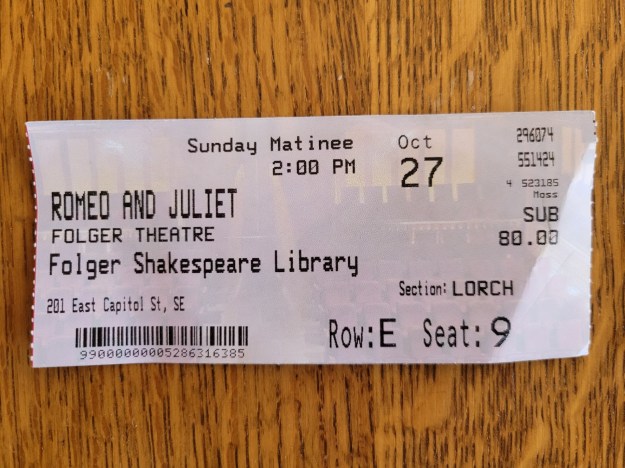
  • With my friend Donna, I saw a timely production of Romeo and Juliet at the Folger Theatre.
  • With Tom and other volunteers, I planted native trees at the Allie S. Freed Park in Arlington, Virginia.
  • In the last few weeks, Tom and I have visited the National Gallery, the Hirshhorn Museum, the National Museum of the American Indian, and several Smithsonian gardens.
  • In October, I flew to Salt Lake City to talk with dear friends again (See Roads).
  • I keep reading, most recently Camino Ghosts by John Grisham and Nature’s Temples: A Natural History of Old-Growth Forests by Joan Maloof.
  • I walk in the beautiful fall.

Romeo and Juliet, Folger Theatre

asters, Red Butte Garden and Arboretum Salt Lake City, Utah

Camino Ghosts, Nature's Temple

Camino Ghosts and Nature’s Temple

When I was walking in the neighborhood yesterday, instead of Yeats or Wordsworth or Shakespeare, in my  head, I heard the words from Small Faces from “Itchycoo Park“: “It’s all too beautiful.” I am a child of my generation. What I really think, though, is that it is all so beautiful. Troubled and complicated as it is, I don’t want our American democracy to end at the hands of a racist, sexist, narcissistic fascist and his collaborators.  November 5, 2024 is Election Day and also my 75th birthday. I have been pretty lucky in this life so far; I am hoping the luck of our country holds firm and strong on Tuesday.

Some photos that make me feel calmer and more hopeful before Election Day:

black walnut, Ft. C.F. Smith, Arlington, Virginia

upper path, Theodore Roosevelt Island

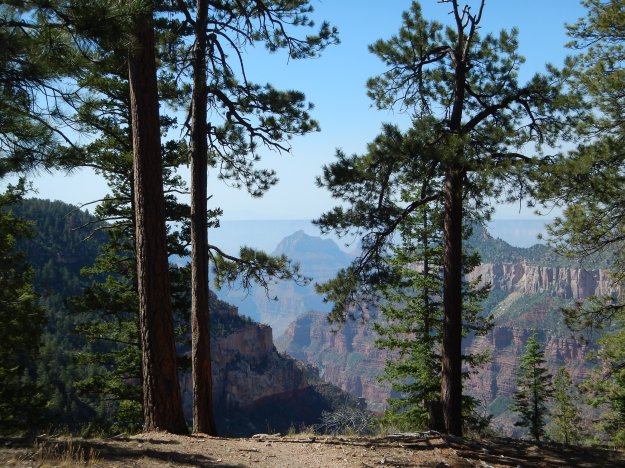
Widforss Trail, North Rim, Grand Canyon

Sleeping Bear National Lakeshore

Shenandoah National Park

pearl crescent on white snakeroot

Bear Lake State Park, Idaho

Bear Lake State Park, Idaho

The Needles, Canyonlands National Park

The Needles, Canyonlands National Park

Lake Superior

Union Bay, Lake Superior


Book Talk, Part 3

Arlington, Virginia, September 2024

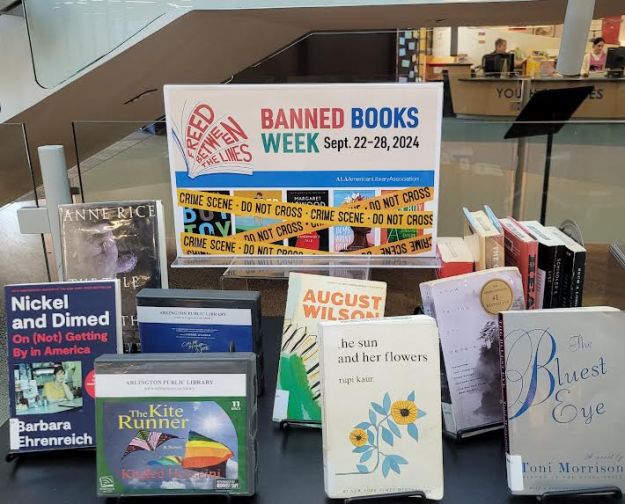
While I was brushing my teeth yesterday morning and (simultaneously) giving myself a pep talk about finishing this article, a book title came to mind: Ursula Hegi’s Stones from the River. I read this in a book club over twenty years ago. This novel has a habit of surfacing in my mind every so often. That may be because of the increasingly unruly (or is it savage?) time we live in. What always comes up for me is Hegi’s description of how the twin infections of fascism and antisemitism slowly crept step by step into the neighborhood, town, and country. Hegi shows the steps. We now can see the steps in our country and this book banning mania is one step.  As I mentioned in an earlier post, that does not mean I think everyone should read every book. What I mean is that no single entity (e.g., local school board, do-gooder/know-it-all organization, etc.) gets to adjudicate for everyone else what they are allowed to read. Or, as I used to tell my children: de gustibus non est disputandum.

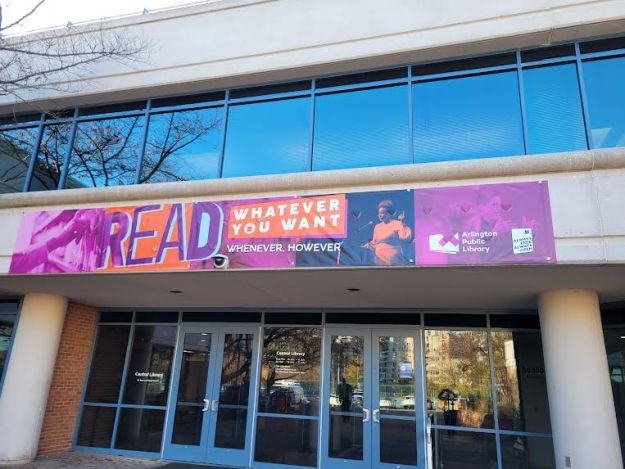
I feel lucky to live in Arlington County, Virginia where our Arlington Public Library supports our community–from story hours, used book sales, and providing access to free income tax help to free concerts, hosting distinguished authors (like Art Spiegelman, Jacqueline Woodson, and Jesmyn Ward), and being an official “book sanctuary.

Now, I need to leave the comfort of my liberal bastion (see above) and go back once again to a different time and place: Page, Arizona, 1972-1973. I have written on this blog about Page before. One might reasonably think that, by now, I would have dissected this single year of my life until it is nothing but a pile of desert-bleached bones. Not so. It’s crazy, but after all my years of remembering my experiences in Page (many pleasant and all instructive), I have just recently come to a clearer understanding. As you will see from my account below, I fell into the clutches of a system that believed that I was an unsuccessful teacher because I didn’t follow the school’s rules of what I was supposed to teach. Even though I quickly realized that I was a good teacher (even in Page), I see I have some niggling trauma about my apparent failure (in the eyes of the system). I hope finishing this article may let those bones finally rest.

Banned Books Week, Arlington Central Library, September 2024

Read Whatever You Want Banner Arlington Central Library

Page, Arizona 1972-1973*

I taught eighth grade literature for one year (1972-73) in Page, Arizona. Following in the footsteps of my Milford teachers, I tried, inexpertly, to connect with the students and their lives. On a certain level, I did not prosper there. The authorities almost ran me out of town on a rail (not exactly, but they didn’t want me back). In other ways, maybe it was okay for both the students and for me.

One of my ideas was to augment the bland class textbook with a pile of books the kids might actually want to read. This is not a novel (haha) idea, but there were some complications. Although I was supposedly teaching literature, some students could not read well at all and many others were not up to what I thought was “eighth grade” reading level. Some students were (what we now call) English language learners: Navajo, Hopi, and Apache. Some were children of the construction workers who had come into town to build the Navajo Generating Station.  Still others were the local Anglo kids whose parents worked at the Glen Canyon Dam, for the National Park Service, other Federal agencies, for the state, and in other, mostly white-collar, jobs. So, some kids could read nothing much and some were The Lord of the Rings aficionados along with me. My school-owned lodging cost next to nothing, so, with my schoolteacher salary, I was comparatively flush. I went to Babbitt’s (the main store in town back then) and bought paperback books such as The Green Grass of Wyoming, Wild Animals I Have Known and the High Adventure of Eric Ryback and some kind of age-appropriate book on sex. At some point, I also sent away for forty copies of Johnny Tremain, a particular favorite from my own childhood.

While we all slogged through the class text, lots of kids [and there were lots of kids– about thirty in each of my five (or was it six?) classes] read the paperbacks in the back of the room. I remember two sisters. They were barrel-racing, horse crazy girls who seemed to like The Green Grass of Wyoming as much as I did. They gave me a desert tortoise that lived and died in the closet of the barracks-like apartment I shared with a strait-laced school librarian.

I digress, but this is the most important part about the books at the back of the room I was shocked when I found that the only kind of books the school library had about Native Americans was schlock like Little Feather Draws a Bow (I made up this title because I can’t remember the actual titles).  So, I put my anthropology and other books about Native Americans on the shelf at the back of the room. Some of those books disappeared and that was a good thing. I hope they were of use to the children and their families.

Somewhere, I acquired Forgotten Pages of American Literature. (Gerald W. Haslam. 1970. Boston: Houghton Mifflin). This book was an anthology of Native American, African American, Asian American, and Latin American literature. The book’s dedication, in memory of Dr. Martin Luther King, Jr., quotes the dream:

I have a dream that my four little children will one day live in a nation where they will not be judged by the color of their skin, but the content of their character.

I was so earnest back then and I loved these lines. Besides the bookshelf at that the back of the room and the poetry or song lyrics I would write on the board each day, I also tried to inject some more varied readings and ideas into class. I think (but am not sure) it was the Haslam book and some others (one of African American poetry, I think) that I wanted to use to give the students something more filling than wonder bread.

You would have thought that I would have been smarter than having one of the teacher’s aides copy the pages from my books for the kids. It turns out that some of these books had cuss words or some other “objectionable” text in them. The aide, a good church woman (although without the guts to confront me about my transgressions) ratted me out to the principal.

Let me confess here another text that also got me in trouble. I had the temerity (or congenital naiveté) to teach Shirley Jackson’s “The Lottery” to thirteen- and fourteen-year old students. With that story, we probably had the best class discussions of the whole year. However, I was hauled out in the middle of class one day and had my ears pinned back for presenting such inappropriate material. Never mind that I had first read that short story in sixth grade back in my little town of Milford. When I presented that defense, the principal schooled me, I guess, in the differences between Page and what he imagined was my sophisticated eastern school. (Milford, MI?) He did not fire me on the spot for my transgressions, but said I would not be teaching again in the fall. Note: It turned out okay as I received a teaching fellowship at the University of Utah for the next year.

Bottom-line: The ethnocentrism was palpable in that school in Page. Not just addled teens, but experienced teachers talked about dirty Indians and about which indigenous groups were smarter or better than others. I hated that, and I hope things have changed.  I do remember, though, at our class party T____, the pretty Anglo cowgirl slow-danced with E___, the handsome and very funny Navajo boy. MLK, this dance is for you.

Forgotten Pages of American Literature


Conclusion

I find myself at the end of this third “Book Talk” with no great pronouncements about the socio-political intricacies of banning books. I do remain angry about people and entities egregiously  telling others what they should read, or think, or believe. I am no anarchist: I believe in formal and non-formal institutions and appropriate, reality-based authority/ies under the guarantees of the The Bill of Rights. I love children, schools, books, and libraries–museums, too, for that matter. I want children–in sensitive, age- and culturally-appropriate ways–to learn. That means learning all sorts of things: the multiplication tables, the carbon cycle, how to swim, and the factual history of our country, world, and the universe. Especially, I want children, and all of us, to learn about how we can all be different–age, gender, ethnicity, abilities, interests, everything–and that that is the good way for our society to be.

You see, I am still naive, idealistic, and hopeful, even now.

Tom just texted that he is picking up the new Kwame Alexander book for me. I can hardly wait.

Happy autumn and please vote.


*adapted from Losing It: Deconstructing a Life, unpublished work © Lynda Terrill, all rights reserved

Book Talk, Part 2

First Things First Before I address more of that distant past rattling in my brain, I want to write about four books I’ve read since Tom and I returned from our road trip in early June. Three of these books, and tangentially, the fourth, fit in with my general topics of book banning and individual rights. In the order I read them, the books are: The Bassett Women, by Grace McClure; This America of Ours: Bernard and Avis DeVoto and the Forgotten Fight to Save the Wild by Nate Schweber;  The Heaven & Earth Grocery Store by James McBride; and The Door of No Return by Kwame Alexander.

four books

Note: I wrote the above paragraph over a week ago and then I lost my train of thought. In part that was just my usual mix of avoidance, inertia, and letting ideas percolate slowly through my mind. Also, though, we had our parrot friend Phoenix visiting last week, we’ve had friends over for dinners, I’ve worked in the native plant nursery and weeding invasive plants in Hillside Park, I’ve done my high intensity interval trainings, I’ve read too many political articles, and we’ve had–just when I thought a mild and lovely September here was a fading dream–it appeared.  I am making myself sit here at the computer until Tom makes dinner. After I straighten up the kitchen, I am out the door before it  gets dark. I will be back at the desk tomorrow morning, hoping my thoughts and words are ready.

Phoenix (photo by William Terrill)

Huron sachem butterfly in the condo garden

I’m Back and now I need to understand why I wanted to tell you about these books. I have been thinking about each of these four books, but how do I pull them together with a conclusion about the interplay between control and freedom? I think going back to the texts will help me understand.

The Bassett Women (copyright 1985 ) In May I bought this book at the Quarry Visitor Center in Dinosaur National Monument. Since early childhood I have loved books about nature and history and I have gravitated toward reading about indigenous peoples, the immigrants who came to this country, and the enslaved people who were brought here unwillingly. When I first visited the American West in 1970, I was beguiled by all the stories I heard, and that has not changed. These last three decades, I have also especially sought out memoirs and accounts of  women in the West. When I say, “sought out,” I mean sought out in a desultory fashion. I am no scholar here; just a quirky reader. When I came home from the West this June, I read The Bassett Women right away. I enjoyed reading this history of Ann and Josie Bassett and other pioneers, ranchers, and outlaws (such as Butch Cassidy) in Brown’s Park in Northwestern Colorado. However, the composition teacher/editor in me didn’t think the writing was as clear as I wished, nor was the historical account as fastidious as it should have been. Still, the book will find a place on my bookshelf and I will continue to think about the women and men trying to survive in a challenging, if beautiful, environment.*

bookshelf

This America of Ours: Bernard and Avis DeVoto and the Forgotten Fight to Save the Wild (copyright 2022). I am searching for modifiers to describe how much I like this excellent book. I am almost giddy. When I am reading a nonfiction book, I like an index, a substantial bibliography, and many footnotes. This America of Ours has 33 pages (small font) of footnotes! In this book I read that historian and writer Bernard DeVoto was born in Ogden, Utah; Tom lived in Ogden when he was young. Bernard fell in love and married Avis from Michigan; I’m from Michigan. Bernard and Avis loved road trips through the West just as Tom and I do. Avis and Julia Child became close friends–bonding, at least partly, through food. Tom and I have loved cooking recipes from Julia Child’s cookbooks. More seriously, Bernard and Avis cared about preserving the land, the people, and the overall environment of the American West. This meant speaking up for forest rangers, small ranchers, and others who cared about the land. This meant speaking up against backroom political deals, and the anti-Constitution, anti-egalitarian, anti-immigrant schemes of Senator Pat McCarran (Nevada) and Senator Joe McCarthy (Wisconsin) who were in league with FBI Director J. Edgar Hoover. I need to stop myself from going on too much longer–just two more things. Author Nate Schweber follows the trail of attorney Roy Cohn from his early years working with the nefarious McCarran and McCarthy and identifies links to his protege, Donald J. Trump. On a happier note: I learned there is a DeVoto Memorial Cedar Grove off U.S. Highway 12 near Lolo Pass in eastern Idaho. Turns out, Tom and I have driven this road twice, the first time in 2015 and then again in 2018. Along this road in the Nez Perce–Clearwater National Forest we found the rivers, the forests, the rocks, and the sky moving and beautiful beyond words. We didn’t know about this memorial of ancient western red cedars. If Tom and I ever find ourselves on another western road trip, we won’t miss it again.

The Heaven & Earth Grocery Store (copyright 2023) I had read James McBride’s The Good Lord Bird a few years ago. I liked it and continued to think about it since. A month or so ago, when I saw The Heaven & Earth Grocery Store on display at a local bookstore, I wanted to read it. I say this as a person who tries to limit my reading of beautiful but difficult books–I can only take so much pain and brilliance. I was happy I took this chance. I’ve never been to Pottstown, Pennsylvania, but all my life I have traveled through Pennsylvania. Some of my earliest travel memories are of queasiness on the mountains and in the valleys of the Pennsylvania Turnpike. Tom and I have traveled through fog on steep and twisty back roads through damp forests in Pennsylvania. Now, I want to find the fictional Pottstown of McBride’s world in The Heaven & Earth Grocery Store. I want to go to Chicken Hill and see Malachi, “The Greatest Dancer in the World” and, perhaps, a magician. I want to see the kindness of Moshe and Chona. I want to feel the strength and uprightness of Nate and Addie, Paper, Miggy, and so many others. I want to hang out with Fatty and Big Soap. This book–full of the Depression, antisemitism, racism, sexism, poverty, and abuse–was an exhilarating read and it gives me hope for the country and the world. The book is also full of music, humor, hijinks, mystery, and love. I agree with the New York Times review by Danez Smith that, “The book is a murder mystery locked inside a Great American Novel.” If you like to read novels and are not afraid of pain and brilliance, this book may be for you.

The Door of No Return (copyright 2022) About two weeks ago, needing to calm down after finishing The Heaven & Earth Grocery Store, I made a beeline for the middle grades** shelf of the Friends of the Library store at Central Library, Arlington Public Library, three blocks from my home.  I read many middle grade books. I do that because many are very well written, because middle grade books are usually good for a couple of sittings, and because, even when things are tough for the characters, some optimism pokes through. On the library shelf I found The Door of No Return. I  read this 398 page book in several sittings, but it didn’t calm me down. This  brave book in verse tells the story of Kofi an eleven-year-old Asante boy in 1860 (in what is now Ghana). The verse structure brings an immediacy to the narrative and, complex and gripping as the plot is, I  think it is  generally accessible to middle grade readers and old women alike. I just found out a sequel, Black Star, will be available by the end of this month. I am going to get on the library waiting list for it.

Conclusion I took you wandering with me through these books because I couldn’t let them go–even if they took me off the straight(er) and more narrow path of my exposition of book banning and individual freedoms. That’s how it is for me with words (and music and nature). There are however, some resonances between these four books and my overall concerns with books and an open and egalitarian society.


*Long before the Bassett family arrived in Brown’s Park there is the underlying history of the indigenous peoples who originally lived there. More on this topic in Book Talk, Part 3, forthcoming.

** Middle grades books are often considered to be for 8- to 12-year old readers. As far as I can tell, though, this designation is somewhat flexible. The majority of the Newbery Medal and Newbery Honor books are within in this category. So far, I have read approximately 145 Newbery winners.