Category Archives: Places

Detour

Our current road trip will end tomorrow as Tom and I head back to Charlottesville. Spring awaits with its cleaning, taxes, and, best of all, the garden.

daffodils

daffodils

What a strange (but not too long) a trip it’s been: squealing differential in Florida, airborne tent in Texas, hankering to be one with the earth everywhere, while still craving that internet political fix.

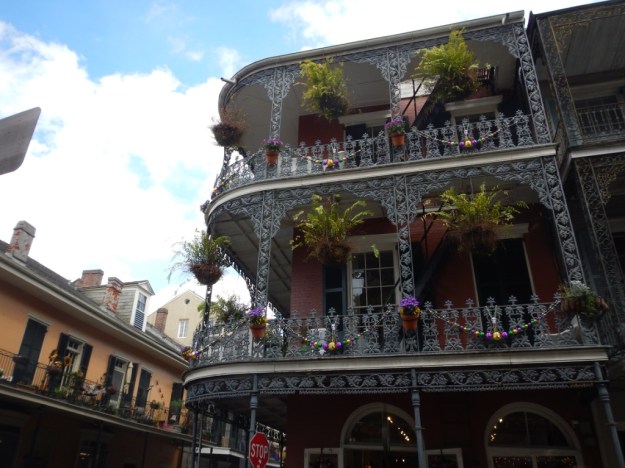
Today, I am taking a detour to New Orleans. Tom didn’t quite take me to the Mardi Gras (it’s on February 28 this year), but close enough for a woman who doesn’t smoke, mostly doesn’t drink, and who surely can’t dance (except maybe to Motown).

almost Mardi Gras

almost Mardi Gras

I love New Orleans. Maybe it started with my mom’s New Orleans pralines.  Or, maybe it was Paul Simon’s, “Take Me to the Mardi Gras“:

Come on, take me to the Mardi Gras
Where the people sing and play
Where the dancing is elite
And there’s music in the street
Both night and day

Hurry, take me to the Mardi Gras
In the city of my dreams
You can legalize your lows
You can wear your summer clothes
In the New Orleans

And I will lay my burden down
Rest my head upon that shore
And when I wear that starry crown
I won’t be wanting anymore

Take your burdens to the Mardi Gras
Let the music wash your soul
You can mingle in the street
You can jingle to the beat
Of Jelly Roll

© 1973 Words and Music by Paul Simon

I loved the food. People were singing and playing. There was music in the street.

Cafe Du Monde

Cafe Du Monde

shrimp po boy, Cafe Fleur De Lis, French Quarter

shrimp po boy, Cafe Fleur De Lis, French Quarter

music, Jackson Square

music, Jackson Square

music in the street

music in the street

I let the music wash my soul and I mingled in the street. I worked on laying some of my burden down.

I remembered what I thought the first time I went–alone–to New Orleans about 14 years ago. As I wandered through the French Quarter, I thought: I know who I am throwing in my lot with. I am with the people who sing, dance, eat real food, and maybe smoke and drink and whatever, but just trying to get by with a little grace, style, and humor. I do not stand with those who think there is only one way and who denigrate those who choose a different path. That sounds like fascism to me.  I can’t explain myself well on this topic, but, lucky for me, Robin and Linda Williams have some words that work for me in Going, Going Gone:

When I pass a church house door I breathe a prayer one time more
I don’t know that I belong, but I still sing love’s
sweet old songs
If I’m not among the blessed, then I’ll be like all the rest
Getting by day to day moving down the lost highway
Going, Going, Going Gone
                                   by Robin and Linda Williams, Jerome Clark 2008
live oak (Quercus virginia)

live oak (Quercus virginia)

Facts and Photos

A seldom recalled fact (except by me) is that for three years in mid-1960s, I wrote the column “Milford High School News” for The Milford Times in Milford, Michigan. Through my teen years, I also wrote articles for other junior and senior high school publications. I mention this here because the title of this post reminds me of high school verbiage: you know, “Roses and Cabbages” or something.  If I remember my columns accurately, I used plenty of passive voice, such as, ” the French Club had their spring dinner and a good time was had by all.”  I want now to write about the  hikes Tom and I have taken, the clear skies north of Sierra Vista, the kangaroo rat that jumped into our camper shell on a dark night, the Arizona sycamores, and much more.

However, I haven’t been able to clear my mind  sufficiently to write because, when I have access to the internet, I keep taking looks at my Facebook feed, The New York Times, and The Washington Post, and then I fret instead of write. We have so many problems: the attempted Muslim ban, the environment, the judiciary, the wall, women’s rights, and deranged tweets about Saturday Night Live, for god’s sake. I need to focus on what I know: There is truth and there is beauty (AKA facts and photos) and I am striving to hold onto both.

Facts I learned

  • It is generally agreed that there are four distinct desert regions in North America: Chihuahuan, Sonoran, Mojave, and Great Basin. Arizona claims to be the only state that  contains parts of all four deserts (for more information, see the article from The Arizona-Sonora Desert Museum).
  • “By the time Big Bend National Park was established in 1944, there were virtually no resident bears in the Big Bend area.” However, in recent decades black bears have returned and there are approximately 8 to 12 adult bears living in the park now. (for more information, see Black Bears in Big Bend).
  • “The San Pedro River [near Sierra Vista, Arizona] is one of the last free flowing rivers in the Southwest. In 1995, the American Bird Conservancy recognized the San Pedro as its first ‘globally important bird area’ in the the United States, dubbing it the ‘largest and best example of riparian woodland remaining’ in the Southwest–from a brochure of the San Pedro Riparian National Conservation Area.”
  • The Arizona sycamore (Platanus wrightii)  grows in the Sonoran desert “in riparian washes and canyon bottoms between 2,000 and 6,000 feet in elevation in Arizona, New Mexico and northwestern old Mexico” (see Arizona State University online publication for more information).

Photos I took

Arizona sycamore (Platanus wrightii), Ramsey Canyon Preserve

Arizona sycamore (Platanus wrightii), Ramsey Canyon Preserve

American kestrel (Falco sparverius), Arizona-Sonora Desert Museum

American kestrel (Falco sparverius), Arizona-Sonora Desert Museum

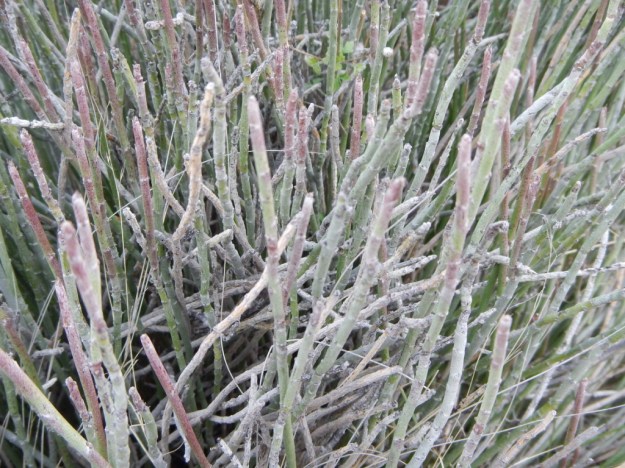
Tom among the sacaton, San Pedro Riparian National Conservation Area

Tom among the sacaton ( Sporobolus airoides), San Pedro Riparian National Conservation Area

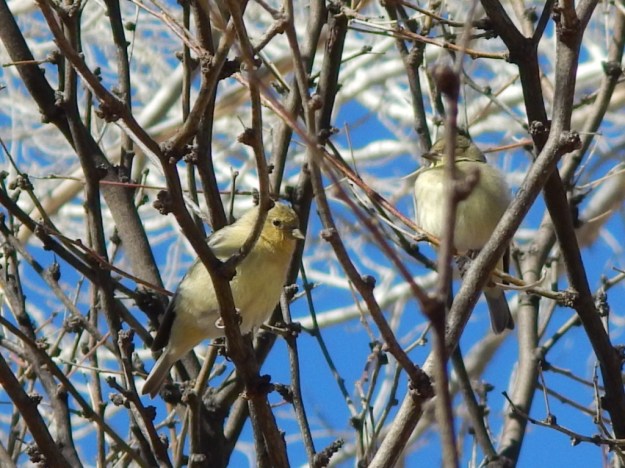
birds (I don't know their names), San Pedro Riparian National Conservation Area

birds (I don’t know their names), San Pedro Riparian National Conservation Area

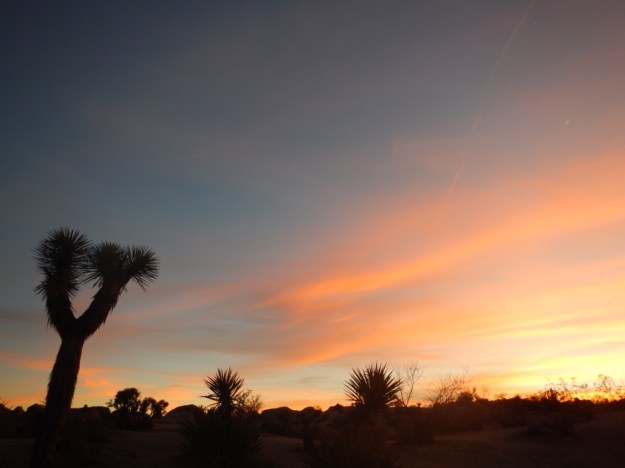
sunset, Joshua Tree National Park

sunset, Joshua Tree National Park

Observation

I see turmoil, anger, confusion, and sadness in our public life now. I saw a great deal of scat on the desert trails where Tom and I walked.  I am an organic gardener, so I know that scat and other organic debris enriches the soil so beautiful plants can grow. I am going with that: We have scat now, but beautiful flowers will bloom, I do believe.

scat, Murray Springs Clovis Site, Arizona

scat, Murray Springs Clovis Site, Arizona

brittlebush (Encelia farinosa), Arizona-Sonora Desert Museum

brittlebush (Encelia farinosa), Arizona-Sonora Desert Museum


Big Bend National Park

Sierra Vista, Arizona

Last week my husband and I spent four nights camping in Big Bend National Park in Southwest Texas. The days and nights were so windy in the Chisos Basin Campground that, when we were away from our campsite, our brand new tent ripped and became airborne until some kindly neighbors caught it and secured it with our camp chairs and several rocks.

our tent, Chisos Basin Campground, not yet airborne

our tent, Chisos Basin Campground, not yet airborne

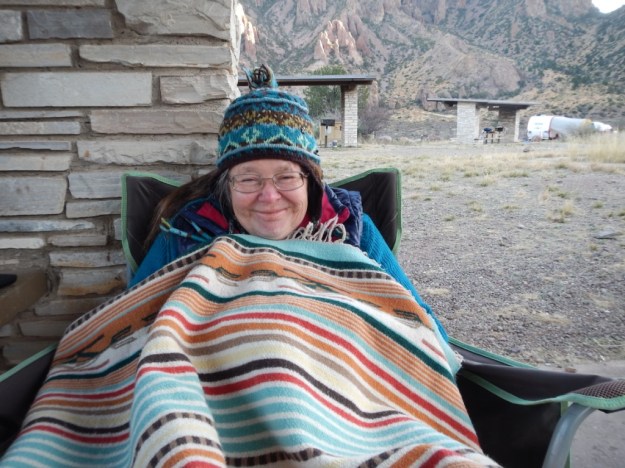
It was also cold. Note to daughter: Both day and night, I wore  up to five layers on the top–including my fancy Patagonia long underwear–and I was still cold!

keeping warm in Chisos Basin

keeping warm in Chisos Basin

Mostly, we didn’t hear the news. The wind and the cold cleansed us.  The rocks and the sky were grand, as always.  The desert and mountain plants and animals helped us focus on being close to the ground. We had to walk carefully on the rocks and gravel. (See Geology of Big Bend National Park for more information.) We had to bend close to inspect the plants, bark, and rocks. I took photographs to help us remember what we saw.

candelilla (Euphorbia antisyphitica)

candelilla (Euphorbia antisyphitica)

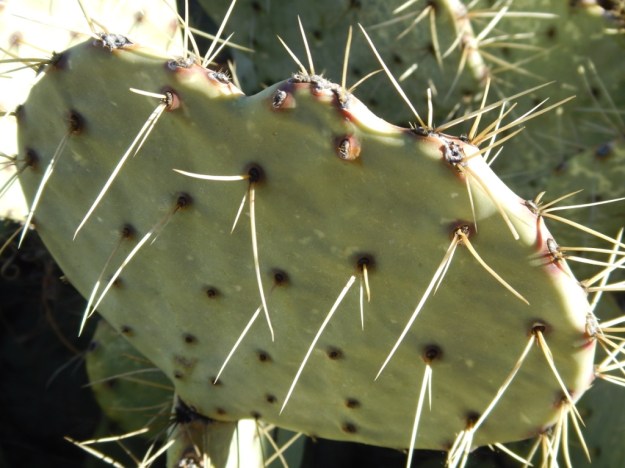
Chisos Mountain pricklypear (Opuntia chisosensis)

Chisos Mountain pricklypear (Opuntia chisosensis)

cholla (Cylindropuntia imbricata?

cholla (Cylindropuntia imbricata?)

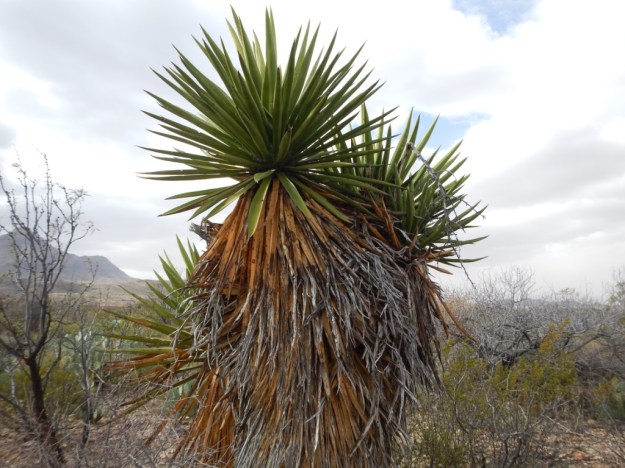
giant dagger yucca (Yucca faxoniana)

giant dagger yucca (Yucca faxoniana)

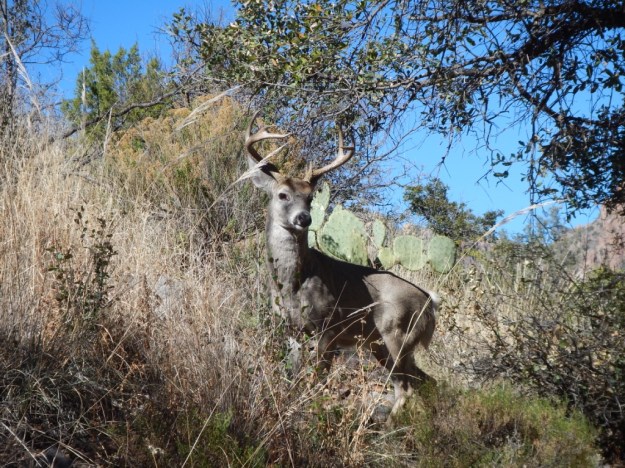
Carmen Mountains white-tailed deer (Odocoileus virginianus carminis)

Carmen Mountains white-tailed deer (Odocoileus virginianus carminis)

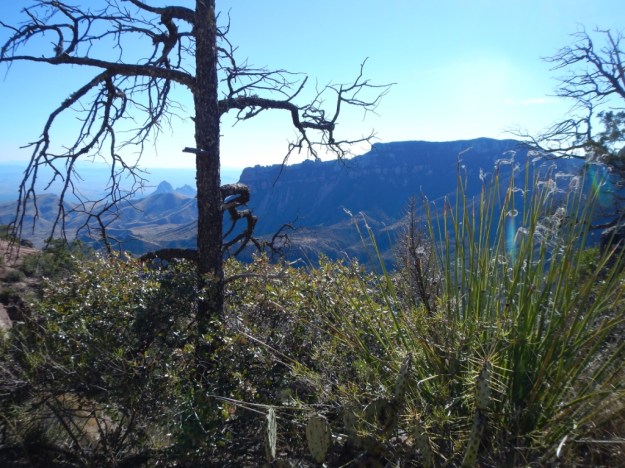
View fromLost Mine Trail, Big Bend N.P.

View from Lost Mine Trail, Big Bend N.P.

The Window, Chisos Basin, Big Bend N.P.

The Window, Chisos Basin, Big Bend N.P.

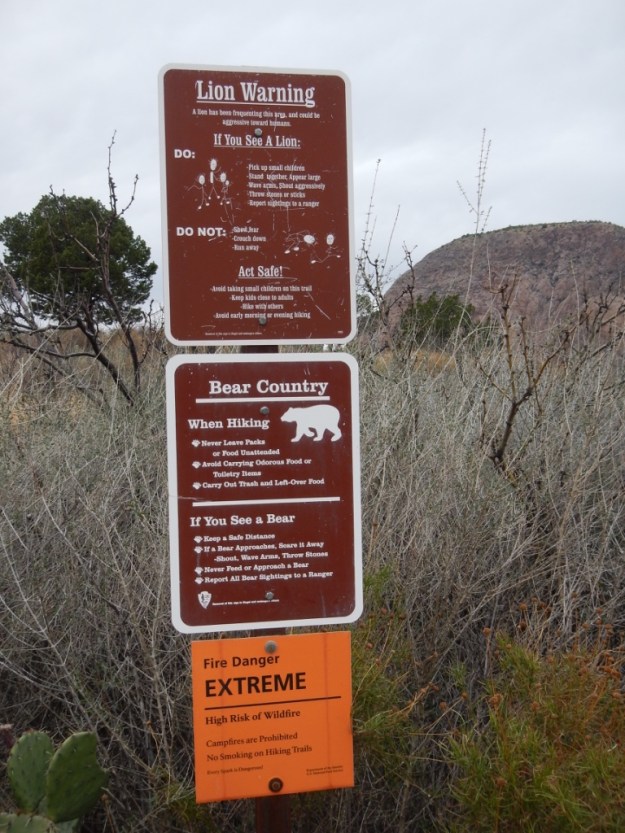
There is so much more to learn: how volcanoes helped build the Chisos Basin, why the black bears came back to the park, who was that snake we saw in the rocks (he looked like the little ones in my garden), and what will be the impact of climate change on this and other natural sanctuaries? Luckily, Tom and I always find enthusiastic and knowledgeable National Park Service workers to help us with our questions.

another friendly and informative park service ranger

another friendly and informative park service ranger

Sometimes, especially now, I feel uneasy and unsafe in this world, but not from the  slippery rocks or bears or lions. I feel uneasy and unsafe about any who would try to take away our constitutionally guaranteed freedoms and our public lands. However, I will keep walking and talking and working to help protect this lovely land and its people.

dangers that I prefer

dangers that I prefer


Mississippi Sandhill Crane National Wildlife Refuge

Mississippi Sandhill Crane National Wildlife Refuge

Mississippi Sandhill Crane National Wildlife Refuge

D’Iberville, Mississippi

I see that I am a year behind on writing “Refugees, Part II.” I also have been hanging on to a draft of an article where I parse my long (and glorious!) history with doughnuts. In that piece, I keep trying to connect fried cakes with some sort of existential optimism. I think I understand why I am not finished with that one yet.

I need to feel close to the ground again. I need to clear my heart and head and fill them with flowers, birds, and the smell of pine needles in the sun. My husband Tom and I are on the road again for several weeks: the Tree Steward and the Master Naturalist walking about together before they aren’t able to do so anymore. My current plan is to write short nature-based posts, which I will post more often than has been my habit.

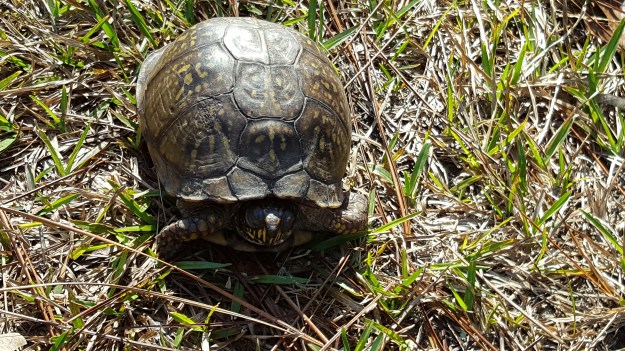
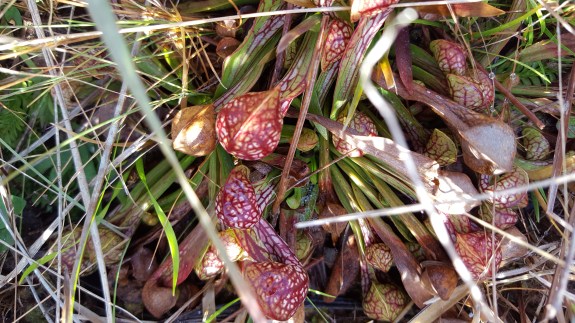
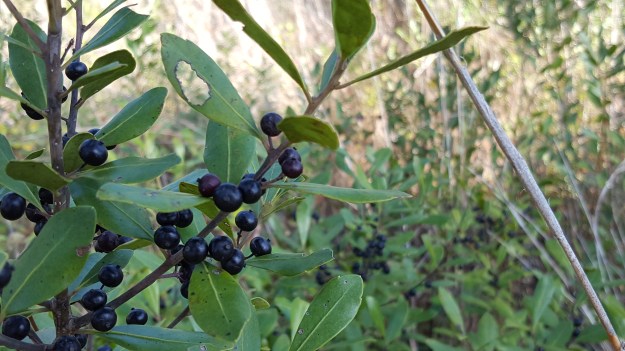
So far in this journey we’ve visited Highlands Hammock State Park in Florida, Everglades National ParkBig Cypress National Preserve, and, today, Mississippi Sandhill Crane National Wildlife Refuge. Here are some photos from today:

wet pine savannah

wet pine savannah

box turtle

box turtle (Terrapene carolina)

parrot's beak pitcher plant (Sarracenia psittacina)

parrot’s beak pitcher plant (Sarracenia psittacina)

inkberry (Ilex glabra)

inkberry (Ilex glabra)

Note: I am not abandoning our country to ethnocentric, sexist, despoilers of all this beauty. I will not be watching television on January 20, 2017. On January 21, if we are near a city, Tom and I will march for women (and their husbands, sons, fathers, and brothers). If Tom and I are in the hinterland, our hike will be a march for equality and respect for our people and our land.


I Need to Stay Close to the Ground

Some days, weeks, years,  and decades seem difficult.

I think, at heart, I am a simple person.  I believe what Scout told Jem in To Kill a Mockingbird, ” I think there is just one kind of folks. Folks.” I am having a hard time holding to that ideal, or, more precisely, getting the world to accept it.  So what I do is cling to the ground to help preserve my sanity (or at least a bit of equilibrium). My ground includes the bugs, the bindweed, and the first tomatoes in my garden. More fundamentally, though,  I am thinking about the wild (more or less) places I have been lucky enough to hike in.

I had been planning to write a post about the hundredth anniversary of the National Park Service. For a  few minutes earlier today,  I thought the topic was too light for this day, week, month, and year of violence, ethnocentrism, demagoguery, and hatred.  I dropped that thought almost immediately. I believe also what Thoreau said, “In wildness is the preservation of the world.”

Enough words. Below are a few photos of some of my favorite places within the National Parks system. May we have peace (I still believe in that ideal, too).

Kolob Canyons, Zion National Park

Kolob Canyons, Zion National Park

Congaree National Park, South Carolina

Congaree National Park, South Carolina

Mesa Verde

Mesa Verde

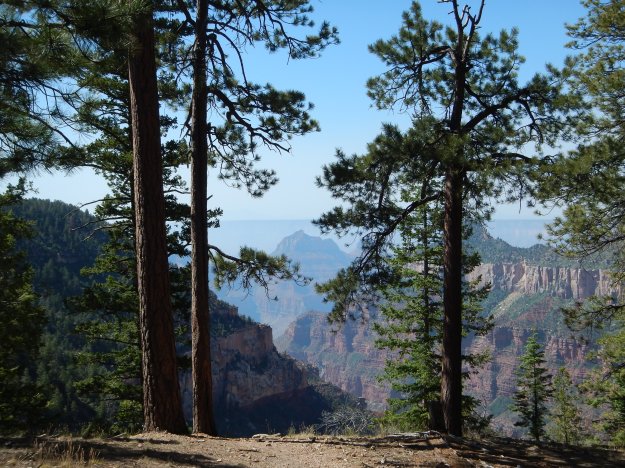
Widforss Trail, North Rim, Grand Canyon

Widforss Trail, North Rim, Grand Canyon

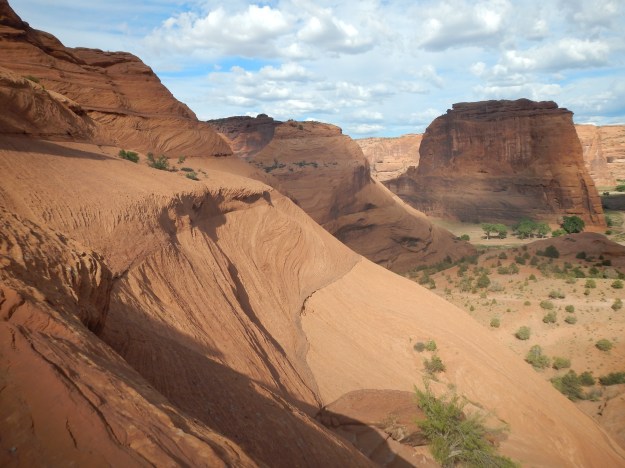
Canyon de Chelly

Canyon de Chelly

fritillary, Yosemite

fritillary, Yosemite

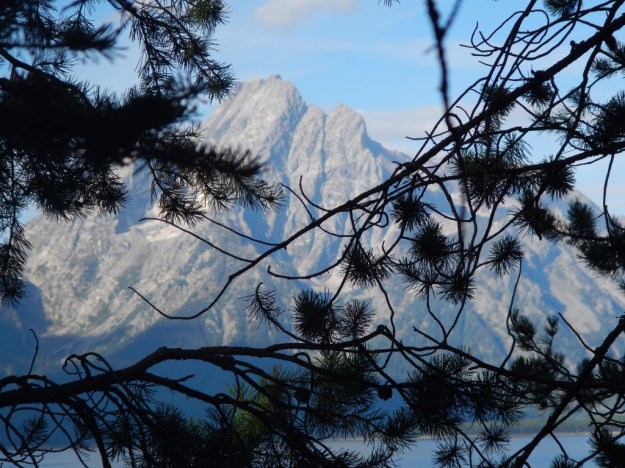
Grand Tetons

Grand Tetons

Lava Beds National Monument

Lava Beds National Monument

Needles Overlook, Canyons

Needles Overlook, Canyonlands

Chisos Basin, Big Bend

Chisos Basin, Big Bend

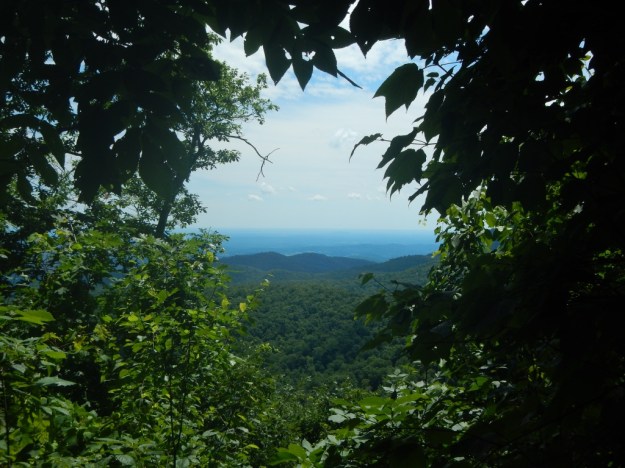
Shenandoah National Park

Shenandoah National Park

Lava Beds

Lava Beds

Bee’s Knees and Bears Ears

So far this morning I have: skimmed the front section of the New York Times, worked on yesterday’s crossword puzzle, swept the floor (picking up stray oat shards that fell off the bran muffins), emptied the dishwasher, washed and dried clothes, plumped up the bath rugs in the dryer, tried to clean the cushions for the porch chairs, and corresponded with friends and relatives. All of this was not in an effort to be neat and efficient, but to pile up more tasks in order to avoid finishing this blog post. I began this post over three weeks ago, but I have not wanted to finish it. Part of this reluctance may be because, especially in this over-heated political climate, I want to avoid writing about political topics. As my friend Sharon said once, I do like to please people. I think, though, the bigger stumbling block is that I don’t know how to synthesize my ideas and feelings to express them succinctly in these few paragraphs. Synthesized or not, succinct or not, I am done waffling. Hold back the edges of your gowns, Ladies*, I’m going back in.

By the time I was 20 years old, I had pretty much given up the idea that politics could or would save the world. Earlier on, I had thought that non-violent political and social engagement could do that. That’s why I majored in political science. That’s why I had canvassed for Martin Luther King Jr. and had rallied against the war in Vietnam, had tried to organize to save Biafran babies, and had written about preventing the Alaskan pipeline. Well, the war in Vietnam did end eventually, but, in significant ways, the other causes haven’t worked out well.

I was 20 when the news of the Kent State massacre wafted into Zion Canyon where I was living. I felt pain and outrage for a bit and then the canyon and the sky took me back.

Zion Canyon

Zion Canyon

I spent three summers on the North Rim of the Grand Canyon. Back then we were mostly isolated from the news. Instead of the news, we listened to the wind in the ponderosas and the calls of the ravens.

ravens over the Grand Canyon

ravens over the Grand Canyon

When I was 22, I taught public school for one year in Page, Arizona, just outside the Navajo Nation. This was challenging for me because of loneliness, school bureaucracy, and fairly rampant ethnocentrism. This experience was also an honor for me because of the land outside my classroom, some caring colleagues, and the students themselves.

Those early years in wild country passed quickly and I settled in close to the ground with my husband, my children, and whatever little bit of land I had to garden. This is where I have mostly remained. However, sometimes I force myself to bring my head up.
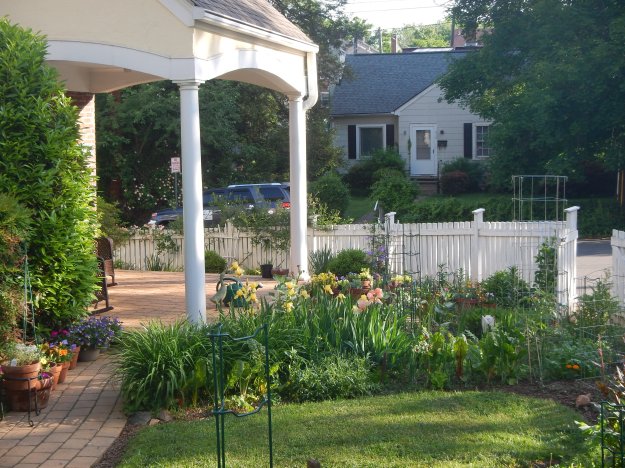
our garden

our garden

Bee’s knees: Already this spring, I have seen a few wasps, several bumblebees, several types of native bees, one cabbage butterfly, a couple of yellow swallowtails (or one twice) and another unidentified butterfly flying across the street. A few blocks away, I saw what looked to be a couple of honeybees among the flowers. I am hopeful that we legions of organic gardeners and farmers, and other assorted tree huggers will stem the tides of poison, disequilibrium, and destruction of our earth and its inhabitants. I plant my garden and I look (and find) signs of hope. Recently, I moved a clay pot that had over-wintered on my front porch and I startled a red-backed salamander. About a week ago, Tom discovered a garter (most likely) snake in one of my rock piles. Two evenings ago, I attended a presentation about non-honeybee pollinators at Ivy Creek Natural Area here in Charlottesville. It appears that many varieties of native bees and other arthropods are continuing to pollinate the flora for us, but we need to plant more native plants, and, of course, refrain from using poison.

bee and flower, Idaho Botanical Garden

bee and flower, Idaho Botanical Garden

Bear Ears: Ever since it came in the mail last Saturday (now almost a month ago), I’ve been wearing my “Protect Bears Ears” tee shirt to the gym and around the neighborhood.The few people that have commented on it seem to think this is an initiative to make sure that bears have adequate hearing protection.

No, it’s not about that. I have brought my head up from my comfortable dirt, rocks, and plants and I am becoming political again. Bears Ears is the name for an area of Southeastern Utah, east and south of Canyonlands National Park. Many Native Americans and environmental groups are calling on President Obama to name this area a national monument through the Antiquities Act. Some people  advocate leaving the control (and designation of use now and in the future) of this approximately 1.9 million acres of land to the state of Utah. Since I am adverse to, well, adversity, it’s a relief that people around here don’t seem to know what my shirt is referring to.  Confession: A couple of weeks ago realizing that many other gym goers’ tee shirts sport names of races, vacation spots, or bars, I chickened out and started wearing my wordless tee shirts again. This week, I toughened up and tried to put my body where my heart was.

My heart is with the native people of the Colorado Plateau—Diné, Hopi, Ute, Zuni and others. In many instances back in Page, my students, their families, and their cultures were not respected. It looks like there are still some people now who disrespect and disregard the cultures and histories of the groups who have lived in the Colorado Plateau hundreds (and thousands) of years before the pioneers settled there in the latter half of the 1800s.
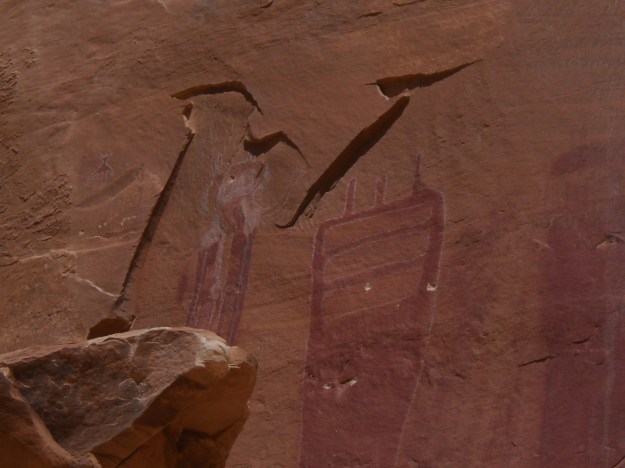
bullet holes in pictographs, Southern Utah

bullet holes in pictographs, Southern Utah

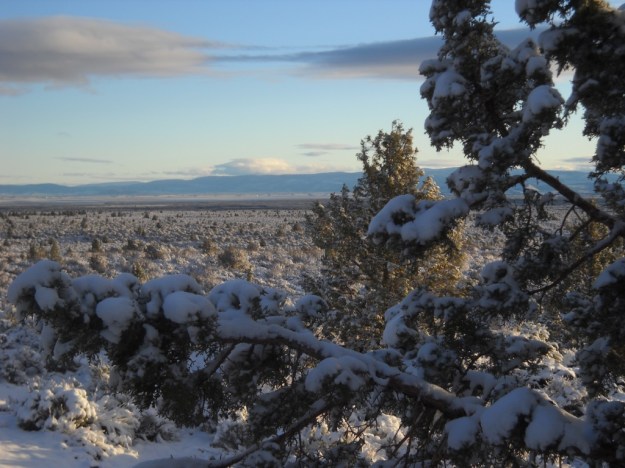
My heart is with the rock, sand, and sky of Southern Utah. I believe that this land should be preserved for all the inhabitants of this earth. I hope that President Obama will designate the Bears Ears a national monument.

Southeastern Utah

Southeastern Utah

There. I have said my piece and I am hunkering down close to the ground again.
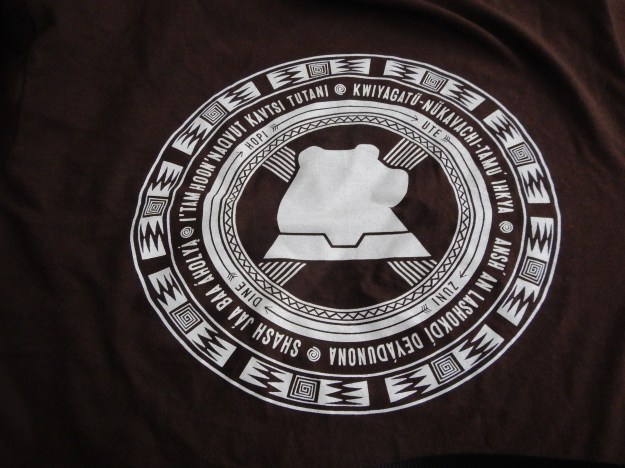
protect Bears Ears

protect Bears Ears

For more information about Bears Ears, please see: The Bears Ears Inter-Tribal Coalition, The Grand Canyon Trust, and many articles in the Salt Lake Tribune and other periodicals available online.

* Thank you, William Carlos Williams and Allen Ginsberg (see the introduction to Howl and Other Poems).

 

The Year in Review: 2015

Hello, here are twelve photos from 2015 and my wishes for a Happy New Year.

January: Goodbye to the dogwood

January: Goodbye to the dogwood

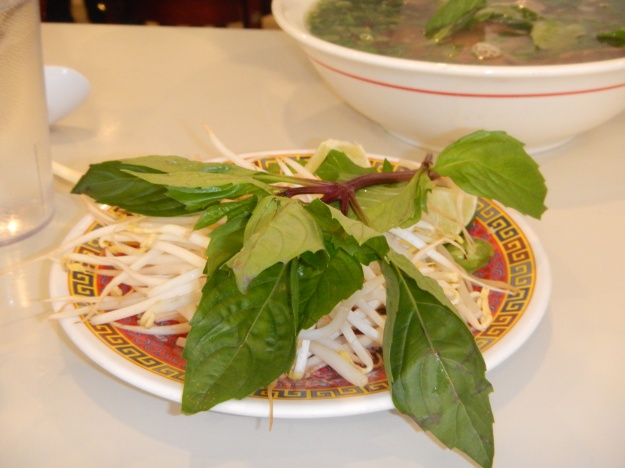
February: Pho 75

February: Pho 75

March: crocus

March: crocus

April: creeping phlox

April: creeping phlox

May: The Awakening

May: The Awakening

June: black-eyed Susan vine

June: black-eyed Susan vine

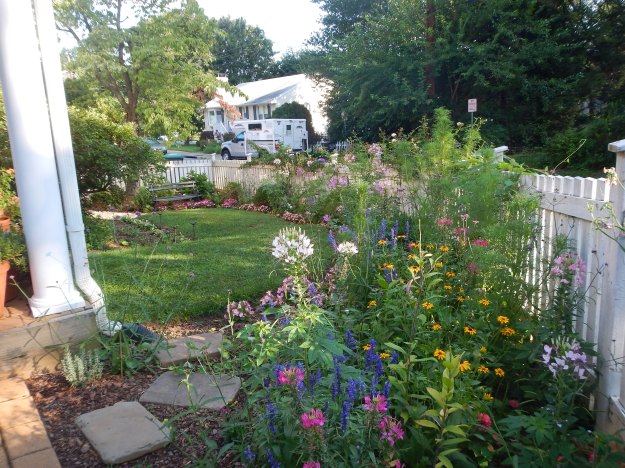
July: the garden and the camper

July: the garden and the camper

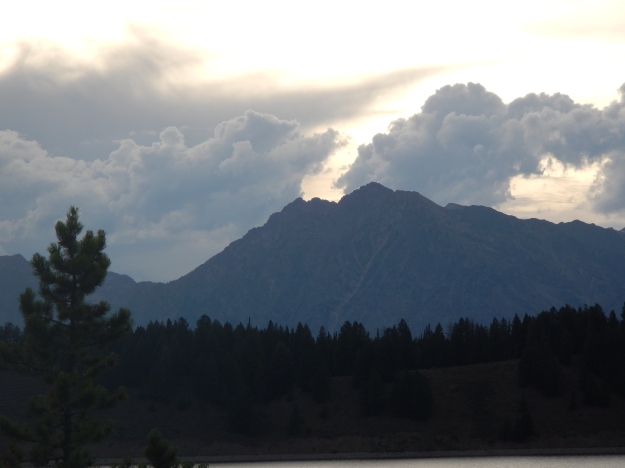
Grand Teton National Park

August: Grand Teton National Park

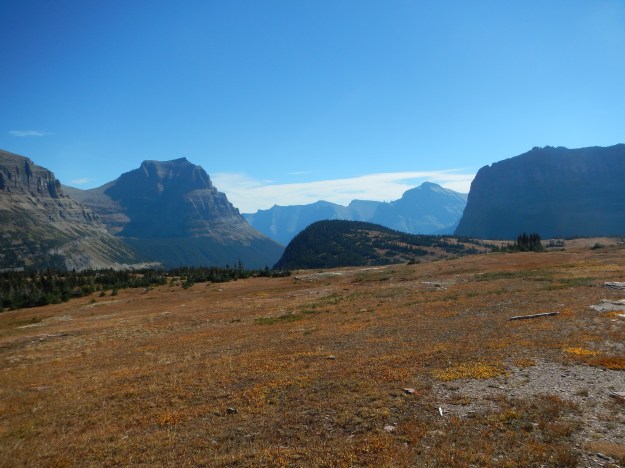
September: Glacier National Park

September: Glacier National Park

October: Insect on locust

October: Insect on locust

November: Frick Park, Pittsburgh

November: Frick Park, Pittsburgh

December: Flowers from my student

December: Flowers from my student


I Wonder As I Wander

Going-to-the-Sun Mountain

Going-to-the-Sun Mountain, Glacier National Park, Montana

I was (still am) the youngest of five children. One of the benefits of this set-up was that I  listened to rock and roll from a tender age. I remember Jerry Lee Lewis’ “Great Balls of Fire” from Cooke School in Detroit. I remember Van Morrison from 6th grade in Milford, mostly because I had a friend named G-L-O-R-I-A. One of my older brothers and his friends used to sing rock a cappela on the school bus.  Another brother annoyed me because he always demanded that I answer the question, “Who put the bomp in the bomp bah bomp bah bomp? Who put the ram in the rama lama ding dong?…Who was that man? I’d like to shake his hand… (Barry Mann, 1961).” I don’t know that man’s name, but this morning I am happy to report a breakthrough on a similar venerable rock and roll question:

I Wonder, wonder who, who ooh ooh who
Who wrote the book of love?
The Monotones, 1958

The answer, I now believe, is Stevie Wonder. Last night, my husband, Tom, our next door neighbors Mark and Ward, and another (roughly) 10,000 people at the John Paul Jones Jones Arena in Charlottesville, Virginia jammed to Stevie’s skill, power, grace, and love until after the midnight hour. I can’t sing, I can’t dance—my hiking boots stuck to the floor in best WASP-of-a-certain-age-style—but still, I danced and sang with Stevie until I was hoarse and tears were in my eyes. I could go on and on, but, well, maybe I will just a little bit: the geniality, the humor, the call and response, the steel guitar, the harmonica, intertwining The Star Spangled Banner and Lift Every Voice and Sing in the funkiest and best version of either I’ve ever heard, and on and on.

I do go on, but here’s the take away: Stevie called on us all to love more and hate less. Yes, he referred to the Paris massacre and the gun violence ongoing in this country. I am going to try to accept his challenge. Note: When I say “called on,” I don’t mean that lovey-dovey ideas were just floating in the ether.  I mean Stevie explicitly gave us our marching orders: He told us that we need to start going forward, not backward.

What I didn’t write: Since September 25, I’ve wanted to write about finally getting on the Going-to-the-Sun Road in Glacier National Park. I’ve wanted to go there ever since I read the  poet, Vachel Lindsay, sometime in the mid-1960s. Lindsay, more noted for such works as “Abraham Lincoln Walks at Midnight,” and “General William Booth Enters into Heaven,” also wrote a poem called “Going-to-the-Sun” in a volume of the same name.  I’ve searched for the snippet of poetry that had inflamed my imagination all those years ago. I haven’t been able to unearth it yet, but more on that in another post.

Then I came back to Charlottesville and started sifting through books and memorabilia like I have for the last five years. Do I keep this or that piece of paper or shred of cloth? What do I do with the remaining mountains of teaching materials?

A piece of paper

A piece of paper

Then, last night with Stevie, I had to think, yet again, of the innocents and their blood–in this country and around the world–and of the refugees.

Likely I will write some more about poets and rock and roll, my travels, and my memories. Not today, though. Stevie brought it all home for me last night. I know now which sun I am really traveling to:

Lift every voice and sing
Till earth and heaven ring,
Ring with the harmonies of Liberty;
Let our rejoicing rise
High as the listening skies,
Let it resound loud as the rolling sea.
Sing a song full of the faith that the dark past has taught us,
Sing a song full of the hope that the present has brought us,
Facing the rising sun of our new day begun
Let us march on till victory is won.
“Lift Every Voice and Sing,” James Weldon Johnson (poem to music, 1900)

I’m Starting Now: I love you.


Book Report II

I’ve loved books as far back as I can remember. When I was almost five, I started Cooke Elementary School in Northwest Detroit.  That’s a long time ago now, but I still remember the school—staffed by plenty of tough old birds, some with their hair done up in braids like stern fräuleins out of Heidi. I remember the school library where  I read the Billy and Blaze books by Clarence William Anderson. It’s not like I’ve remembered the author’s name through these intervening years. In fact, until I Googled the title a few minutes ago, I had forgotten about the eponymous Billy as well. I have remembered some of the illustrations and—more—the joy I felt reading those books.

Tom just mentioned that I need to tell you more about why I liked Billy and Blaze. I admit the specifics are harder to dredge up than the memory of  the joy.  I liked this book because I liked reading about someone who actually got a pony.  I wanted a pony–really a horse. I loved the pony rides at some of the parks I went to with my family.  I still want to own a horse, but it seems impractical because a) I don’t know anything about taking care of horses b) horses are expensive c) we own 1/10 of an acre inside a city.  I also enjoyed Billy and Blaze because it may have been the first series I read by myself.  Not only did I get to enjoy one story, but there was more and then more pleasure to anticipate.

Cooke Elementary School, Detroit, Michigan

Cooke Elementary School, Detroit, Michigan

Another book I enjoyed (and have since remembered) from those very early years was Squanto, Friend of the Pilgrims by Robert Clyde Bulla. I reread Squanto a few years ago and I believe I have it now in storage as part of my Native American book collection. Nowadays, I wonder whether Squanto was wise to have been such a good friend, but that doesn’t change the happiness I experienced in reading the book. I think I was probably seven when I read Squanto. Here, I think I was first experiencing a sympathetic hero as well as a strong plot related to real life happenings–a literary element I enjoy to this day.

Here’s the point: Even books that are not deemed great or good literature or even decent popular writing, can calm that whirling in my head (see yesterday’s Prologue) and help me to consider new facts and ideas. This is all leading up to the four books I am currently reading:


Lamentation by C.J. Sansom

Lamentation by C.J. Sansom


Lamentation by C.J. Sansom is the latest in the six book (so far) mystery series about Matthew Shardlake, a lawyer in the time of King Henry VIII. Not only have I learned more about politics and intrigue in Tudor England than I’ve ever known, but I have had to consider again the nature of good and evil and of power and powerlessness. We don’t have torture in the Tower of London now, but otherwise those twisty, dark, hot, and smelly London streets remind me too much our own times. Matthew Shardlake tries to be a good person in a bad, or at least troubled, world. When I can, I try to do that, too.

Cordelia Underwood by Van Reid

Cordelia Underwood by Van Reid

I picked up Van Reid’s Cordelia Underwood or The Marvelous Beginnings of the Moosepath League at a store called Bull Moose in Brunswick, Maine. I had facilitated the first part of a workshop and felt the need of a calming book to read that evening and on the plane back home the next day. Cordelia, a young adult book and a New York Times Notable Book, fit the bill. I read it in my spartan college dorm room at Bowdoin College and at the Portland airport and in the air. I’m not sure I will finish it right now, but I will cart it along for my next lonely trip because as the NYT Book Review says, this book is “an amiable, richly populated first novel…” (from the blurb on the back of the book).
 

Look to the Mountains by Charles S. Peterson

Look to the Mountains by Charles S. Peterson

The book that has most often been in my backpack recently is Look to the Mountains: Southeastern Utah and the La Sal National Forest by Charles S. Peterson. Tom’s father, the forest supervisor of the Manti-La Sal National Forest when this book project was undertaken, gave us this book when we recently visited him in Florida. I don’t know what has happened to me, but for the last many years, there is no reading I enjoy more than digging into non-fiction histories of the American West. Talk about calming my fretful mind: for me reading about the natural history,  prehistory, and history of San Juan and Grand counties in Utah is like the meditative breathing I am always forgetting to do. It’s like chanting a mystical syllable and I don’t know why. I do know, or at least suspect, that I am the only person in this country reading Look to the Mountains at this time.

Lake Warner, La Sal Mountains

Lake Warner, La Sal Mountains

Tattered Legacy by Shannon Baker

Tattered Legacy by Shannon Baker


Speaking of Grand County, Utah, about a week or so ago Tom bought me, Tattered Legacy (A Nora Abbott Mystery) by Shannon Baker, published this year. I’ve only read 30 pages so far and it doesn’t seem to be (charitable comment) a particularly well-written book, but I am continuing through it because the setting is Moab, Utah. Perhaps almost too trendy for its own good, Moab is in the middle of some of the most beautiful landscape on the earth. Clarification: I have not seen most of the landscapes of the earth and many other places that I’ve seen are also beautiful, but the red rock desert touches me in a way I can’t express with any amount of modifiers, hyperbolic or not. Tattered Legacy is nothing like the reality of the Southeastern Utah landscape and history. So far, this book is overly replete with villainous polygamists and clunky prose, but I am going to finish it. Our hero, Nora, works for a group that is trying to convince Congress to expand Canyonlands National Park. I keep trying to convince Congress and President Obama to do the same. If you want to read more about the efforts to save the land and the human treasures of this area, please see the Southern Utah Wilderness Alliance, the  Grand Canyon Trust, the Bears Ears Coalition, and others.


The Needles, Canyonlands National Park

The Needles, Canyonlands National Park

Waiting in the wings: Stephen King, Finders Keepers. My husband it is reading it now, but only in the daylight!

Prologue: Book Report II

For some time now, I’ve been meaning to write, but, as you might have noticed, I haven’t produced anything since I gave you my mother’s cookie recipe.

First, I wanted to write about the five Lake Superior rocks I have by my birdbath here in Central Virginia. I didn’t know what I was going to write about them, but  I know they are important to me. My guess is that I wanted to say something about the thesis and antithesis and synthesis of the North and the South (and the East and the West, for that matter) inside of me. Something like: I love the little birds and flowers here in this (mostly) mild place, but how I love that cold and wild Superior.

Lake Superior rocks and birdbath

Lake Superior rocks and birdbath

Then, I wanted to write about my swiss chard: maybe something more about the about the polarities in my life. I grew up eating iceberg lettuce or, to be exotic, the odd bit of romaine or escarole. When I was still quite a new gardener back in the early 1980s, I figured out that there was no point in me growing either head lettuce or spinach. The former didn’t work for my home garden—I need greens all the time, not one time and then you’re done. The latter bolted as soon as the weather got hot and it’s hot everywhere I’ve lived since the 1970s: hot and dry or hot and humid. So, I started growing swiss chard even though it seemed exotic to my bland mid-western self. Swiss chard grows for me in  hot and dry and  hot and humid and cold and snow and  mud and baked clay. I love it. We eat chard in salads and in pasta and with rice.  My favorite chard varieties are “Bright Lights” and “Rainbow Mix.” I am growing organic “Rainbow Mix” this year. How lovely, how timely: Here’s to our rainbow country and may we all live long and prosper.

swiss chard, "Rainbow Mix"

swiss chard, “Rainbow Mix”

Later,  I wanted to write about how Tom and I camped on the Eastern Shore. We were so excited to be among the wild horses at Assateague National Seashore, but a little time passed and I forgot to write.

wild horses, Assateague National Seashore

wild horses, Assateague National Seashore

Finally, I took dozens of photos I wanted to share with you of Tom’s climbing rose, Awakening, but none of them (even the photo below) were able to  completely capture the gentle, fresh beauty of its reality.

awakening copyright Lynda Terrill

Awakening

I think I couldn’t write because my mind these days is like a Tilt-a-Whirl. My mind spins one way and then another. It stops, goes up, then down, and makes me sick in my stomach and in my head.  I couldn’t shake out the words.*

A trusty remedy for my twirling mind has always been reading. Child and woman, student and teacher, I have enjoyed book reports. Expect a report tomorrow on the four books I am currently reading.

*I have never liked amusement park rides. So many stories: the feckless pilot of my bumper car trying to be cool like my brothers; two go-rounds on the Edgewater roller-coaster, to be cool and then puke; my sister-in-law encouraging me to go on the “mild”  pirate ship, so that I felt even more terror than on the Hershey Park roller coaster. Apparently close to the ground is where I belong. Anyhow, if you want to see a photo of the Bob-Lo Island Tilt-a-Whirl and other photos, go to https://www.facebook.com/media/set/?set=a.127533410970.137189.126609635970&type=3