Category Archives: Flora

Data Points in My Life

In my September 2025 post, I noted that my mind was full of unruly ideas waiting to form themselves into a reasonably cogent article.* Two months later, that still hasn’t happened. I think I might reasonably throw some blame on the challenging times.**  Instead, I am going back to the fundamental premise of this blog: eschewing grand belief systems, in favor of concentrating on smaller things, on trying to be closer to the ground (both in metaphor and in fact). So, with no essay in mind, I am falling back to a tool of education and other disciplines: the bulleted list.

  • Speaking of smaller things, closer to the ground, I fear that oak leaf gall mites (Pyemotes herfsi) have it in for me. Since the summer of 2023, I have been prey to sporadic seasonable bouts of small, itchy, painful rashes that look like the work of oak leaf gall (or itch) mites. I am not sure that the oak leaf gall mites are the culprits, but, my  brief investigation leads me to think so. As an amateur (wannabe, at least) naturalist, I spend an inordinate amount of time poking around in nearby woods. Four of my favorite local parks have plenty of oak trees. I am happy about this as I love oak trees (see Old Growth), but I going to have to suit up more carefully next season.
  • I do go on about flowers, trees, birds, and other little live things. Sometimes, too, I go on about canyons and other grand places.  However, I noticed a few months ago that the wallpaper on both my laptop and on my phone display photos of water. I think that looking at these photos calms me (a bit) and makes me happy (somewhat) even in these disordered and disturbing times. These photos remind me of the lake water I listened to and watched day and night during my childhood.
  • I have been pretty grouchy the last few days and last night I had troubled sleep. Nothing major: life stuff, getting old stuff, and the ridiculous and unrelenting dross emanating from the U.S. president and his minions. Also, I have recently curtailed my nature walks hoping to avoid the pesky mites (see above). Still, It’s now the end of November, so today I chanced a walk over to the Ballston Wetland Park. I saw the water, the fall plants, the insects, and the birds. I watched a bumblebee busy in the late flowers and a small flock of Canada Geese flew in for a paddle. I heard several small birds in the underbrush and caught sight of a northern mockingbird and a cardinal. I feel much better now than I have for the last few days. I (sometimes) try not to be (overly) directive, but I do recommend a bracing walk in the woods, in the fields, along the shoreline, or in the park as an antidote to the blues.

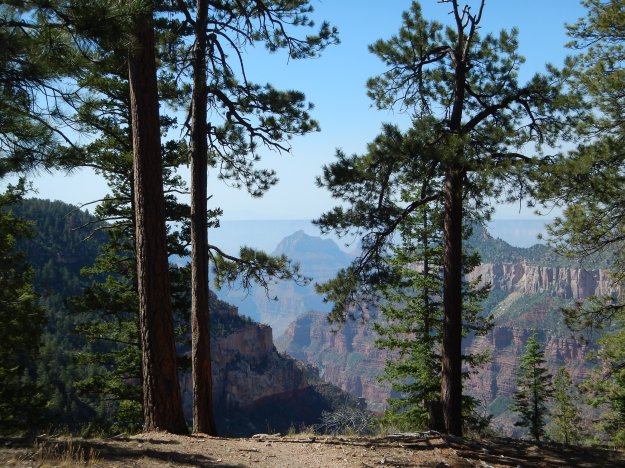
near Kirk Creek, Big Sur, March 26, 2013 (my laptop wallpaper)
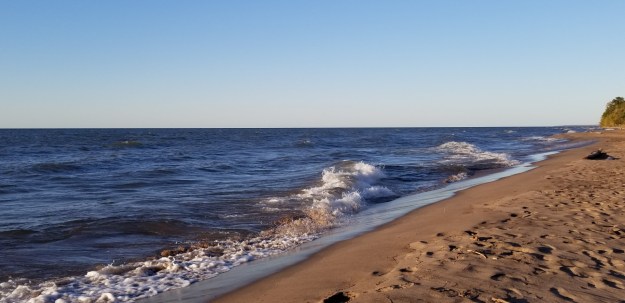
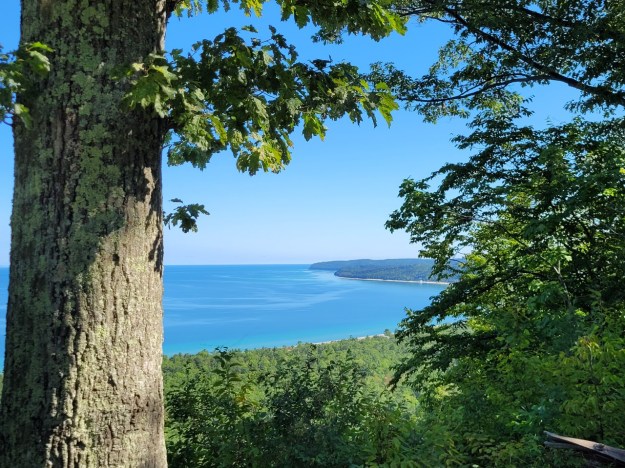
Lake Superior, Ontonagon, Michigan, September 17, 2021 (my phone wallpaper)
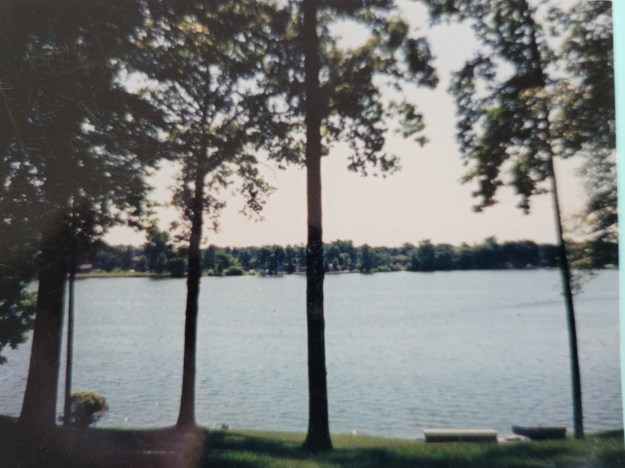
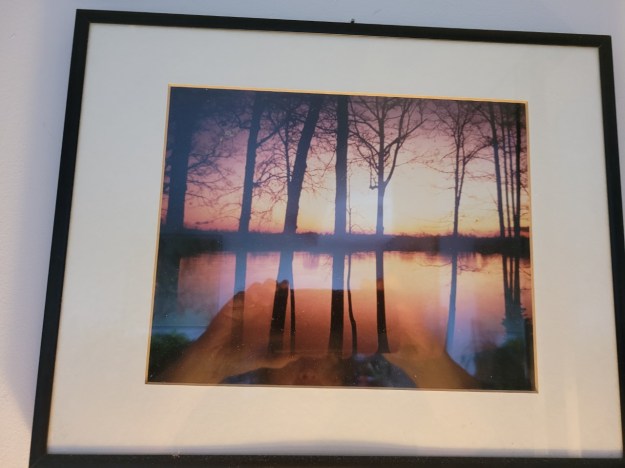
view from my front yard, Lake Sherwood, circa 1960s or 1970s (photographer unknown)

staghorn sumac, Ballston Wetland Park
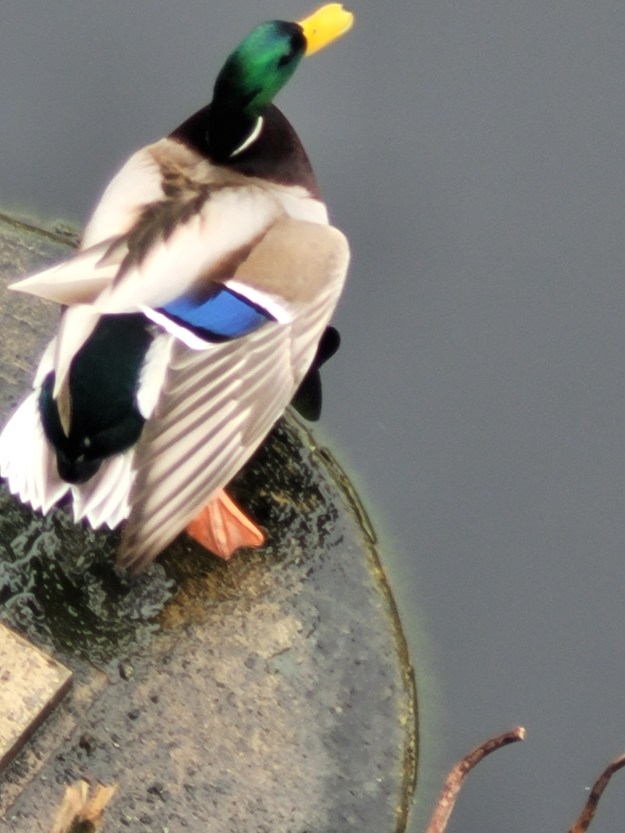
mallard ruffling his feathers at Ballston Wetland Park, Arlington, VA

Canada geese, November 26, 2025

  • In the beginning of November, Tom and I drove up to Michigan for the memorial for our sister-in-law, Nancy.  When we were young, Tom and I didn’t expect that we would come to enjoy memorials for those who die, but we have done so.  Along with the others in attendance, we laughed, we cried, and we ate a good lunch. Before and after the service, we drove the back roads of southeastern Michigan: sun and wind and red and golden leaves. It was perfect. This was the landscape of my early life. On the way up to Michigan and then heading back home, we stayed with George and his wife, Valerie, as we have for close to 40 years.  We drove home on the tollways, highways, and byways of Pennsylvania to visit our sister-in-law, Jeanne. Tom and I were glad to see so many people we love.
  • I love music, but I never learned to play an instrument or to read music. In sixth grade or whenever, when students were encouraged to take up an instrument, I was too shy to do so. I regret this decision, but then I have been a life-long whistler–taking after my dad. I am writing about music now because the Beatles came to mind a few days ago and started me on this article.

There are places I’ll remember
All my life, though some have changed.
Some forever, not for better;
Some have gone and some remain.

All these places had their moments
With lovers and friends I still can recall.
Some are dead and some are living,
In my life I’ve loved them all.      “In My Life,” (1965)

I wish you and those you love a Happy Thanksgiving..


* I am (mostly) not being lazy when I use this “wait until something bubbles up method.”  I discovered this method in college, or even before, and it works for me. There seems to be some part of my brain that keeps working on ideas and words while other parts are focused elsewhere.

**”Challenging times,” are my trying-to-sound-balanced words. More viscerally and honestly, the sh%$ storm that Tom foretold before the last inauguration has turned out to be an ongoing superstorm.  I am devastated by the wanton destruction of so many of our Constitutional, governmental, and societal norms on the part of individuals who appear to be cruel and fascist.  However, I will keep fighting what I believe is the good fight and trying to love my relatives and friends and neighbors. I also am working on having empathy for all.

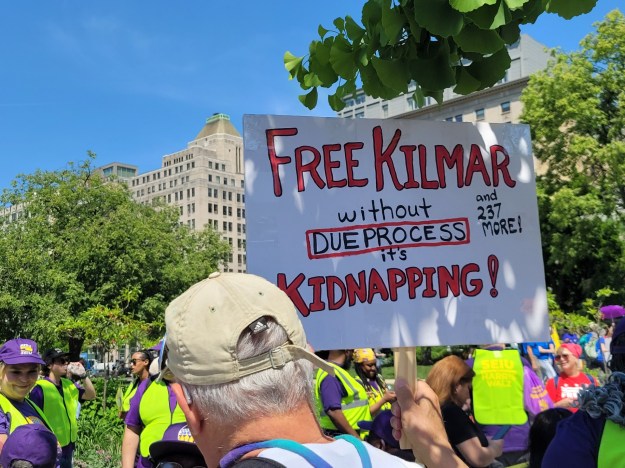
Puzzled, Edgy, and Seeking Comfort

Puzzled For the last several months, I have been working assiduously on a variety of puzzles–even more than I had done previously (as a retired person with too much time on her hands). The New York Times informed me this morning that I have played 663 games of their online Spelling Bee. That’s my favorite game. For a year or so, I  also worked on the Times’ Connections. Now, because the newspaper doesn’t allow each of us to work separately on this puzzle, it’s Tom’s year to play. I enjoyed playing Connections, but I only solved the puzzle about 68% of the time. I also play Strands, which is a simple wordfind puzzle. Simple though the puzzle may be, I often have to use several hints to complete it. About the same time I started working on Connections, I started playing Wordle on NYT. I was never very good at it and had little patience for it. I think I had little patience because I wasn’t very good at it. In addition, I didn’t bond with the format. All these puzzles have led me to think about the way my brain works (or doesn’t work). For over a decade, Tom and I have worked on crossword puzzles. We worked on them when we still subscribed to paper versions of The Washington Post and the The New York Times. When we  were traveling and camping a great deal, we always had our trusty NYT crossword books with us. Now, I usually work on some Post crosswords and help Tom on some of the Times crosswords.

You may have seen those articles about how crosswords (and other puzzles) may (or may not) help old people retain high cognitive functioning. Who knows? So far, though, I am with my friend, Laura, who posits that people who work on puzzles become adept at doing those puzzles. I have recently taken up Sudoku again. More about that below.

Edgy An example of how edgy I have been lately: I was just writing this section of the article, but I felt the need to pause to reply to a political email from one of my score of anti-Trump friends.  I try. I really try to avoid overdosing on the Trumpworld news of the corrupt and the deranged. This far into the regime, I am only so successful at tamping down my anxiety. I am trying to do my part, but I need to do more. I need to do more than make a few calls and write a few emails, go to a couple of marches, surreptitiously place immigrant rights cards in stores and restaurants, and give a little money to the ACLU. I am trying to work harder to help preserve our government, our land, and our people from the would-be autocrats and their orcs.

resist tee shirt

my tee shirt for the gym and protests, circa early 2017

Franklin Park, May 1, 2025, MWashington D.C

Franklin Park, May 1, 2025, Washington D.C.

caricature, Franklin Square protest, May 1, 2025

caricature, Franklin Square protest, May 1, 2025

my sign of the times, May 1, 2025

my sign of the times, May 1, 2025

Puzzled and Edgy I am going nuts on the puzzles because they calm me down. Concentrating on becoming a “genius” in Spelling Bee every morning keeps me from reading too many news articles. I took up Sudoku again because, before bed, if I am not working on a crossword, I can fill my mind with nine digits again and again until it is time to sleep. I am puzzled about how day after day, illogical, unconstitutional, unethical, and cruel things happen in this country I love. Most of my life (white and middle class though I am) I have been aware of the many persistent problems facing our nation (e.g., racism, sexism, homophobia, access to healthcare, extreme wealth inequality, environmental issues, climate change, education, and more). In my own small way, I have tried to help work on some of these problems. I saw good (not perfect) things happening in the United States. Now, I am puzzled about how our society has veered into this ugly corner. It seems like we are in a horrible mash-up of the bumper cars and the haunted house in a carnival run by stupid and evil clowns. You can see I am feeling on edge. Lately, I have to keep reminding myself to take deep meditative breaths.

I am Seeking Comfort and I am relieved that I am finding it in many ways.

  • I have been working harder on my high-intensity interval training (HIIT). My 75 year old version of this exercise may be laughable to the younger and more fit, but working out as hard and sweaty as I can, relieves my anxiety and, generally, makes me feel more optimistic for much of a day.
  • I take walks alone, with Tom, with our daughter, Sarah, and with my friend, Donna. I watch and hear the birds. I see the trees. Occasionally, I hug them. I feel more calm when I walk among the trees–whether they  are in large forests (G. Richard Thompson Wildlife Management Area) or in one acre parks in densely urban settings (Hillside Park). I see flowers everywhere this time of year and that makes me happy. I also feel hopeful when I see more and more native plants growing in yards and parks.
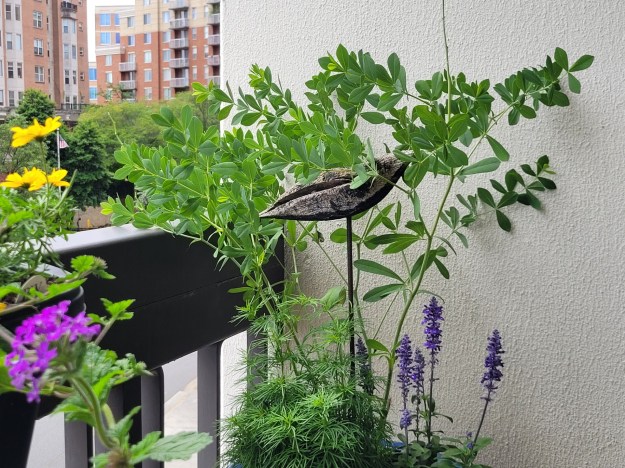
  • Tom and I have filled our balcony with plants in tubs and pots. Our old iron birdbath is our current rock garden. We have put in a small bed of native plants at Sarah and Mike’s house. I spend some happy time there hacking back the English ivy and white mulberries.
  • Tom does most of the cooking and I do most of the cleaning up. Even though I am also a good cook, I like it that way. Cleaning our tiny kitchen gives me more small, repetitive tasks that make me feel efficient and  help keep the zeitgeist at bay. I still find pleasure in making the occasional pie, soup, or loaf of bread.

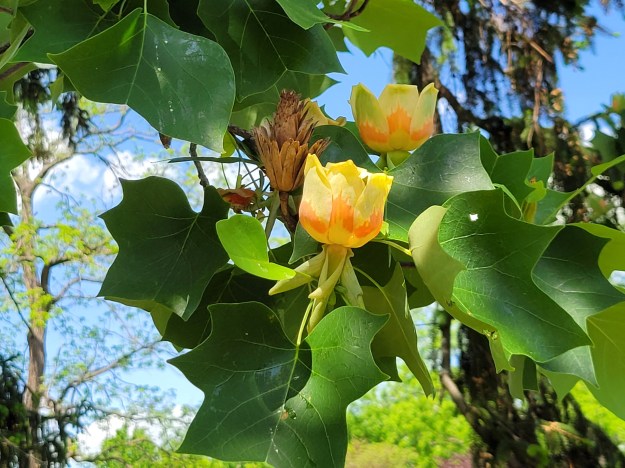
tulip poplar, Ft. C.F. Smith, May 2025

native plants on the balcony, May 26, 2025

rhubarb pie

Bedrock I am lucky to have family (human, avian, and canine) and friends whom I love and who love me. Since I was 17, John Lennon has been telling me, “All you need is love.” I am not sure that is accurate, but it is my mantra now during these difficult times. Please be well.

Listing

Listing Part 1 Since I was very young, I’ve enjoyed making lists in my head, verbally, or on paper. For example, I had a list of all my stuffed animals. I could rattle off their names whenever I felt like it: Woodsy, Foresty, Teddy, Fishy, Plushpuppy, Ginger, Kitty (if there were more animals, I have since forgotten their names). I think that I might have already told you how in high school, I wrote a list of the books I owned.

My penchant for listing does seem at least somewhat acquisitive. My heaps of names, words, and books made me feel a little like Scrooge McDuck immersed in his pile of money (I read my share of comics, too). However, since my freshman year of college, I have also used my lists to organize my life. I would use a day planner to list what tasks I had to do and marked each one off when it was finished. That made me feel like I was accomplishing something, even if it just meant one more day until a visit home. Most importantly making lists has helped me remain engaged in my own life and the world around me. Below are some examples.

About six or seven years ago–before the pandemic–I signed up for the INaturalist app. This app (and the organization behind it) allow me to identify plants and animals and share photographs I take with amateur and professional scientists around my community and the world.

screenshot of my INaturalist list, March 15, 2025

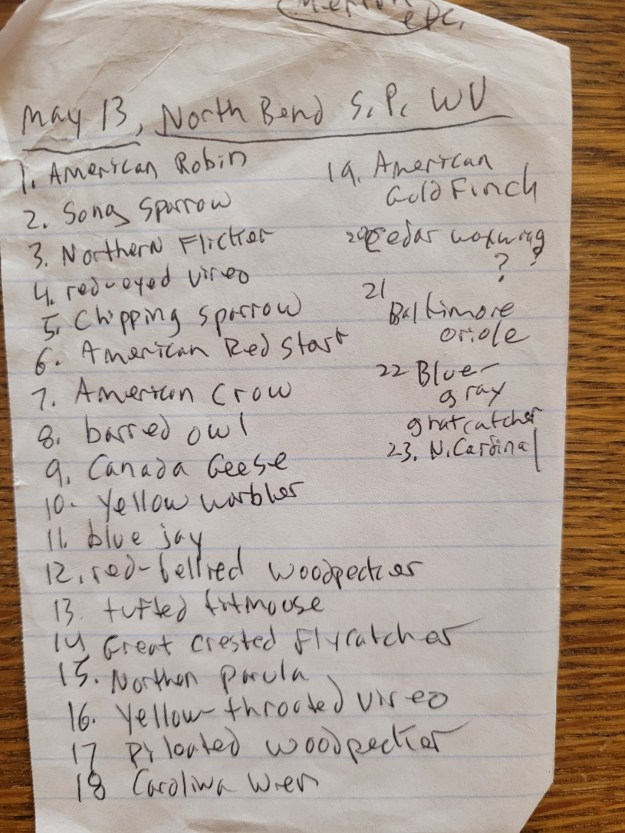
I was so happy with INaturalist that I finally downloaded the Merlin Bird ID app from Cornell Lab of Ornithology. I used this app just two days ago to help me identify the bird calls of eight species I heard on my eleven minute walk home from the library: northern mockingbird, American crow, European starling, American robin, Carolina wren, northern cardinal, house sparrow, and blue jay. In less urban environments, I use Merlin to identify birds I can’t see in the trees and to verify guesses about the birds I do see. Below is my list from the afternoon of May 13, 2024, in North Bend State Park, West Virginia.

North Bend State Park, West Virginia, May 13, 2024

Following in the footsteps of my brother Dan, I have again started writing a list of the books I’ve read.  Dan’s list (I have a copy of his list tucked away somewhere) featured academic literature. Mine is my usual hodgepodge, but I like it.

book list circa 2024-2025

Through the last 14 years, I have used my day book to note trips to gardens, museums, forests, parks, visits with family and friends, road trips, and the like. Since the beginning of this year, I have also used my day book to list each day’s activities more granularly. My daily list has changed. Now, along with lunch or dinner with friends and family or going to the Smithsonian or working at Hillside Park, I also list going to the store or to the the recycling bin in the next block or to the downstairs gym or that I made muffins. I am focusing on daily tasks. One task listed is, “breathe.” Not, breathe in and out 24 hours a day; I mean meditative breathing to keep myself moderately calm(ish). Our country is in turmoil. I need to stay calm enough to empathize with others and to remain active, helpful, and hopeful. Today I sent ten postcards to Donald J. Trump expressing my views on social, political, and governmental issues. I also responded to a text from one of my senators. Some days I contact people in Congress, join in town hall meetings, sign petitions, or donate tiny bits of money to the ACLU. These things are also on my list. I haven’t gone to a march yet, but I think I will soon. So my lists have changed a bit, but they still help me keep engaged in my own life and in that of my country.

Listing Part 2 A ship can be said to be listing when it tilts to the port (left) side or the starboard (right) side. Our ship of state is listing dangerously to the right. I do not want it to founder on the jagged rocks of racism, sexism, homophobia, greed, ignorance, or cruelty. I will to do my part.

Note:Democracy” is on my long list of favorite Leonard Cohen songs. Please be well.

December 2024: Melancholy, Memories, and Marcescence

Melancholy

I debated about even using the word “melancholy.” It’s a good word, but it might exaggerate my actual emotional state. Still, the word is mostly accurate for me on this cold bright Winter Solstice.* Ever since my parents died decades ago, I have had a complicated relationship with Christmas (see Humbug, Maybe from December 2012). I remain agnostic about many things in this life. However, I still love holiday festivities with my family and my friends. Through the holiday season, I continue to listen hour after hour to Christmas music (the carols of The Boston Camerata are some of my particular favorites). I remember being a small child singing carols in my bedroom in Detroit. Even then, I thought about the great promise of the words, “peace on earth, goodwill to men.” I still believe, or hope these words even now, although I would change “men” to “all.”

My three quarters of a century’s worth of years are weighing on me somewhat now. This seems especially true because two work friends died this year and family and friends are facing health issues. Another thing: I dread the coming of the next Trump regime. As one of my loved ones has said, “It’s going to be a sh**storm.” It looks to me like the storm is already here and Inauguration Day is still almost a month away. On January 20, 2025, I plan on remembering the words and actions of Dr. Martin Luther King, Jr. and, weather permitting, joining in the National Day of Service by clearing out invasive plants at Hillside Park. I am a proponent of freedom of speech, diversity, equity, and inclusion–also, and perhaps more fundamentally, of civility and kindness. This does not mean I am always civil and kind: these are my goals. I am downcast by the ugliness and hatred I see and hear announced from so many quarters. Now, sometimes, I find it a little harder to get out of bed in the morning. Sometimes, I feel the tears behind my eyes. Sometimes, I feel as old as I now look. However, my dear ones (my husband, my family, and my friends) and I are of a like mind. We will hope and not despair and work together to save ourselves and our country.

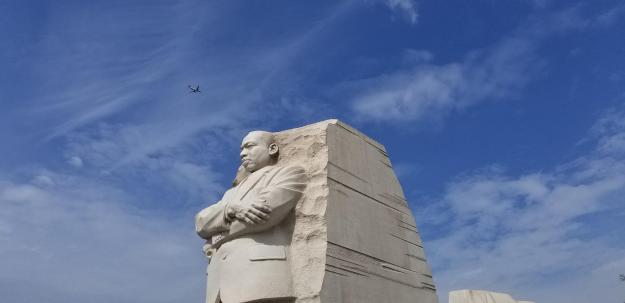
Martin Luther King, Jr. Memorial

Martin Luther King, Jr. Memorial, Washington, D.C.

Memories

Now that I have started thinking of winters and Christmases past, the wisps of melancholy around me are disappearing. Disappearing in a mental jumble of snow, sleds, skates, pralines, gingerbread, trees, and light. Below are Just a few  of the memories crowding my mind:

  • Christmas at my Grandma Jose’s with all the cousins back when we all lived in Detroit. I loved her little round Christmas tree with all the lights.
  • Snow in the winter–every winter–with all the wet gloves, boots, and pants dripping in the tub
  • Heading down the Pennsylvania Turnpike during a snowstorm for Dan and Jeanne’s wedding
  • Finishing college exams, exhausted, but heading home for rest and comfort
  • Back in Page, Arizona, every classroom had a Christmas tree from the Kaibab National Forest
  • Making gingerbread people with Laura in Salt Lake City; Laura’s were stylish, mine were barely hominid
  • Sewing Christmas clothes and toys for our children (even though I couldn’t sew)
  • Making our own holiday traditions with our children: chile verde, spring rolls, or pupusas for Christmas!

So many good memories, I think it will take me days to revisit them all in my head.  That’s one of the good things about having so many years under my belt now.

Kaibab ponderosas

Kaibab ponderosas–our classroom trees were not so large

Marcescence

Last year I learned a new word to describe a natural phenomenon I have noticed throughout my life. The word is marcescence. This phenomenon is when some deciduous trees (such as oaks and beeches) retain some leaves on their branches into the winter and early spring. Note: For more information about this, see “Marcescence and the Legend of the Evergreens” by Alonso Abugattas.

marcescent leaves, Theodore Roosevelt Island, January 2022

Thinking of winter leaves takes me back to more happy winter scenes: Michigan winters with lots of oak leaves hanging on amid the snow and Theodore Roosevelt Island, my refuge during the pandemic, when we all tried to hang on. I believe the leaves below are from a tiny beech tree on the island that I love (and have photographed several times).

I am trying to be like this marcescent beech. I am holding on for spring and for better times.

Happy Holidays!

marcescent beech leaves, Theodore Roosevelt Island, February 2021


* Yet again I missed my self-imposed deadline, Now, one day after the Winter Solstice, we are turning toward the light.

Roads

After failed attempts in three successive years, Tom and I recently completed one more road trip to the western United States. While not the year-long or months-long trips of years past, it was (you may say) satisfactory. We drove 6,184 miles through 15 states. For a good part of the trip west, we tried to travel on U.S. Route 50. On the way back home, once we got through Colorado, we mostly followed U.S. Route 30 east.

early morning, Iowa farm country

early morning, Iowa farm country

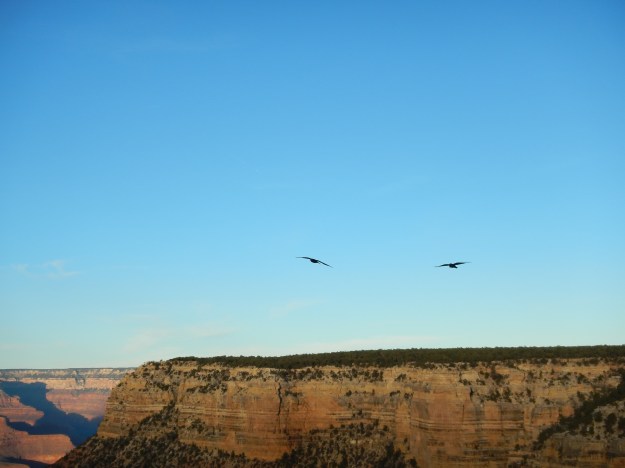
We heard birds everywhere we traveled: a Baltimore oriole cheeped in the tree above our campsite at North Bend State Park in West Virginia; dicksissels and Eastern meadowlarks sang in the TallGrass Prairie National Preserve in Kansas; and we saw, heard, and acknowledged the ravens at the North Rim of the Grand Canyon.  At the Gates of Lodore campground in Dinosaur National Monument, Tom and I camped next to a busy family of black-billed magpies, where, for hours at a time, the parents took turns quickly gathering food and returning to the nest to feed their clamoring babies. I had never seen before this intense behavior so near at hand. I feel lucky to have seen it  On our month-long trip we heard and saw warblers, vireos, woodpeckers, sparrows, nuthatches, tanagers, cardinals, owls, Canada geese, wrens, and many more species. Through the weeks and miles–in the woods, prairies, canyons, and mountains–I often would hear a particularly sweet clear song. It was always familiar, but I would check my Merlin app to be sure. It was always an American robin. I love them and thank them for their companionship on this trip and in my life.

On this trip Tom and I made an effort to see not just our favorite places, but also some places we have longed to see. We sought out gardens, arboretums, forests, preserves, parks, and monuments. Some places–like Browns Park in northeastern Colorado–I had been reading about for decades. Other places–like Purdue’s Gabis Arboretum in northwestern Indiana–we searched out as we traveled. Below are photos of some of the places we visited.

cream violet, North Bend State Park, West Virginia

Muscatatuck National Wildlife Refuge, Indiana

southeastern Colorado

Bandelier National Monument, New Mexico

roundleaf buffaloberry, Cape Royal, North Rim, Arizona

Gates of Lodore, Dinosaur National Monument, Colorado

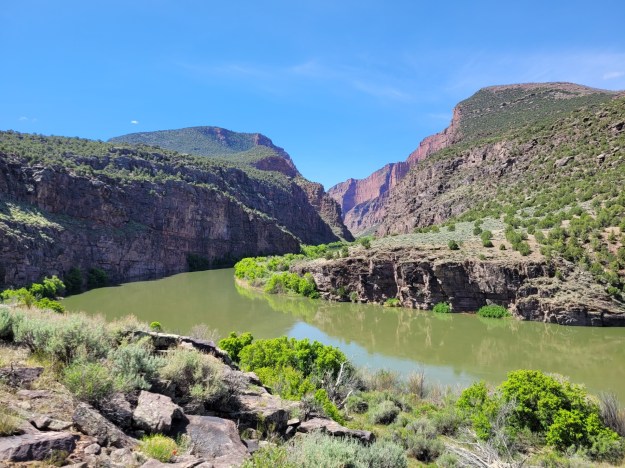
Browns Park National Wildlife Refuge, Colorado

Poudre River Canyon, Colorado

Poudre River Canyon, Colorado

evening, Prairie Rose State Park, Iowa

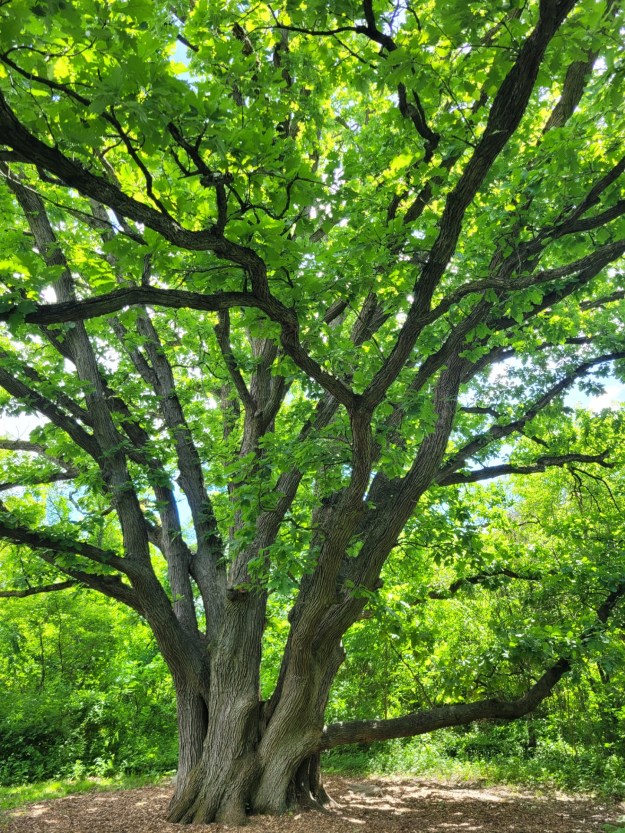
bur oak, Gabis Arboretum, Indiana

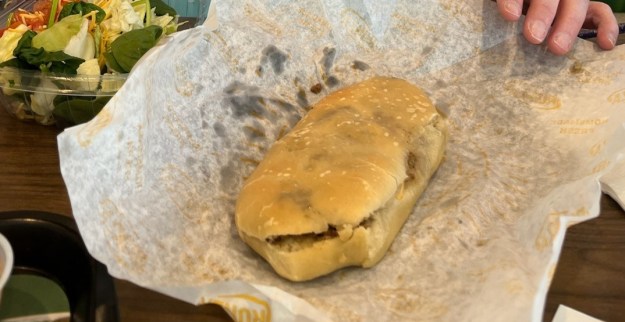
Tom and I were going on a road trip, so we were also planning on finding some tasty road food along the way. In fact, before our departure, Tom had been studying The Great American Burger Book to find iconic burgers in the states we would travel through. As it turned out, we only tried two regional favorites from the book: a GOM Sandwich at Zaharakos Ice Cream Parlor and Museum in Columbus, Indiana and a bierock at Runza, a chain restaurant in North Platte, Nebraska. I found the GOM sandwich pretty good and the root beer float I drank with it delicious. The fast food bierock tasted like nondescript fast food, but the staff members were friendly. If I travel through Nebraska again, I would like to try a slow cooked version of a bierock.

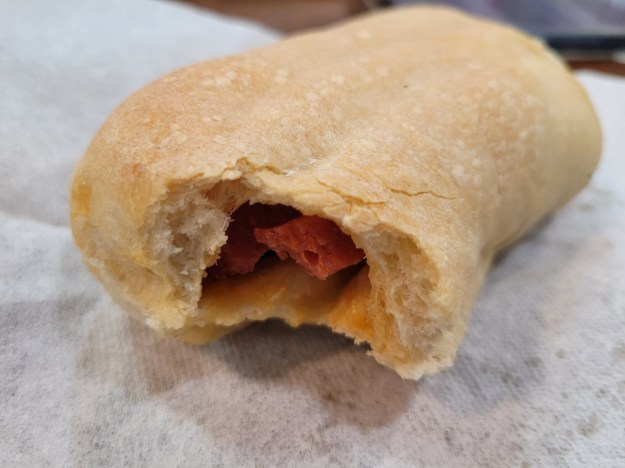
We did come across a handful of good restaurant meals on the road, though. Pepperoni rolls are a thing in West Virginia and we had great ones–for lunch and dinner!–from Tomaro’s Bakery in Clarksburg. If you like good bread and flavorful artery-hardening Italian meat and if you are nearby, it’s worth a drive to the old Clarksburg downtown to try these rolls. It’s a long way from almost anywhere to the generic strip mall in Minooka Illinois, that houses the Dragon Inn. We ate the best dumplings we ever had and the other dishes we had (which escape me already) were also delicious. I wish I had taken more photos, but we were busy eating.

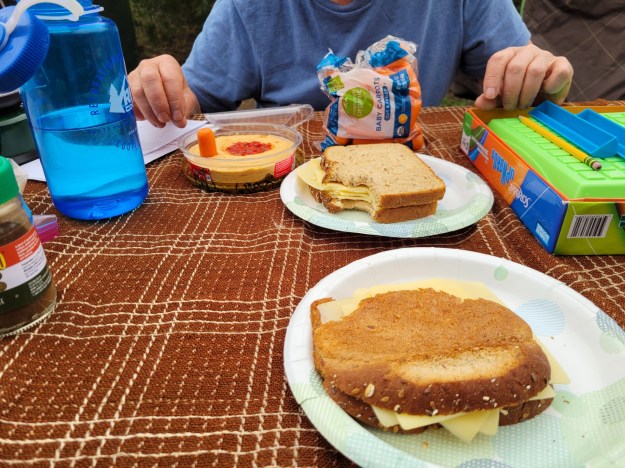
On this trip Tom and I stayed in hotels much more than we camped. Still, one of my favorite meals was our standard  camp meal of cheese sandwich, hummus, carrots, and chips.

The Great American Burger Book

pepperoni roll from Tomaro’s Bakery, Clarksburg, West Virginia

bierock, North Platte, Nebraska

dumplings, Dragon Inn, Minooka, Illinois

camp meal and game, Bandelier National Monument

The Other Road We Travel Yesterday was Tom and my 50th wedding anniversary.* As it does happen in this life, we started out young and now we are old.  When we were young at the North Rim and a few years later in Salt Lake City, we flew  with our friends like a flock of freewheeling birds above our uncertainties, our problems, our pains, and our setbacks.  This year, Tom and I needed to get back to the the rim and Salt Lake City (and the Front Range of Colorado) one more time (at least) to where we began together and to see others of our flock.

This was the primary impetus that got us on the road. We feel fine, or fine enough for a couple of old coots, but we don’t know how long that will last. I don’t know the exact words to describe the sweetness and comfort I felt–even in this uncertain, uncivilized, and fraught era–in seeing our friends again. Laura, Art, Howard, and Mark in Salt Lake; Sally in Colorado; and Richard when we were back home in Virginia. I remember with love all our friends from those days–the ones we recently saw and the ones we didn’t.  And, I just now recalled a line from Bob Dylan that gets me closer to what I mean to say: then and now, you give us shelter from the storm.

ravens over the Grand Canyon

ravens over the Grand Canyon

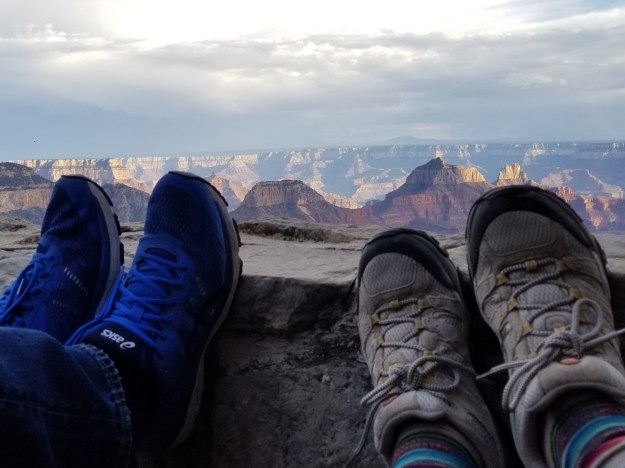
North Rim, 2018


* Because it was our actual anniversary and the Summer Solstice, I hoped to finish this article yesterday. My excuses for others:  It was hot and we went out to dinner. My excuse for myself: I was in an extended period of procrastination.

Spring Ephemera

Last Friday, on a tramp looking for invasive incised fumewort, I spied my first mayapples of the season.

The previous Sunday, on Theodore Roosevelt Island, I saw three spring ephemerals: common blue violets, cut-leaf toothwort, and–one of my favorites–spring beauty.

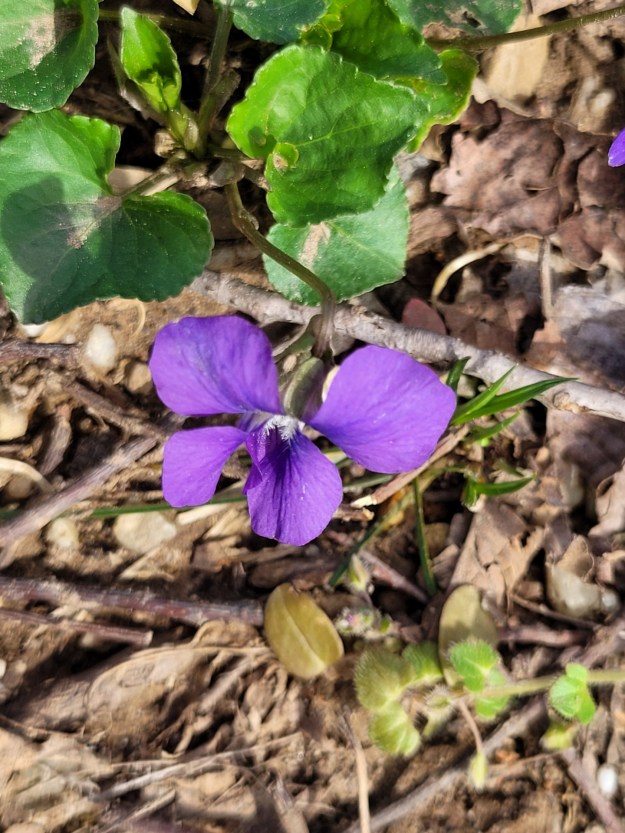
common blue violet (Viola sororia)

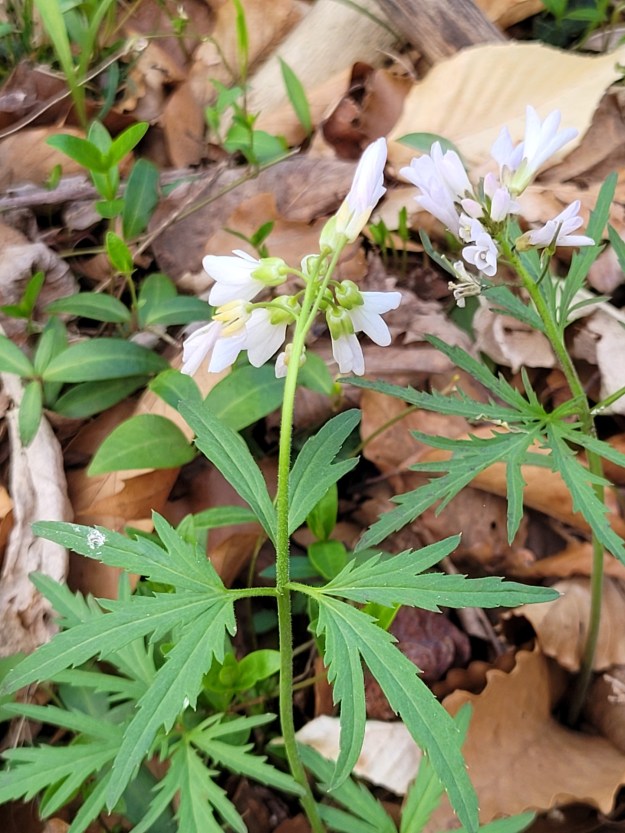
cutleaf toothwort (Cardamine concatenata)

spring beauty (Claytonia virginica)

On the island, people were walking, jogging, volunteering with the National Park Service (clearing out invasive plants and other activities in aid of the island’s health), birding, and other spring pursuits. Speaking of birding, on the upper trail in the middle of the island, one young woman shared her exciting find with me: a baby barred owl. I think maybe I finally saw the baby bird; I hope I did; I imagine I did.*

Just because I was having a hard time seeing them, does not mean that the owls and other birds were not in full springtime mode.  Throughout my walk around the island, the Carolina wrens were making an exuberant racket. Using my own limited knowledge and with the help of the Merlin app, I heard 16 species of birds:

  • Carolina wren
  • mourning dove
  • Northern cardinal
  • song sparrow
  • tufted titmouse
  • downy woodpecker
  • American crow
  • red-winged blackbird
  • swamp sparrow
  • American robin
  • common grackle
  • Canada goose
  • white-throated sparrow
  • cedar waxwing
  • Carolina chickadee
  • ruby-crowned kinglet

Speaking of birds: so far this spring at least four species of birds have visited our balcony: mourning doves, blue jays, sparrows, and one American crow. I think the mourning doves started visiting in February. Alone or with a partner, the doves walk along the railing planters and investigate the other pots scattered around. I think they do this with an eye to starting a family. They do seem to feel at home here, as I have observed them mating the last couple of years. As a result, each of the last two years a single egg has been laid in a pot and then abandoned by the doves. I am not sure why this happens  (mourning doves are not noted as particularly conscientious nesters), but I think if they did they would be sitting ducks for more aggressive birds.

Blue jays visit occasionally throughout the year and have been here several times recently.  The jays seem to like to keep a lookout on our space.  They sometimes plant the peanuts that they find somewhere, and generally mess up the dirt in our pots.  I love jays for their raucous, bold, blue, and beautiful ways–hold the presses!  Two minutes ago a blue jay came swooping in to inspect the coral bells that Tom planted in his planters twenty minutes ago.  They have their eyes on us.

Although they are very common in our urban neighborhood, this is the first year I remember sparrows flying up to our balcony.  These little visitors flit around so quickly, I am not sure what species they are. They may be invasive house sparrows, but I am not sure. Today, I put the binoculars in the living room so I can look closely next time before the sparrows fly away.

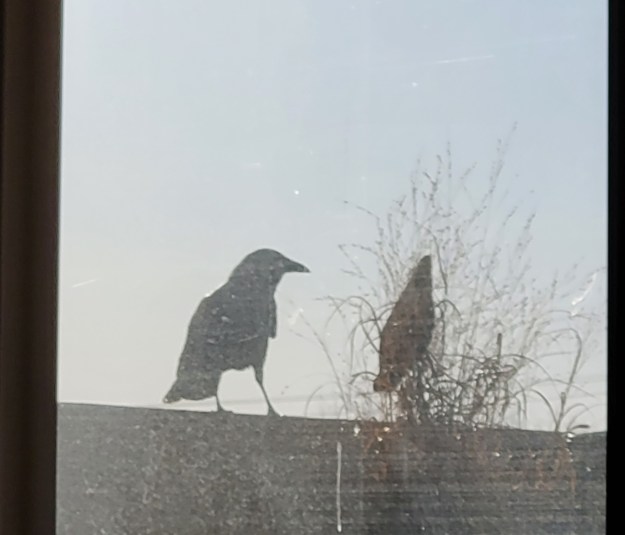
Three days ago an American crow flew onto the balcony railing. He or she peremptorily picked at the planter where I recently planted black-seeded Simpson lettuce and where mourning doves recently walked and blue jays recently snooped. Then the crow swooped right next to one (of two) black painted wooden crows we’ve had in every garden, since the 1990s, The crows seem to have their eyes on us, too, and–somehow–that comforts me.

American crow and wooden crow from Glen Arbor, MI with Virginia switchgrass

The Blues At several places on that most recent walk on T.R. Island, I encountered little blue butterflies. These “blues,” as they are called, are some of my favorite butterflies. I never  manage to get photos of them–they are so quick and erratic. When we meet, it’s  a flash of blue and an intense feeling of movement and light. In 2014 Tom and I were hiking on an upland forest trail in Great Basin National Park when we came upon hundreds of blues dancing in the bright dappled sun.  I think I took a photo, but, if I caught anything, it was moving sunlight.

These walks in dappled sun, these glimpses of spring beauties, these baby owls, these flashing wings of blue, help me keep the other blues at bay.


*I have been watching birds all my life and I have tried, fitfully, to be a birder for over 50 years, but I am still a novice. I have spotted many wonderful birds (e.g., vermilion flycatcher, American condor, cactus wren, etc.), but I have missed many more.

January 6, 2024

Happy New Year!

Good News Today, I took down the Christmas tree. Tom took the tree downstairs to the tree recycling dumpster.  I gathered up all the holiday paraphernalia into its big blue plastic bin and stowed it in our shed. Years ago, my parents would put up the tree only a few days before Christmas, but then keep it up until January 6. I think I keep to the January 6 routine because it gives me an opportunity to think about my mom and dad–a good idea on this cold, gray, and rainy afternoon. On this Epiphany, I am also enjoying thinking about Shakespeare’s Twelfth Night or What You Will, which is one of my favorite plays. Right now, I can just about laugh aloud thinking about Malvolio’s yellow cross-gartered stockings.

Twelfth Night

Yesterday, I planted a little pot of dill, some native southern sundrops (Oenotera fruticosa) and common golden alexanders (Zizia aurea). Good gardener that I am, I have a so-so record on successfully starting tiny seeds in winter. I keep planting as an act of faith that spring will come.

seeds of southern sundrops and dill

On Monday evening, my alma mater, the University of Michigan, will play in the football national championship (January 8, 2024). I hope my team wins, but I plan on enjoying the game whether we prevail or not.

my Michigan shirt

Other News Today, I remember the insurrection of January 6, 2021. I don’t remember this as  just a news item. I remember this as a personal assault. I may live across the Potomac River from D.C., but, still, this was an attack on my city, my government, and my beloved country. Three years ago my (formerly) robust political and social idealism sustained a wound that has not yet fully healed. Enough of that for now.  What am I–at 74 years old–to do this year? I will vote, I will sign petitions, I will write, and I will support those who would protect our civil society, our Constitution, and justice for all people. Also, I will continue to understand that if someone tells me that the sky is green and the grass is blue, reality will let me know that the sky remains blue and the grass green.  I wish you all a good year.

black walnut, Ft. C.F. Smith, Arlington, Virginia (where the sky is blue and the grass is green)


Autumn 2023

In early October, I worked on an article about the current rash of book banning.  My plan was to finish the post in time to publish it for Banned Books Week (October 1-7, 2023). It turns out that I had too much to think and write about books (and schools and libraries) to complete an article by my self-imposed deadline. I am still planning to complete that article, but I need to ruminate a bit more before I finish. Also, in September, I picked up a case of Covid-19 on our trip to Michigan. A few weeks later, I either relapsed or picked up a crazy bad cold/flu.  I can report that I feel fine now and I am back to seeing family and friends, cranking out high intensity intervals at the gym, and transplanting seedlings at the Arlington County native plant nursery.  Below are some words and recent photos from Michigan,  the Washington, D.C. area, and my walk last week on Theodore Roosevelt Island.

Michigan

Tom and I try to travel to Michigan at least once a year.  We enjoy visiting family and the places we love. Each year, we also try to see some places we haven’t been yet.  At one of our favorite places–Sleeping Bear National Lakeshore–we hiked in a new area: Pyramid Point. There, the vistas, woods, meadows, flowers, and bugs, were just as beautiful as we have come to expect in this park. After Sleeping Bear, we headed east to Lake Huron. I went to YWCA camp on Lake Huron as a teenager. Tom and I and our children camped decades ago on the Canadian side of Huron. However, it was time to visit Tawas, a place I had heard of all  my life.  Tawas Point State Park, was yet another pretty and friendly Michigan park where one routinely shoots the breeze with strangers and shares a bit of early morning bird-watching.

For the first time in my life, I camped at Proud Lake Recreation Area. This is notable because the the campground is 3.7 miles by car (it would be considerably less as the crow flies) from my childhood home. The trees, fields, water, and the air itself seemed familiar and comfortable at Proud Lake.  I must say, also, that I have not been bitten by so many mosquitos, since I left my lake home.  The price we Michiganders pay for all that water!

There is beauty wherever Tom and I  live or travel, but I always count myself lucky when I can get a dose of the pleasant peninsulas.

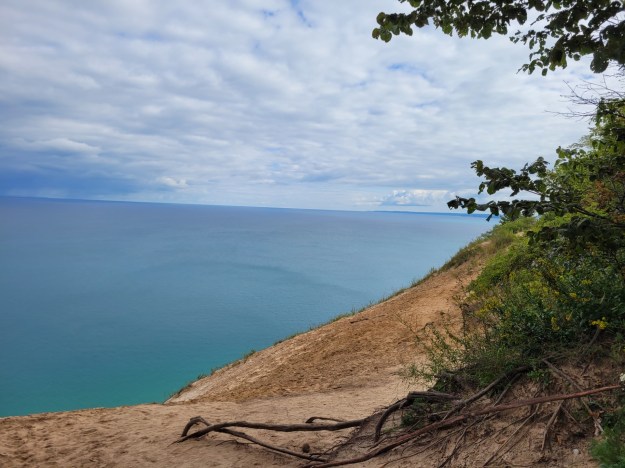
Empire Bluffs Trail, Sleeping Bear National Lakeshore

Pyramid Point Trail, Sleeping Bear National Lakeshore

meadow trail near Pyramid Point

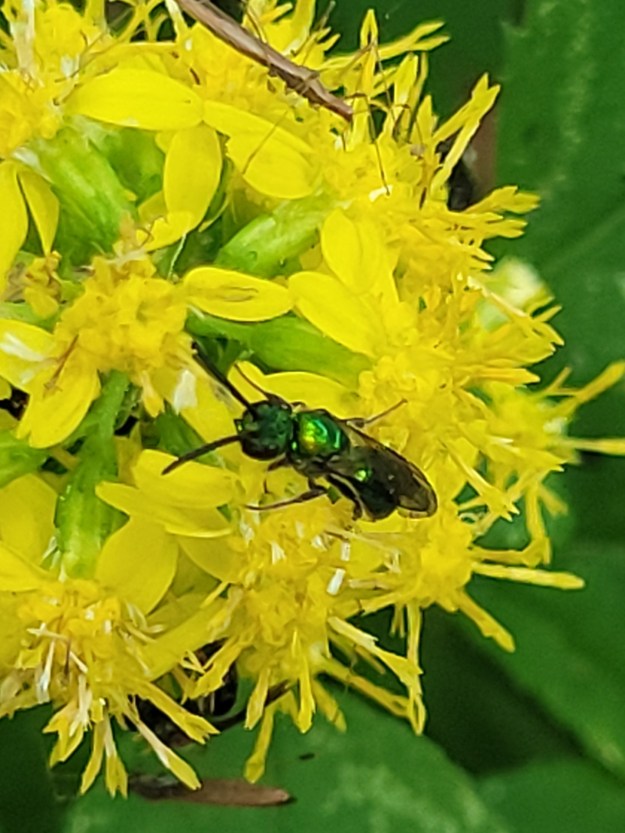
pure green sweat bee near Pyramid Point

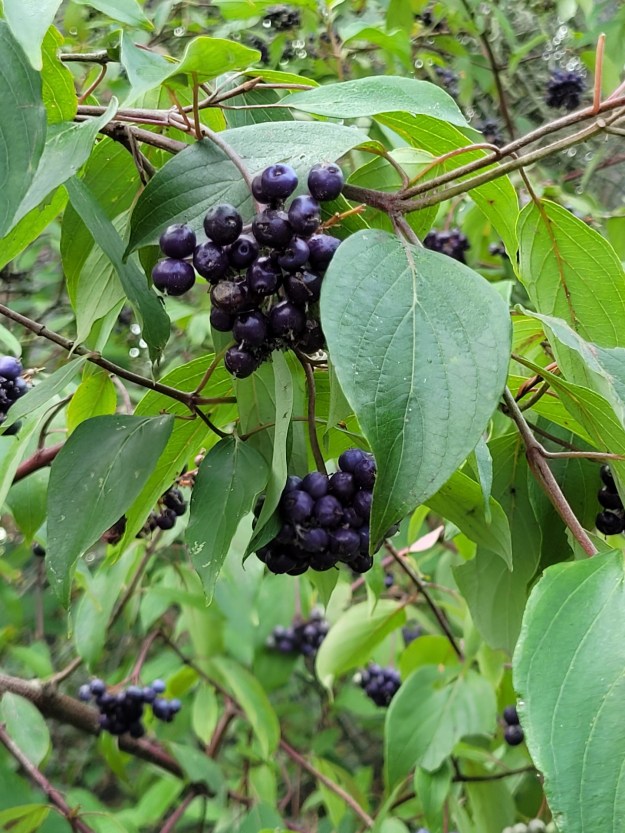
silky dogwood, Tawas Point State Park

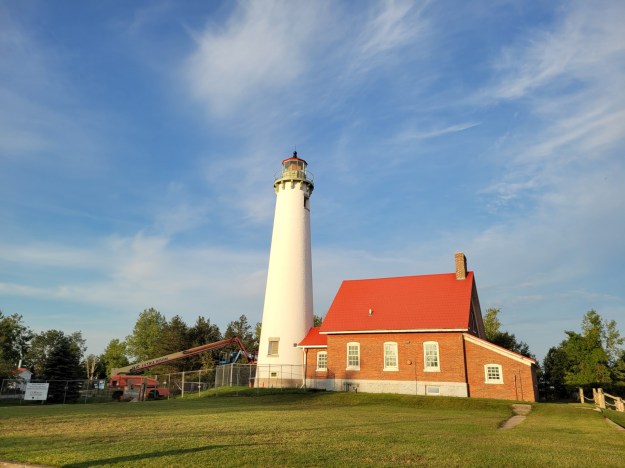
Tawas Point Lighthouse, Tawas Point State Park

swamp aster, Proud Lake Recreation Area, Commerce Charter Township

Washington, D.C. Area

Reading the newspapers or watching the news, I think a person might possibly get a skewed idea about the Washington, D.C. area. I am not saying that the news is necessarily wrong, just that it isn’t a comprehensive view. Yes, I’ve seen the fences around the Supreme Court, Congress, and the White House. I was under curfew on January 6, 2021.  Tom saw military gunboats in the Potomac River before the last inauguration. I saw the Pentagon burning in the days after 9/11. And on and on, but…I have attended an uncountable number of wonderful concerts, festivals, fireworks, and protests. I have visited monuments, memorials, cemeteries, libraries, and parks.  Then there are the museums–still a marvel to me after all these years.  I don’t forget the gardens. Tom and I walk through the gardens–spring, summer, fall, winter–through the decades. I like all the big things like the monuments and memorials, but the gardens help keep me close to the ground.

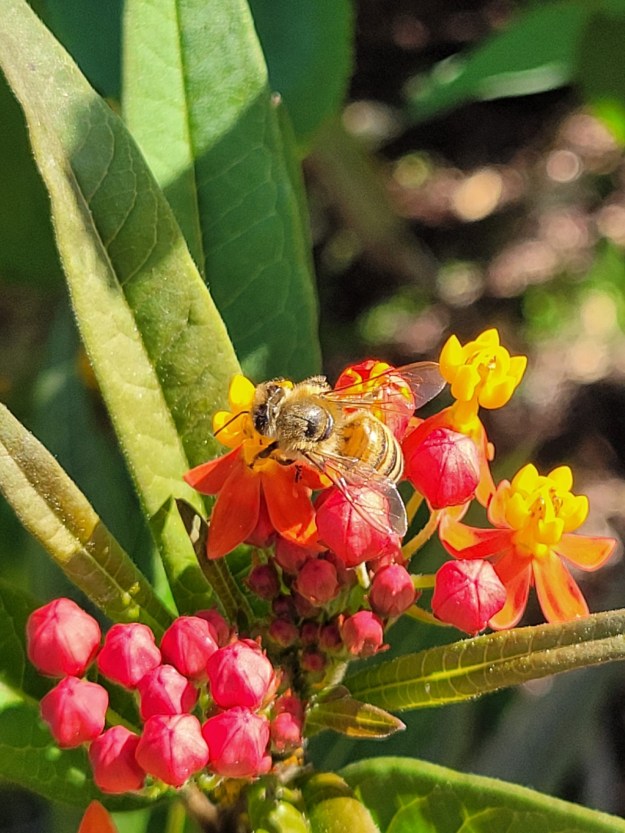
bee on tropical milkweed, U.S. Botanic Garden

buttonbush, Quincy Park, Arlington, Virginia

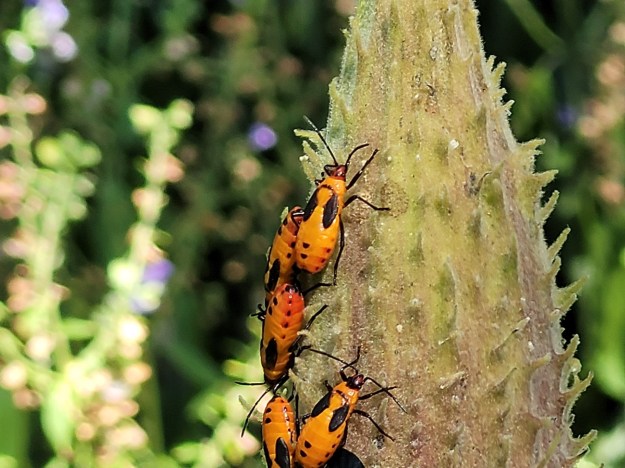
milkweed bugs, Bartholdi Park, Washington, D.C.

maple tree, Quincy Park, Arlington, Virginia

Theodore Roosevelt Island, November 16, 2023

Last Thursday was a lovely day on the island. It is curious to me how this little, overused island–with the jets flying overhead, the Kennedy Center peeking through the trees, and its often filthy bathroom–makes my feet happy and my soul calm(er). On Thursday, I heard many birds and saw a few. I heard  one or more Carolina wren, white-throated sparrow, northern flicker, robin, song sparrow, swamp sparrow,  yellow-rumped warbler, belted kingfisher, and mallard.

from the walking bridge

lower path

upper path

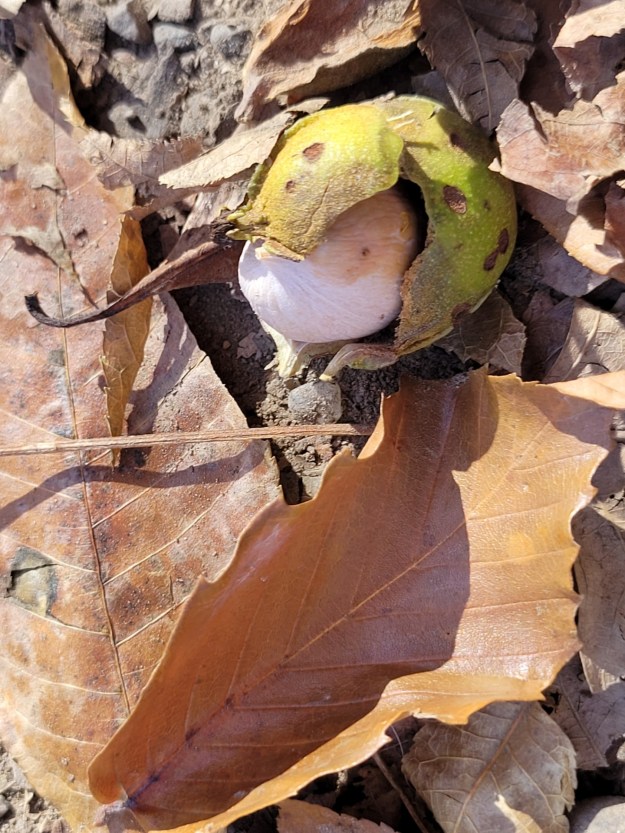
hickory nut and leaves

mallard

Thanksgiving

In my family we have taken to having potluck meals on Thanksgiving: bring what you want and you don’t have to tell anyone what you are bringing.  We started this during darkest Covid times.  We would meet outside on a picnic table at Walter Reed Park in Arlington. I was thankful that so many of my loved ones were alive and that we could share food together (alas, Robert and Rebekah were in far distant Pittsburgh). The food, while always delicious, was not the main dish. Seeing dear ones in person was better than all the turkey, dressing, and pecan pie I have ever eaten.

Even with the continuing problems of our country and the world (sometimes it seems like things are getting ever worse), I am grateful, for my family, friends, and this still beautiful world.  Happy Thanksgiving.


Old Growth

I take lots of photographs of trees. I often take similar photos: I look straight up to the sky searching for the circling branches. I also take photos of leaves, pine needles, acorns, nuts, and twigs. I mostly haven’t been satisfied with my photos of trunks, but I keep trying. I’ve had a close relationship with trees my entire life and, if anything, I feel closer to them as I grow older.

Meadowlark Botanical Gardens, Fairfax County, Virginia

First Trees I started climbing trees when I was very young at our home in Detroit. The tree–I think my dad called it a silver maple–was also quite young and I was able to shinny up it and climb pretty far up the branches. I remember being proud of my skill because I was the youngest and the girl. My parents also planted a little cherry tree of some kind in the backyard. I remember swiping a maraschino cherry from the jar in the refrigerator and sticking it on a little twig and announcing that the tree had produced a cherry!  I didn’t fool anyone.* The street trees in our Rosedale Park neighborhood were elms. The trees from each side of the street met in the middle and made a comforting leaf canopy.  Back in the 1950s Christmastime was still reliably cold in Detroit. One night I walked around the block with my dad looking at the Christmas lights.  There was a blue spruce glowing with lights. I must have known it was a blue spruce because my dad told me its name. The magic was so strong that I feel it now, 66 years later.  That mix of the cold air, the holiday lights, the blue tree, and my kind father keep me–even through many long and sometimes trying years–looking up at the trees and sky.

A few years later, my family moved to a lake near Milford, Michigan. When we first moved to our house, trilliums still bloomed nearby in the springtime and we saw deer tracks on the beach. My parents made sure that the builders did not cut down any extra trees when they built our house, so our new world was guarded by a grove of tall oaks and hickories along with the odd little sassafras and wild cherry.  In most of the lawn, the grass grew a little bit thin, but the trees were almost like benevolent gods to my young nature-loving self.  When I miss my home, which is often for a place that I haven’t lived in since 1972, I sometimes miss the trees as much as the people who lived there.**

brother George’s photo of winter dawn with lake and trees from our house

*These early memories  are slightly fuzzy; I might not have been the only one involved in the maraschino gambit.

**(Some of these words are adapted from Losing It: Deconstructing a Life, unpublished work © Lynda Terrill, all rights reserved)


More Trees Through the years, I have been lucky to encounter many trees.  I’ve walked through Michigan woods, Appalachian and Piedmont forests, the grand ponderosa pine forests of the Kaibab Plateau, the bristlecone pines of Great Basin National Park, the redwood and sequoia cathedrals of California, and so many more tree lands. Not every forest or tree needed to be grand for me to love it.  I fondly remember the single small tree on a minuscule pull-out on U.S. Route 89A–then, the only tree to be found on the Arizona Strip between Fredonia, Arizona and the Kaibab Plateau. I can’t remember the species of that tree; it might have been a pinyon pine.

I only started taking photographs (first on little Nikons, now just on phones) about 13 years ago. Nonetheless, I find that I have hundreds of tree-related photos. Below are some of my current favorites.

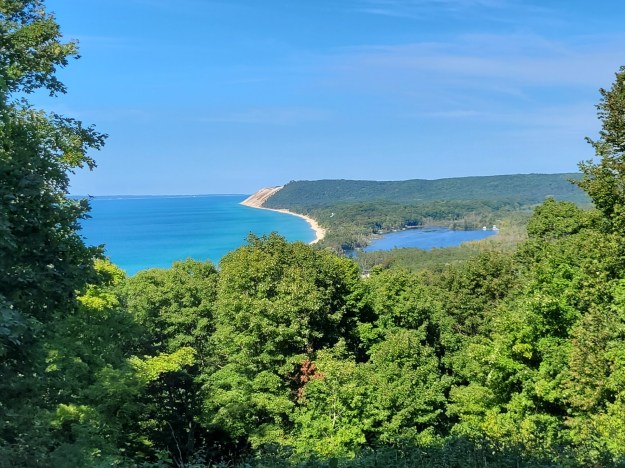
Sleeping Bear Dunes National Lake Shore, Michigan

redbuds, Sky Meadows State Park, Virginia

Eastern hemlocks, Cathedral State Park, West Virginia

autumn, Arlington, Virginia

Mathews Arm Campground, Shenandoah National Park, Virginia

sycamore, Theodore Roosevelt Island, Washington, D.C.

cherry blossoms, Tidal Basin, Washington, D.C.

Red Canyon, Dixie National Forest, Utah

Widforss Trail, North Rim, Grand Canyon, Arizona

November: Frick Park, Pittsburgh

Frick Park, Pittsburgh, Pennsylvania

Great Basin National Park, Nevada

Beach Road, Meher Spiritual Center, Myrtle Beach, SC

Beach Road, Meher Spiritual Center, Myrtle Beach, South Carolina

Sequoia feet

Sequoia & Kings Canyon National Park, California

North Rim, Grand Canyon National Park, Arizona

red mangrove, Florida

G. Richard Thompson Wildlife Management Area, Markham, Virginia

black walnut, Ft. C.F. Smith, Arlington, Virginia

Enough photos for now, I think.

Old Growth, Part 1 In March 2020, Tom and I heard environmentalist Joan Maloof speak about old-growth forests. Maloof, “Professor Emeritus at Salisbury University, founded the Old-Growth Forest Network to preserve, protect and promote the country’s few remaining stands of old-growth forest. (www.joanmaloof.com/).” Since hearing Maloof’s presentation, Tom and I have been visiting more of these special forests, most recently last month when we walked in the Youghiogheny Grove Natural Area in Swallow Falls State Park, Maryland. I was going to make a bulleted list of the old forests we’ve hiked in, but I realized I don’t really know how many we have encountered. I don’t want to sound like a gaga old woman, but I have two ideas to share. First: not only do forests provide the earth with oxygen, food, shelter, fuel, etc., but they provide me with a sense of wonder and contentment that I don’t often feel elsewhere.  Second, while I am a proponent of  preserving all the old-growth forests that are left, I also want to acknowledge that a tree, a grove, a forest, doesn’t need a special designation to be awe-inspiring.  I do encourage tree lovers to investigate the Old Growth Network and I still want to list a few of Tom’s and my favorite forests below:

  • Kaibab National Forest, Arizona
  • Great Basin National Park, Nevada
  • Porcupine Mountains Wilderness State Park, Michigan
  • Cascade Falls, Ottawa National Forest, Michigan
  • Congaree National Park, South Carolina
  • Red Canyon, Dixie National Forest, Utah
  • Fishlake National Forest (including Pando and Singletree Campground), Utah
  • Cathedral Forest, Cook State Forest, Pennsylvania
  • Mariposa Grove of Giant Sequoias, Yosemite National Park, California
  • The Giant Forest, Sequoia  & Kings Canyon National Parks, California

Old-Growth Forest Network sign, Swallow Falls State Park

Youghiogheny Grove Natural Area, Swallow Falls State Park, Maryland

Old Growth, Part 2 I realize that I think, talk, and write quite a bit about trees. I might even repeat myself sometimes. Part of that may be because I am old and prone to reverie, but mostly it is because trees (and birds, bugs, plants, and rocks) help me focus on beauty amid the terrible news that surrounds me almost daily. Side note: I once had an employer who gave me job–at least in part–because, she said, I was a life-long learner. Maybe I am. Now, though, I just want to grow like a tree–like a tulip poplar in flower or just hang on like a pinyon pine on a canyon rim.

tulip poplar flower, Arlington, Virginia

pinyon pine, Colorado National Monument, Colorado

Salad Days, Salad Years: Reverie

Right now, my weather app claims that it is 29 degrees* here this afternoon in Arlington, Virginia. So far this winter we’ve had some cold spells, some cold rains, but only a couple of snow flurries. Still, it is winter enough to keep me inside today in reverie.

I’m old now and I do spend some time thinking about times long past. Shakespeare gives us the phrase “salad days” (Antony and Cleopatra, Act I, Scene 5). For me, though, the phrase is literal: I am thinking about the salads I’ve made and the salad ingredients I’ve grown.

Early salads Sometime in my early teens, I started making salads for the family dinners. This was an easy task, but I felt proud to do it. If you are from the Midwest of my childhood (or perhaps from another time or place, also), you may know this salad. I tore up iceberg lettuce, cut up tomatoes, and–if we had them–also put in cucumbers and scallions. I made the thousand island salad dressing by mixing Hellman’s mayonnaise and ketchup to which I might add a little pickle relish and/or chopped hard-boiled egg to make the islands. I think we all liked the salad well enough and it paired well with the meatloaf or pork chops or pot roast meals we often ate.

Around this same era, my mom taught me to make her potato salad. She was a careful cook and I can see her now–telling me how one needs to boil the potatoes with their “jackets” on, and then showing me how to cut them and the other vegetables in precise pieces before mixing in the few seasonings and dressing. I have been thinking about this potato salad for a couple of years now. I keep thinking I want to make a batch, even though our lives left the cold chicken and potato salad era decades ago. Tom and I both remember picnics up Mill Creek Canyon near Salt Lake City with our very young children and our friends-maybe cold chicken with potato salad in the summer and roasted hot dogs over a fire and potato salad when September came. The last time I made potato salad regularly was in the early 1990s in Washington, D.C. when I taught adult learners from the Food and Beverage Workers Union, Local 32. Most of the classes were on Saturdays and the students and I decided to have potluck lunches. Some students brought D.C. half-smokes, some brought macaroni and cheese, other brought chips, drinks, and other tasty foods. I brought the potato salad. I added more onion, cumin seed, and liquid from jarred jalapenos to my mom’s recipe and it was a hit. Watch for updates: When spring comes for real, I am going to make a batch of potato salad and go on a picnic with Tom and whomever else wants to come. I just can’t decide whether to bring the cold fried chicken or grill the hot dogs.

Middle salads As I’ve mentioned before, I spent the summer of 1970 working for the Utah Parks Company at Zion Inn in Zion National Park as a pantry worker (AKA “salad girl”). I worked the summers of 1971-1973 at Grand Canyon Lodge at the North Rim of the Grand Canyon, also as a pantry worker. These are some of the happiest times of my life so I have years worth of reverie about this era. I learned a great deal from my bosses and coworkers about making salads, cooking, and life in general. In the national parks, I learned to make big trays of desserts and tubs of salads. One of the first lessons in Zion was that what worked in Michigan might not work in the desert southwest. Mary, my pantry boss, instructed me to prepare a large tray of cheese sandwiches. Being the organized person (I thought) I was, I lay out a full tray of bread slices in preparation for adding, in turn, the cheese slices and then the top slice of bread. There, in the desert, that first layer of bread dried out instantly and was unusable. Never would have happened like that in Michigan. Adapt to your circumstances was the lesson. I am still working on that.

In the Grand Canyon Lodge kitchen, I had other lessons to learn. Our dear bosses/mentors/friends-for-life were pantry supervisor Bertha Fitzwater and chef Floyd Winder. Bertha, born in 1897, was hard of hearing. Her hearing seemed selective, though: She could hear what she wanted and needed to hear and then ignore the rest. Early on that summer Bertha told me to “clean as you go” in the kitchen. I have done so ever since then, and it has served me and my kitchen well. More important than cleanliness is kindness and I learned some of that from Bertha. 1971 was so long ago, maybe you can hardly imagine it. We women in the kitchen wore horrible white uniform dresses (they deserve their own whole cranky reverie). Most of the hipp(i)er young men that headed to the North Rim cut their hair before they got there. Not so, Pat Malone. He showed up in the kitchen sporting his long golden locks and scraggly goatee. Utah Parks was a conservative company and many of the workers were traditionally minded Latter-Day Saints. So, as I watched, Pat was getting a quiet and cold shoulder from the workers in the kitchen. Maybe Bertha couldn’t hear, but she could see and feel. She got a bowl of ice cream and went right up to Pat and pushed the bowl near his face and said, smell this, I think it is going bad. Pat put his face down to smell and Bertha shoved the ice cream into his face. Haha, a good laugh all around and the ice was broken. Golden, elf-like Pat (gone these ten years) became a favorite of many. I still see and feel your kindness, Bertha, and I try sometimes to follow your path. Linda, Richard, and Gordon, we are still pantry friends together.

Chef Floyd Winder was a large middle-aged man with a military buzz cut, a Utah twang, a piercing intellect, and a wit as dry as the desert. I met Floyd (and Bertha) in May, 1971, just weeks after I had graduated from college.  After all of those high octane professors (and yes, many of them were exemplary and I learned a great deal from their classes), all the papers I wrote, all the hours I had spent throwing around words like etiology, polity, and structural-functionalism, I was full of myself and my fancy education.  Well, as I watched and listened to Bertha and Floyd I saw that they knew just as much about their own fields of endeavor as the professors did about theirs. More importantly, Bertha and Floyd seemed to understand human nature, but still decided to look at people with humor and kindness. Floyd knew his workers well, and if they were smart and conscientious, he just left them to their jobs—no micromanaging from him. Here are three short Floyd stories:

North Rim was about 80 miles from the closest town. So, when we ran out of ingredients, we were out until the next truck made its way up to our kitchen at the end of the road. The pantry staff made seafood cocktail appetizers, using crab, shrimp, lettuce, cocktail sauce–the usual ingredients. They were popular menu items, so we often ran out of the canned crab. What to do? Floyd said put canned tuna on the salad instead. To our alarmed looks Floyd simply noted that tuna comes from the sea.

Grand Lodge kitchen served excellent ice cream and sherbet, but we made ho-hum puddings, cobblers, cakes, and frozen pies baked in house. One time a customer was oohing and aahing to the server about her slice of pie. The guest asked for the recipe, so Floyd cut off the recipe panel from the frozen pie box for the woman. In neither of this or the above instance did Floyd smile.

The kitchen ran well under Floyd’s firm, but (somehow) laid-back rule. The menu was on a set schedule and the food was rolled out mostly the same week after week under his supervision. The only time I ever saw Floyd personally cook any food was when Utah Parks Company hosted a party for the staff. It turned out that not only could Floyd cook delicious food, but, by god, he created an ice sculpture for us.

I have other, more serious, stories about Floyd. When I felt lonely that year in Page, Arizona, I would visit Floyd and his kids at his home in Springdale, Utah right outside of Zion. A kind face and a homey meal meant a great deal to me back in those days when I was so green. A few years later, Floyd would visit Tom and me and our little children when he was up in Salt Lake City for cancer treatments at the VA Hospital.

Growing salads As I’ve mentioned before, I took up growing my own salads many years ago–49 years ago to be precise. Every garden space (from window sills to large gardens with grape vines and raspberries and corn) is different. Different, but always satisfying. Sometimes plants grow for me and sometimes they don’t, but I am always learning something new from them. Here is a partial list of the salad stuff I’ve grown: many types of lettuce, thyme, basil (five kinds), rosemary, spinach, Swiss chard, cilantro, sugar snap peas, shallots, onions, tomatoes (probably at least 25 varieties), peppers (probably more than 15 varieties), chives, lemon balm, sage, dill, borage, anise hyssop, artichokes, scallions, mint, radicchio, arugula, kale (at least three types), Italian oregano, cucumbers, broccoli, epazote, field cress, mizuna, parsley, lemon grass, and more that I can’t remember right this minute. However, the memories of my mother and the rest of my family, Bertha, Floyd, and all the others remain green.

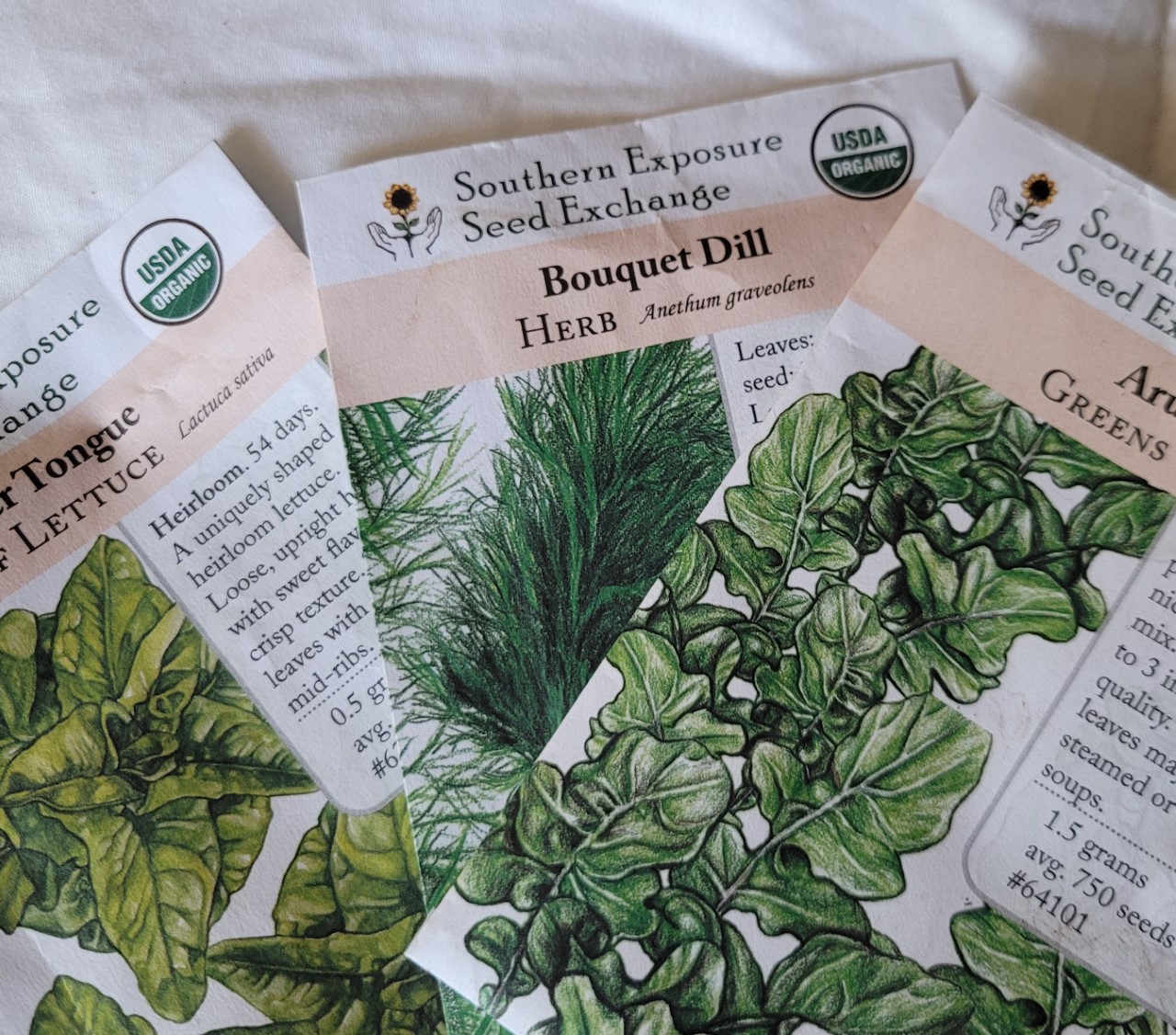
spring seed packets
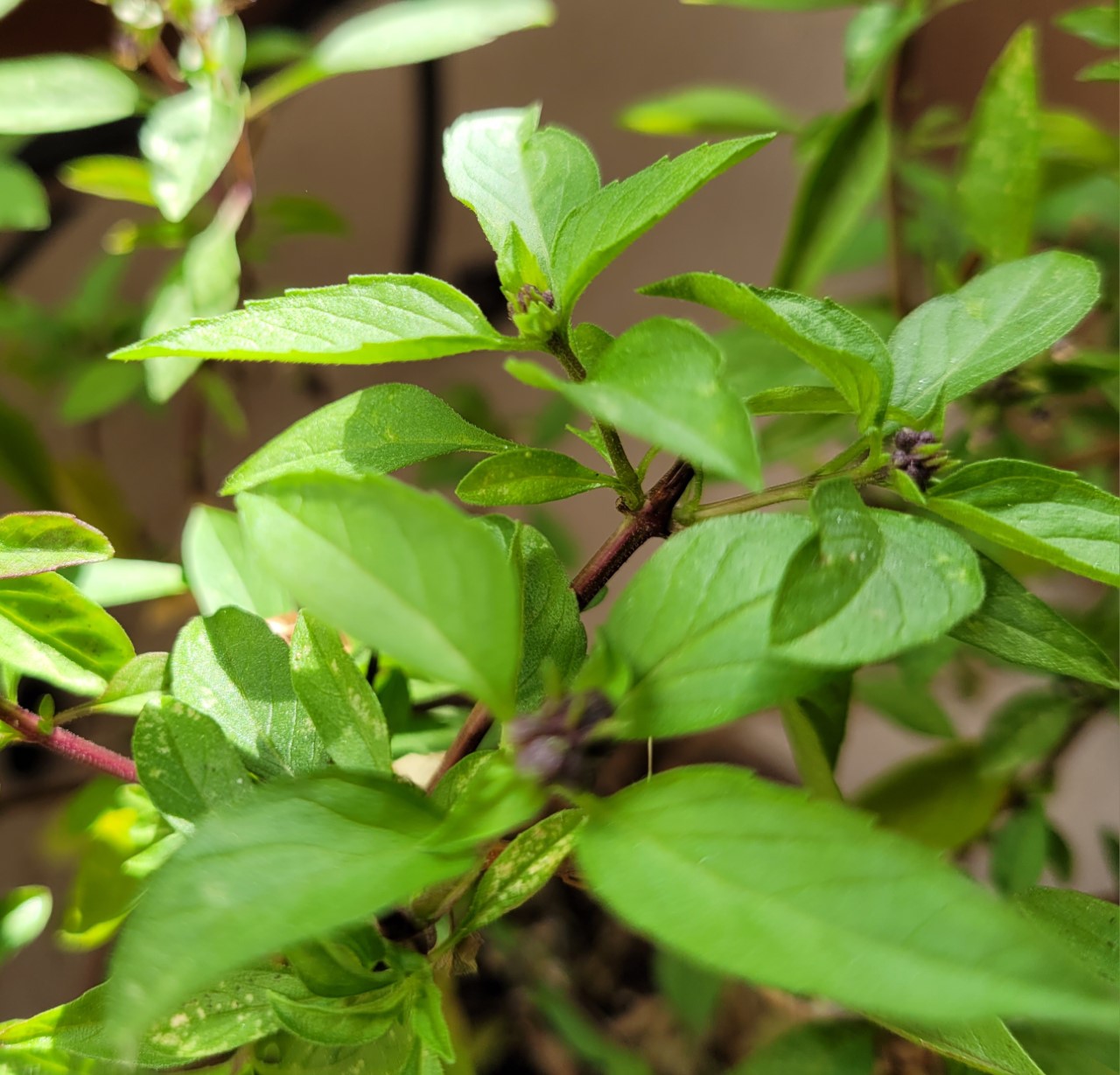
Thai basil over-wintered in the house
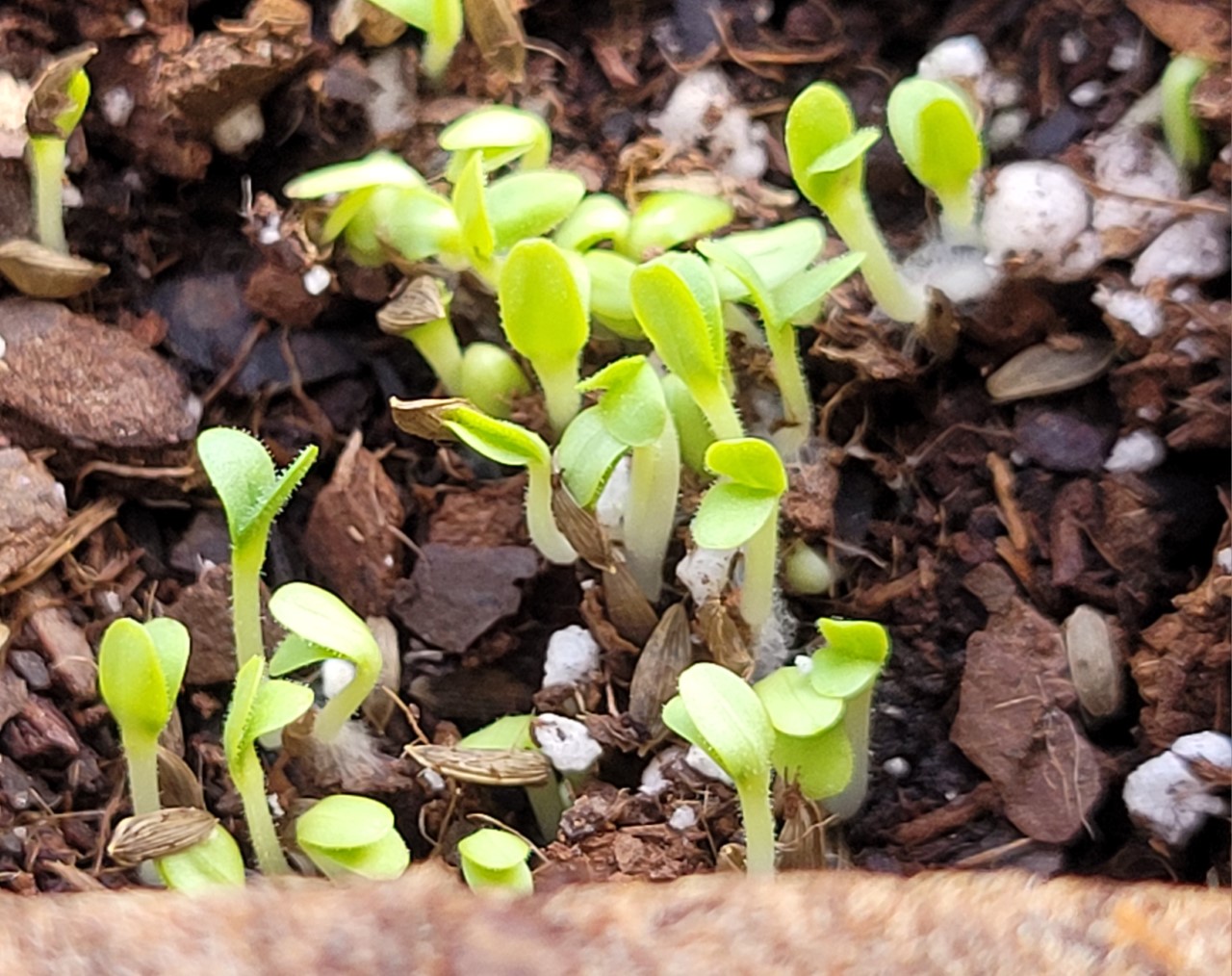
green leaf black seeded simpson lettuce seedlings, 2/15/23
chives

*I started this article about two weeks ago, I have avoided working on it. Today, I feel spring in the air (and in my bones) and hear it in the birdsong.