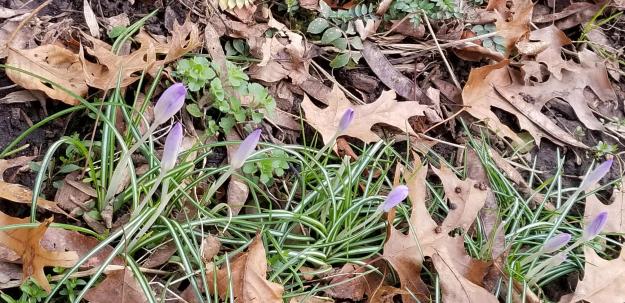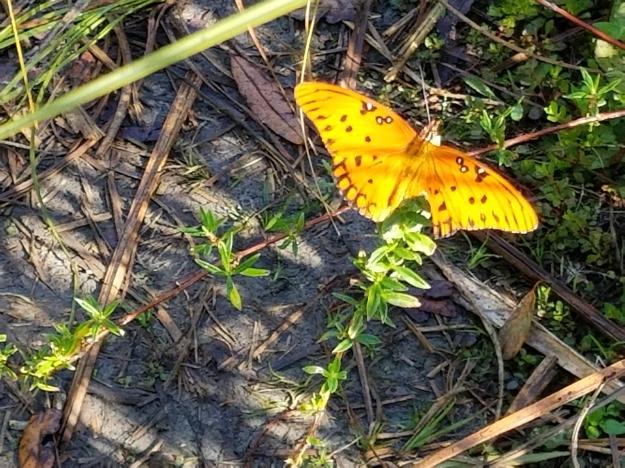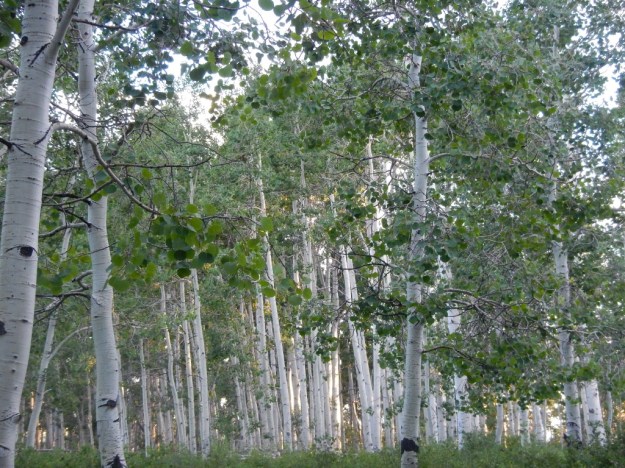
Happy spring!

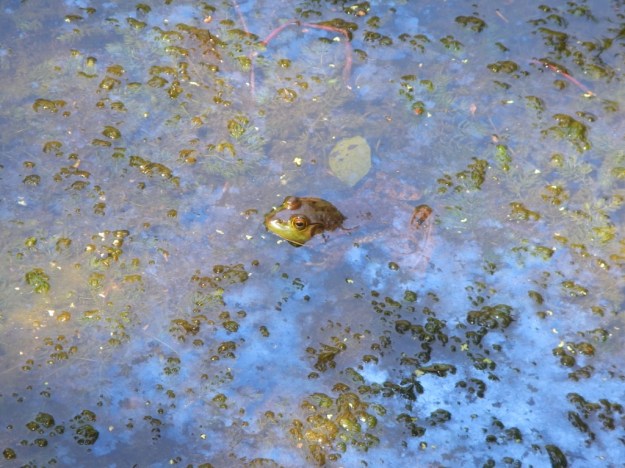
creeping speedwell (?), Rosslyn
Happy spring!

creeping speedwell (?), Rosslyn
Excuses Although it is March, I still haven’t transferred all of my phone numbers, passwords, and other data from my 2017 Audubon Birder’s Engagement Calendar to my 2018 Audubon Birder’s Engagement Calendar. This transfer usually happens early in January (see Old Year, New Year: Flexibility, Part 3). Part of the delay may simply be that there is so much minutia scrawled in the 2017 book that I am daunted by the task of transferring it to the new book.
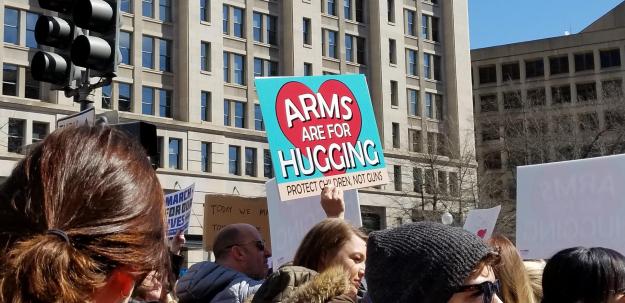
I think the real reason might be more fundamental, though. I have been sitting here — each day at once agitated and inert–waiting to see what happens next to our country. My own version of Potomac fever, I am afraid. And I am afraid: I used to tell my children that our country had had difficult times before and had gotten through it. Now, I believe the current regime and its attendant problems are by far the worst in my lifetime. I went to one march so far this year and will soon go to another. I sign petitions. I walk. I do my weights and stretches, and sometimes I even do my planks. I photograph flowers and trees. On TV, I watch cooking shows and basketball games. I think spring is coming. I believe my hibernation is ending and my hope is growing.
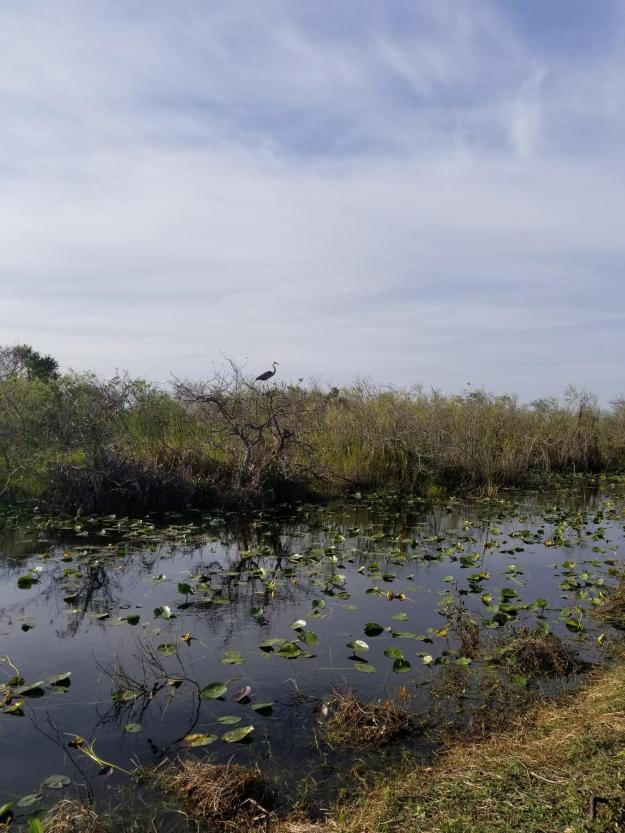
Happy Interlude In early February, Tom and I camped for three nights in the Big Cypress National Preserve and for one night in Everglades National Park. We saw alligators and manatees; anhingas and egrets, mangrove islands and dolphins, and much more.
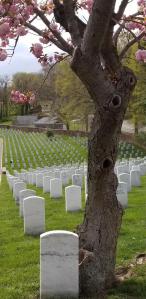
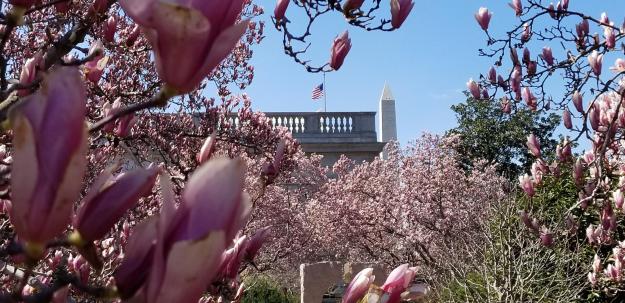
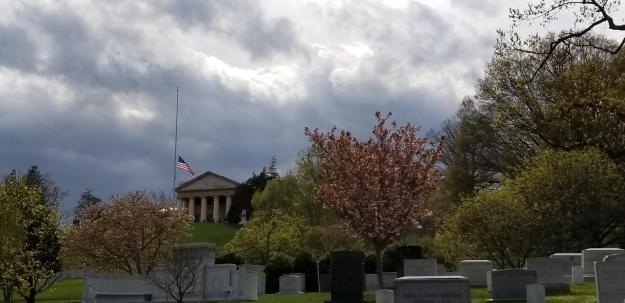
Spring is Coming Wood frogs are mating in vernal pools here in Arlington, Virginia. Salamanders are on the move. Daffodils are blooming and so is the witch hazel and some forsythia. Almost two weeks ago a cherry tree was blossoming at Arlington National Cemetery. Tourist groups are massing on the National Mall. I think it is time to put aside my 2017 almanac and rejoin this year, this fight, and this life.
Staircase to Heaven, again
1972–1973 (North Rim and environs)
Did I ever tell you about the time I got dropped off at Pipe Springs National Monument? I was on my way from the North Rim to my friend Anita’s wedding reception in Salt Lake City. Someone drove me to Pipe Springs–on the Arizona Strip–87 miles from the Grand Canyon Lodge where I worked. I tried to hitch a ride from Pipe Springs to Cedar City, Utah so I could catch a plane to Salt Lake. At least back then, Arizona State Road 389 was not a well traveled road.
After some time, Pipe Springs National Monument closed for the day. It got dark and I felt forlorn and probably a little scared. I settled down in the ditch beside the road. I wasn’t about to take my chances standing on the side of the road through the night. I worried some and I slept some. Morning came, someone picked me up, and I made my flight to Salt Lake and the wedding reception. I was an idiot back then, no doubt, but all that expansive sky, sand, canyons, and forests made me feel that all was possible, all was good, and I would not be harmed.
Angry and sad aside: Most of my life now, this Grand Staircase, this Colorado Plateau, has been for me not only the land of the beautiful, but also of the good and hospitable. I want to scream and cry and kick and yes, hate, as I see people and entities want to destroy this land. I don’t do those things: I am still trying for the beautiful and good.
So many more stories to tell, but I think I am finished for now. I wanted to tell you about Hop Valley, the double rainbows on the snowy road to Bryce, pine nut gathering at Cape Royal, the smell of the ponderosas in the sunlight, and Chesler Park in late winter.
Now, I will march, I will sign petitions, I will walk. In the end of summer, we may be at North Rim again, and, in November I will vote.
Thank you for listening.
Here are some photos:
I have been putting off writing this post about the Grand Staircase. Photos are easy, but sometimes words are hard for me.
This morning I have Windexed the living room table (where we leave smears when we eat in front of the TV). I’ve washed a load of clothes and I am about ready to put them into the dryer. I’ve put two applesauce cakes in the oven (from The Fannie Farmer Baking Book ). I feel comfortable and happily domestic. Even so, somewhere inside, I am afraid that the despoilers of the land will win this battle of the Grand Staircase and Bears Ears and the others. I am sad and angry because I don’t think my words or photos can change the minds of those ones. I will try the words anyhow.
Three days later: My words still haven’t found their way to the computer. I sit in my living room chair. Through my window, I watch the winter silver Potomac flow in the distance. Like most people I know, my heart weeps and my mind hurts. More hate, more racism, more lies spew from our country’s White House. So many things to grieve about and to fight for, where should I begin?
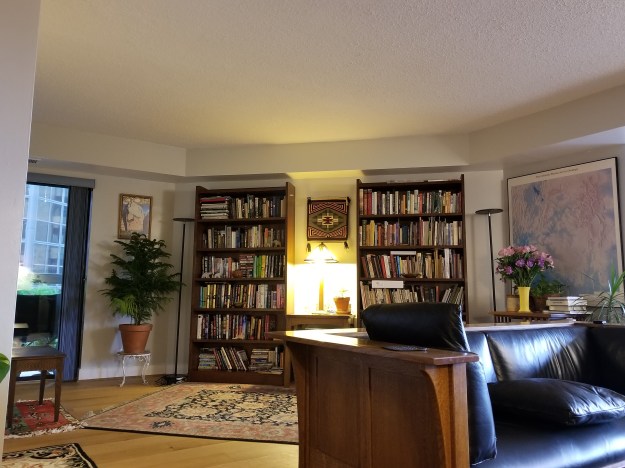
I know. I look around our room and I see the huge blue and pink(ish) map: “The Colorado Plateau and Its Drainage.” Tom bought the map for me about 18 years ago, when I briefly had a job with an office and benefits. To the left of the map are two bookcases, a Navajo rug, and a poster of Zion National Park, “Celebrating a Century of Sanctuary 1909-2009.” On the walls closer to me are the Thomas Moran print of Havasupai Gardens from our friend Laura, a painting of Hopi basket designs by our friend Sally, and many other talismans. Enough for now: Like a movie, the sun just broke through the clouds a tiny bit. I will try my words again.
Now, it looks like I have too many words. Here are some more. I will stop soon.
1958 (?) I saw it on Mickey Mouse Club, I think.
I felt sad when I saw and heard a piece on TV about a river that was going to be dammed and a canyon that would disappear. I saw a fabulous rock called Rainbow Bridge. I felt sad until the feelings were buried. Only decades later, I uncovered this memory and realized I had loved this land of the Colorado River Plateau 12 years before I ever even saw it.
1970 (My spring and summer in Zion National Park)
1971 (North Rim and environs)
1972 — 2014: Too many years and too many stories
*(adapted from Losing It: Deconstructing a Life, unpublished work © Lynda Terrill, all rights reserved)
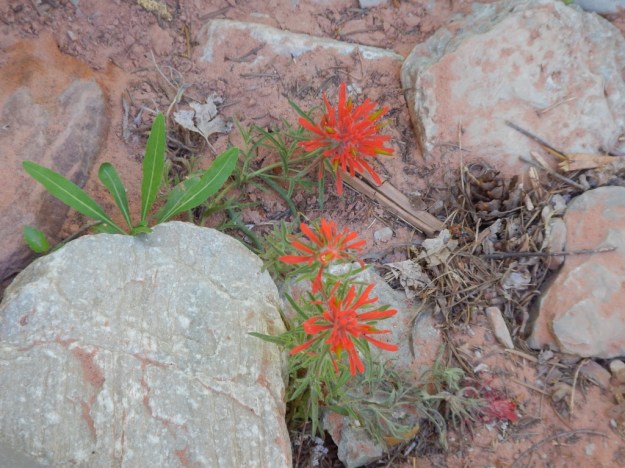
When we were hiking back in Zion in 1970, my friend Pat noted that–even with the technicolor, in-your-face canyon vistas surrounding us–I spent a certain amount of time looking down at the ground. I still do that. Below are some plant photos from the Grand Staircase and environs.
Note: My next post will be mostly words, not photos. I wonder if I can help convince Secretary Zinke, Senator Hatch, Congressman Bishop, and others to preserve our beautiful land.
Happy New Year!
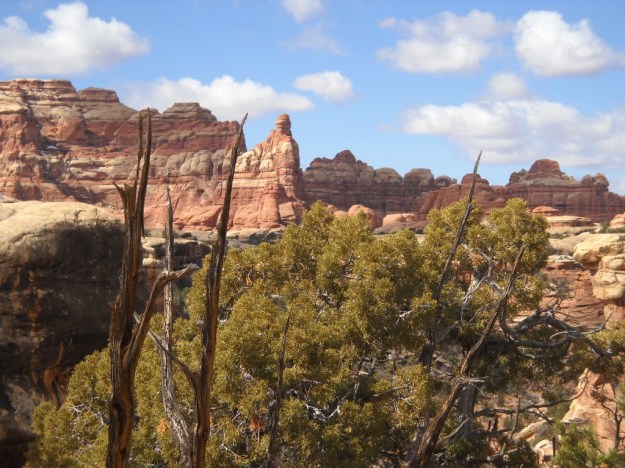
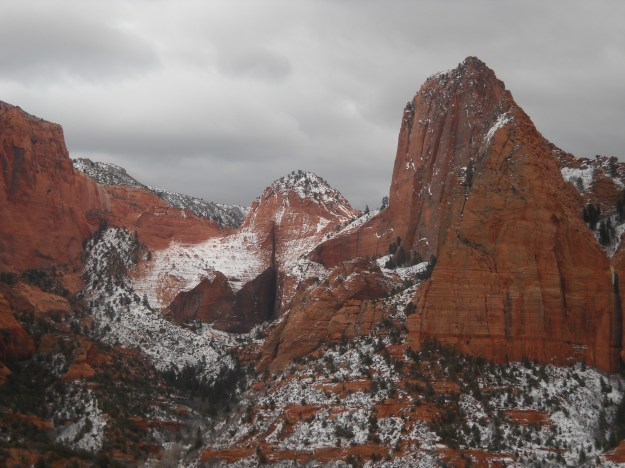
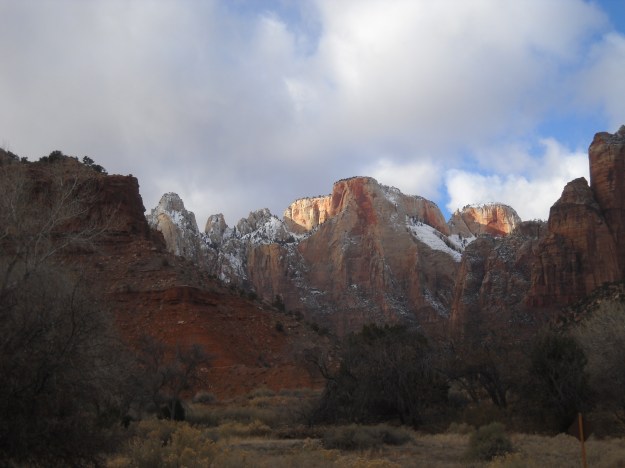
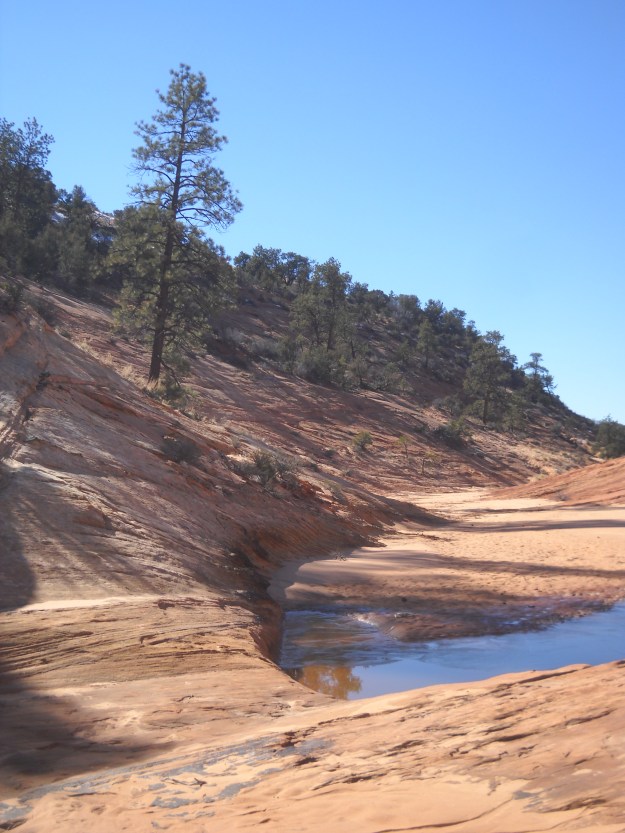
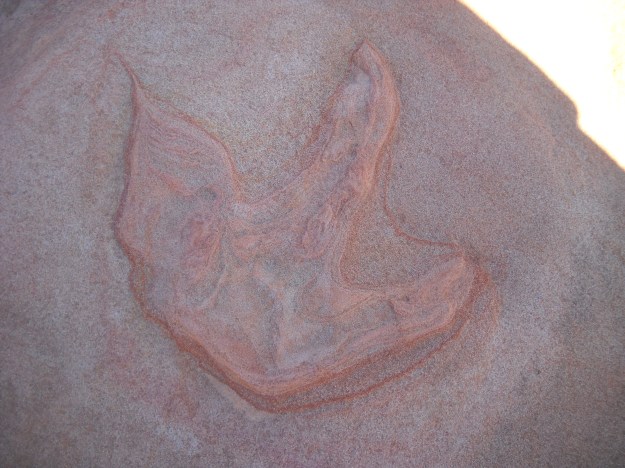
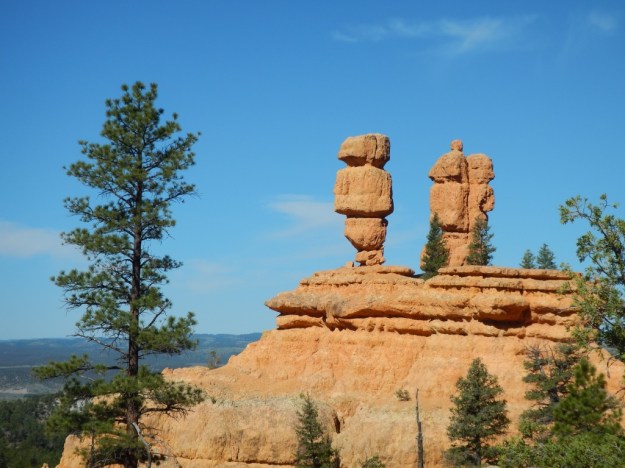
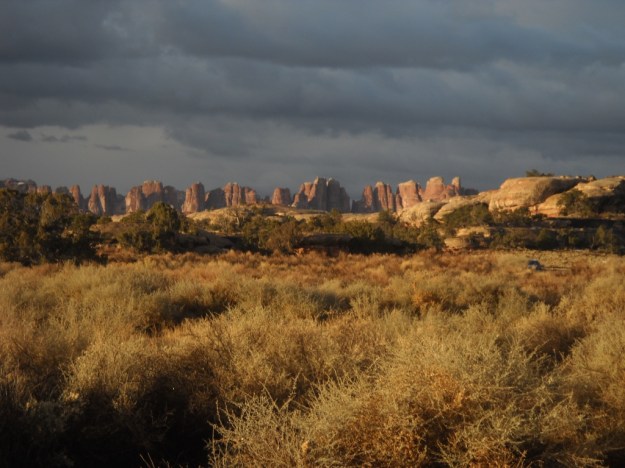
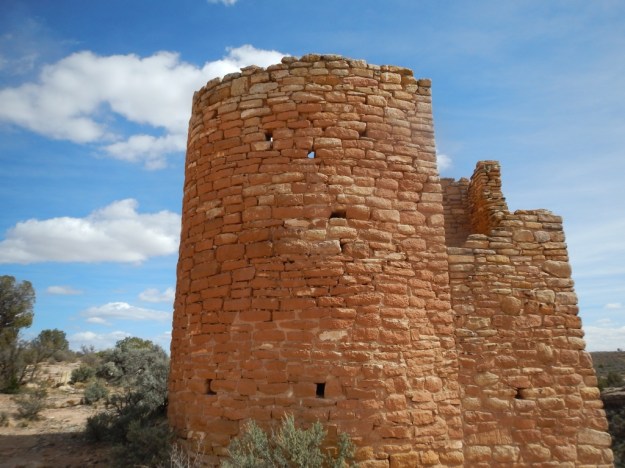
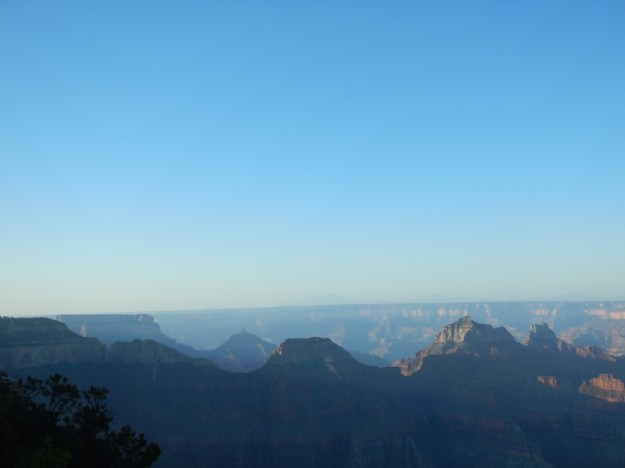
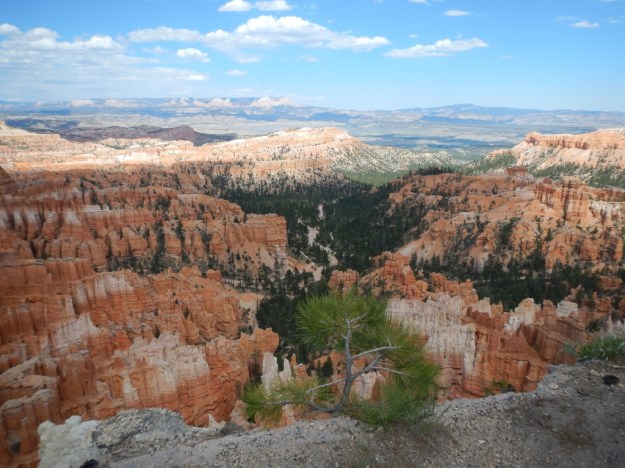
Below are some photos from the Grand Staircase area of the Colorado Plateau. Plant photos to come soon, and then, finally, words.
Colorado River (1973): Jackass Rapids/Jackass in the Rapids *
In the summer of 1973, one of my former eighth grade students (from Page, AZ) invited me to hike down to the Colorado River from near the Bitter Springs Arizona Highway Department outpost where she lived. This would be a walk down to the first rapids within what is generally considered the beginning of the Grand Canyon, not far below Navajo Bridge that spans Marble Canyon. My student said the locals called the area Jackass Rapids. I was a fair-to-middling red rock hiker back then, but it took fancy footwork to keep up with the sure-footed young girl. As my memory of the day comes into clearer focus, I think this trip might have been the girl’s answer to the environmental living elective (see Grand Staircase to Heaven, Part 1). She had not participated in the class, perhaps because, being of local pioneer stock, she already knew much more than I did about the local environment, or maybe it was just that she was already in band during the elective hour.
In any case, the sky was perfect blue and the sun was scorching and I already had sunburn from some recent hikes in Zion National Park. When we finally got down to the Colorado River, I did what I always did back then—I jumped in the water. The air temperature was probably in the mid-90s, the river was around 40°, and my back was already burnt. The resulting pain was intense and I felt like I was the jackass the place was named after. For several years afterwards my arms carried the marks of the sunburn and nowadays in the shower, I wince at cold water on my back. My memories of those Arizona and Utah times, though, remain bright: sky blue, rock red, pine green, and Colorado River brown.
*(adapted from Losing It: Deconstructing a Life, unpublished work © Lynda Terrill, all rights reserved)
Then As far as I can recall, I first saw Utah’s Grand Staircase in the summer of 1970. Heading south and east from Fredonia across the Arizona Strip on U.S. 89A the road rises onto the Kaibab Plateau. Partway up in the pinyon-juniper forest is a scenic overlook. I had been to scenic overlooks before: by the Great Lakes, the Skyline Drive, and, that very summer, I was living right inside Zion National Park. Still, I had never seen a vista so vast as the Grand Staircase. Looking northward, I could see wave after wave of cliffs: the White Cliffs, the Pink Cliffs, the Gray Cliffs, on and on. It seemed like this view was also a bridge to some other plane: one that was all light, beauty, and possibility.
Now They did it. Last week Trump, et al. eviscerated (or, as millions of us have it, tried to eviscerate) Grand Staircase-Escalante National Monument and Bears Ears National Monument. My response has been to put up angry and sad emojis on Facebook and to sign petitions about this and so many other outrageous actions by the current administration.
I want to do more. I want to help save this land of light, beauty, and possibility. For the next few postings, I will tell my own stories about the Grand Staircase. I am only one person, but I have a voice, and I want to join those other voices fighting to save the monuments.
Page, Arizona (1972-73): Dialogue Journals on the Kaiparowits Plateau Road*
Besides teaching eighth grade literature in Page, I developed an elective class I called environmental living. With two notable exceptions (below), I don’t remember much about the class. First, not many students signed up for the class and second, although I was enthusiastic, I was no science teacher. I knew more politics and theory than practical knowledge about environmental issues. The students and I grew plants (I don’t remember what kind), toured the Glen Canyon Dam, and went on a few trips out into the desert that surrounded Page.
One time the students and I took a short trip to part of Antelope Canyon, a few miles outside of Page. I could drive my Volkswagen Squareback right onto the slickrock sandstone, and the times and local culture didn’t worry about insurance or whether there were enough seatbelts to go around. The students and I reveled in the views and in sliding down the slickrock on the seats of our jeans. The success of this outing must have given me the confidence to plan a more ambitious excursion. Note: Back then my students and I could go pretty much where we wanted, but things have changed since that time. For example, now access to Antelope Canyon is now more stringently controlled by the Navajo Nation, and now a large area north of Page is part of the Grand Staircase-Escalante National Monument.
I had been hankering to explore the remote area north of the Arizona/Utah border that could be accessed by what was then called the Kaiparowits Plateau Road. One snowy winter Saturday, a carful of students and I headed north on U.S. Route 89 and then took a right onto the (if memory serves) unimproved Kaiparowits Plateau Road. I don’t remember much about our activities. I think we walked around some, ate, and, like the silly brand-new teacher that I was, I let some of the students smoke cigarettes. As the afternoon advanced, we headed back toward the main road. I was driving up a long hill on the snowy road when some demon made me downshift. I knew better than that, but–all of a sudden–there we were, stalled in the middle of nowhere with the snow starting and the sun going down. The kids got out of the car and I tried again and again to get the car out of the icy tracks where it was stuck. Spinning the wheels on the ever more slick snow, of course, did more harm than good. I almost panicked, but a resourceful teacher is never without her materials.
In the back of the Volkswagen, I had a box of dialogue journals that the students and I had been writing back and forth to each other. Dialogue journals are great tools. The teacher writes a question or makes a comment to an individual student and the student writes back what he or she wants to—language correction is by modeling appropriate form, there are no grades, the sharing is whatever the student decides to share, and no one else needs to see the text. The journals were particularly great tools then, too, because I put some journals (as yet unused) under the back tires and my trusty car roared out of the icy tracks. The kids hopped back in the car and we hotfooted it back to town, just about when the parents and school people were starting to get worried.
*(adapted from Losing It: Deconstructing a Life, unpublished work © Lynda Terrill, all rights reserved)
On Halloween I missed my self-imposed deadline for publishing a post in October. Fall is my favorite time of year and October is my favorite month. This time of year, I tend to think long and (vaguely) literary thoughts and I want to write. I want to write, but I give myself excuses why I haven’t written. Tom and I have been busy putting our new home together. Also, we recently traveled to Salt Lake City to visit dear friends from back in those Arizona and Utah days. Time is passing, and not as slowly as it did up there in the mountains. We feel a strong need to see those we love. We also recently traveled to Pittsburgh to see our son, Robert, and his family. Then it was on to Shaker Heights to visit with two of my brothers and our dear sisters-in-law. More excuses: Plus, it was mostly too hot here to feel like fall. Plus, I spent too much time reading the political news, signing petitions to save Bears Ears, and worrying about the future of our democracy as our laws, our ethics, and our social contract shred before our eyes. So, the good ideas came and went while I couldn’t settle enough to write coherent paragraphs that seemed true. I think I can string some sentences together, though. I think I took some okay photos, so I am adding them below, too.
Sentences
Usually, I am content to have memories of my parents just flit in out of my consciousness. In my mind, there is my mom, teaching me how to make the pie dough. There’s my dad, tying the laces of my ice skates. Different scenes come and go and they are almost all happy. However, when the days shorten and we head toward winter and the holidays, I am the youngest again, the baby sister, and I need my mother and father and the others who have gone.
I work on living in the present. I am better at it than I used to be. For many years I was angry that I couldn’t protect my children from the sadness and pain of life. I had a bad case of hubris. Now, I understand my limitations more. To those I love, I just say–in my mind–“I love you and I wish you well.”
Like my brother, Roger, gone these six years now, I feel lucky: lucky in my husband, lucky in my children, lucky in my friends. Also: the trees, the flowers, the aquatic macroinvertebrates, North Rim, and cold nights camping not alone.
To calm me down from the news, I am trying to get back into my deep breathing. Sometimes Tom and I walk ten miles a day.
When I was 17, I thought we could end war. I thought that we would feed the hungry children. I thought we could come together right then. I thought we would work together to save our planet. Oddly, even now, even here–a 2.7 mile walk from my condo to The White House–I remain hopeful.
You may see this old woman at the marches or maybe we will meet on the ramparts one day, but I still believe in my deep core that the glass is half-full. Happy Fall.
Photographs
We live in Arlington,
Right next to Washington, DC!
These lines come from a little song that our children learned when they were (at various times) in about second grade in Arlington Public Schools. Our oldest child, Sarah, started public school Montessori at Hoffman-Boston School in 1978. Our youngest child, Billy, graduated from Yorktown High School in 2005. So, you can see we spent a goodly amount of time in Arlington. There was a stint in Denver in the early 1980s and then in 2006 Tom and I moved to Charlottesville. There we gardened, we walked everywhere in town, we drove those back roads (Old Plank Road, Poorhouse Road, Hebron Church Road…), we listened to music, and we loved our neighbors. During this era, we did another stint in Denver and we also traveled many roads (55,000 miles’ worth) in our camper.
Now we have come back here, right next to Washington, DC. We plan on more road trips, from our new/old base of Arlington. Here, too, we will garden, we will walk, and we will listen to the music (Jazz last weekend). We will go to Shakespeare, lectures, museums, and hang out with our children and friends, whom we love.
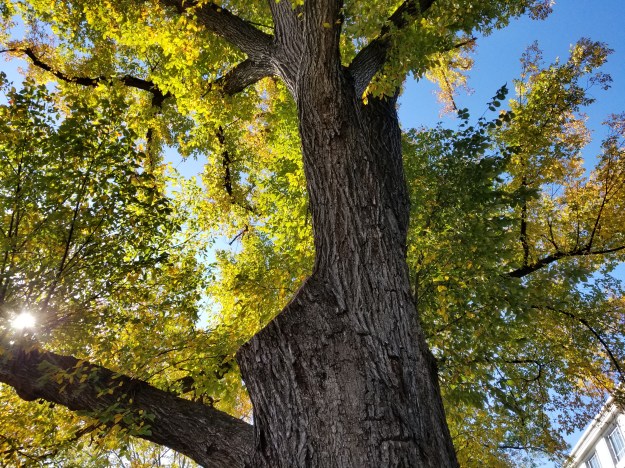
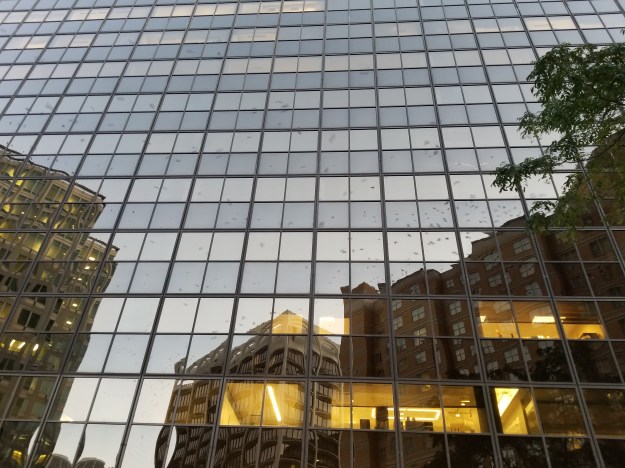
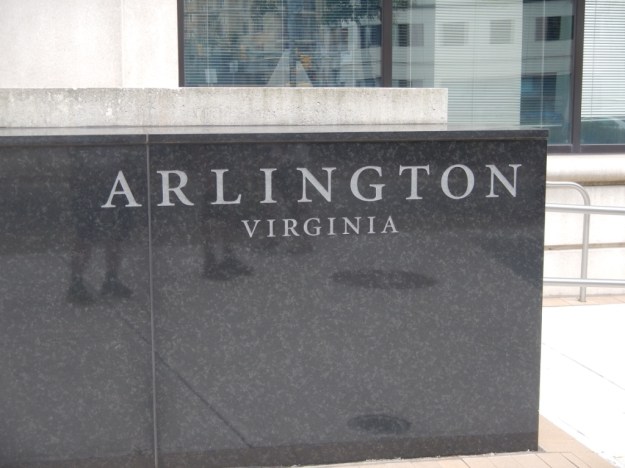
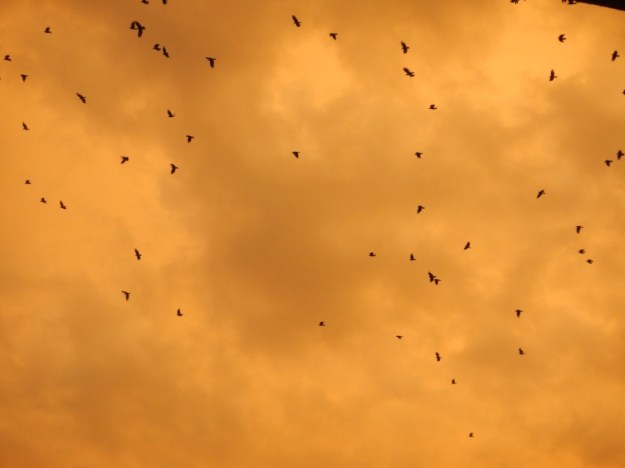
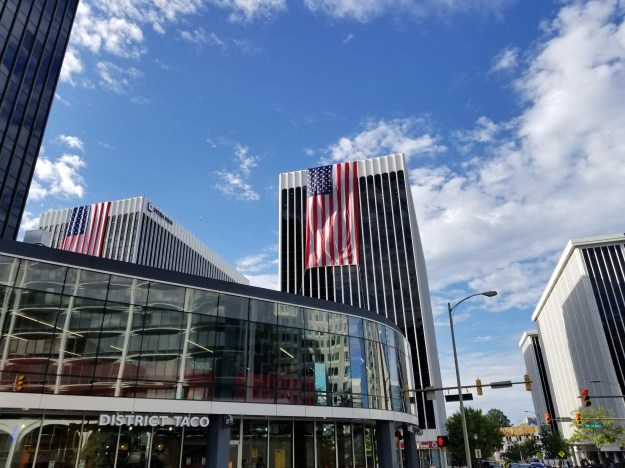
Below are some of the things I like about Arlington.
Actually, I am struggling with this writing. I want to tell you about how Sarah and Robert’s elementary school (Drew Model School) was so big into process and project-based learning. I used to tell folk stories to the children and go on nature walks with them. I remember how Billy loved to wear the monarch butterfly suit at Long Branch Nature Center. Also, I think about how years later, my friend and fellow teacher Donna and I would walk along the stream at Long Branch with the immigrant parents and their children. Dusk came and the bats started flying. I remember one of our teachers’ assistants, Dan. He was a young Vietnamese man and he would swing with the kids–like the child he almost was. When I think of those evenings, I want to cry for the loveliness of it.
For the first several years in Arlington we didn’t have much money. However, even at the beginning, in 1978, we did have money for Brenner’s Bakery doughnuts (sadly defunct these many years) down the street. Later on, mostly in the 1980s, kindly women would cluck over our children at Korean, Vietnamese, and Salvadoran restaurants and serve us delicious meals for a little bit of money. Many years later–in the late 1990s–my adult students from Bosnia, El Salvador, and Vietnam made food for Sarah and Mike’s wedding feast.*
I think I am working up to a more focused comment. I loved and I do love the diversity of Arlington. At the Arlington Education and Employment Program (REEP), I taught adult immigrants and refugees from over 80 countries. Even now, when Arlington is much trendier than in the old days, I look out from my Starbucks table and see people from everywhere walk by on Clarendon Boulevard.
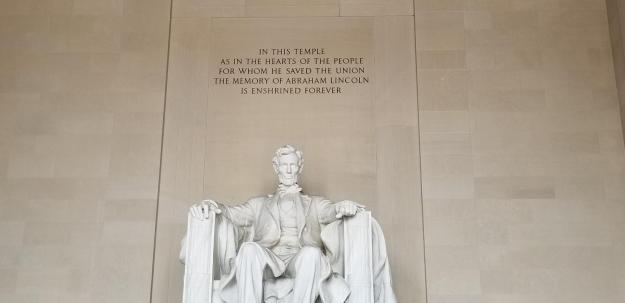
We live close to Washington, DC. Since Tom and I moved back here a little over a month ago, we have been jogging: Jogging past the Netherlands Carillon, past Arlington Cemetery, and along the Potomac River. Sometimes we cross the Memorial Bridge–trotting straight towards the Lincoln Memorial, left past the Kennedy Center, on to Georgetown, and over the Key Bridge back home. What can I say? I have a degree in political science and another in American Studies: I love being here.
Not even getting into the rest of the natural, cultural, and historical opportunities, but we love the Smithsonian Institution. We have been visiting the museums, the zoo, the gardens and the Folklife Festival non-stop for almost 40 years and we never get tired of it, and the price is still right.
After 9/11, we saw the Pentagon burning. You have probably figured that I am not a big military type, but this was my home. I cried for days. Later when Tom and I joined Arlington’s Community Emergency Response Team (CERT), every one of our instructors from the Arlington County Fire Department had been at the Pentagon after the attack. I am honored to have learned from these (and I never use this word lightly) heroes.
Enough! I love Milford, MI and Lake Superior; those red rocks and wild mountains of the west; Charlottesville and its funky music heart, but I am happy to be back home in Arlington.
*Also, our friend Sharon’s mom brought a Southern Maryland specialty, spinach-stuffed ham.
Good friends and neighbors, flowers and trees are more beautiful and stronger than hate and ignorance. That’s the way it has been so far in my life. Charlottesville, may you heal quickly.*
*All of these photos were taken in the city of Charlottesville, Virginia.
Making miles for meals in Western North Carolina.
The wonder-filled life of a single older-ish mom.
Just some joyful jawing about backpacking, hiking and snowshoeing
We all have things to offer. We all have things we need.